Canada Eyes Role in EU Ukraine Loan as Households Watch Currency Risks
Ottawa is negotiating a contribution to the European Union’s €90 billion Ukraine loan program before an EU-Canada summit in Montreal.
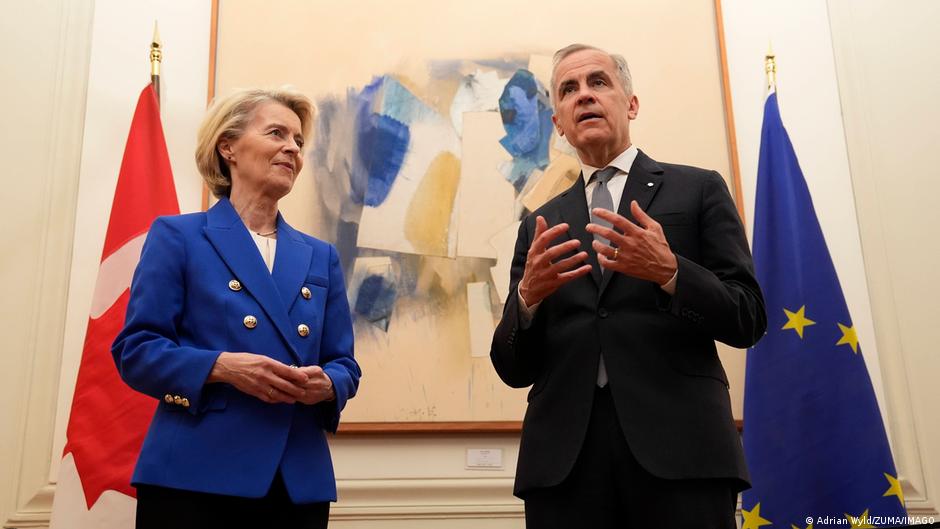
Canada is seeking to join the European Union’s €90 billion loan program for Ukraine, a move that would extend Ottawa’s financial commitment to Kyiv while placing a fresh foreign-policy priority in front of taxpayers, currency markets and everyday investors.
The size of Canada’s potential contribution is still under discussion. According to the Financial Times, which cited people familiar with the matter, Canadian and European officials aim to agree on the amount before the EU-Canada summit scheduled for late October in Montreal. The talks were reported on Sunday, September 13.
For households, the immediate impact is not a direct new bill at the kitchen table. But large international commitments can shape the broader fiscal backdrop that influences taxes, public borrowing, defense spending and the Canadian dollar. If Ottawa joins the program, consumers and savers will be watching how the government frames the cost, the timing and the financing of any contribution.
Canada and the European Union are seeking to settle the size of Ottawa’s contribution before the EU-Canada summit in Montreal at the end of October.
What the Loan Means for Personal Finances
The proposed EU facility is a €90 billion loan program for Ukraine, and Canada is negotiating to participate alongside European partners. Britain is currently the only non-EU country that has joined the loan, according to the report.
For Canadian families, the key question is whether joining the program adds pressure to federal finances at a time when many households are already sensitive to mortgage payments, grocery bills, rent and borrowing costs. International loans and military support are usually funded through government balance sheets rather than direct household payments. Still, they become part of the wider public finance picture that bond markets, rating analysts and voters assess.
Everyday investors may also read the move through the lens of geopolitical risk. Support for Ukraine has been a defining policy issue for Western governments since Russia’s full-scale war, and commitments tied to defense, reconstruction and security can affect sectors ranging from defense technology to energy, infrastructure and currencies. The Canadian government has already allocated C$6.5 billion in military aid to Ukraine, equivalent to about US$4.7 billion, according to the report.
That existing aid matters because it gives investors and taxpayers a benchmark for Ottawa’s previous commitments. A new contribution to an EU-led loan would add a separate channel of support, potentially reinforcing Canada’s role in the transatlantic financial response to the war.
Currency and Savings Angle
The loan under discussion is denominated in euros, while Canada’s public accounts and household savings are largely measured in Canadian dollars. That makes exchange rates part of the consumer story. A Canadian contribution to a euro-based program could be judged partly through the movement of the Canadian dollar against the euro and the U.S. dollar, especially if markets see the move as part of a broader shift in Canada’s trade and diplomatic orientation.
Prime Minister Mark Carney is seeking to use Canada’s participation in the loan program to demonstrate to Europe a commitment to strengthening transatlantic ties, according to the Financial Times. The report says that Carney wants to reduce Canada’s dependence on the United States and build an alliance of liberal powers committed to a multilateral order that, in his view, was disrupted by U.S. President Donald Trump.
That geopolitical strategy has direct relevance for household budgets because Canada’s trade relationships help shape prices, jobs, exports and the value of the currency. When a country attempts to diversify away from reliance on a dominant trading partner, the change can take years. But even the early signals can matter for businesses deciding where to invest, consumers buying imported goods and savers holding foreign assets.
For Canadians with portfolios, the practical issues include currency exposure, government bond yields and sector allocation. A stronger relationship with Europe could eventually support industries tied to defense innovation, artificial intelligence, digital trade and advanced computing. At the same time, any escalation in trade tensions or foreign-policy spending can add uncertainty for markets.
Carney’s Europe Push
The Ukraine loan talks are part of a broader Canadian effort to deepen ties with the European Union. On September 10, Carney and Ukrainian President Volodymyr Zelensky signed a declaration on a 100-year partnership that includes cooperation in defense innovation.
Canada is also hoping to reach other agreements with the European Union as it seeks support in a trade conflict with the United States, the Financial Times reported. Those efforts include joining the EU’s supercomputer network for joint work on artificial intelligence and signing a digital trade agreement with Brussels.
For consumers, those issues may sound distant, but they can carry long-term budget consequences. Artificial intelligence infrastructure can influence productivity, wages and the competitiveness of domestic firms. Digital trade rules can affect cross-border services, data flows and the online economy. Defense innovation can create business opportunities, but it can also require sustained public funding.
The timing is important. Officials are seeking to resolve Canada’s possible contribution before the late-October EU-Canada summit in Montreal, giving the negotiations a political deadline. If an agreement is reached, Ottawa will need to explain how the contribution fits with its existing Ukraine aid, its domestic fiscal priorities and its wider plan to reduce dependence on the U.S.
For households, the bottom line is that Canada’s possible entry into the EU Ukraine loan is not just a foreign-policy headline. It is part of a larger shift in how Ottawa may allocate public money, manage trade exposure and position the Canadian economy between Europe and the United States. The final contribution amount, still under negotiation, will determine how large that shift looks on the public balance sheet.



