Zelensky Says Putin’s War Strategy Is Spreading New Economic Risks
Ukraine’s president used his UN address to link Russia’s war-making capacity to energy markets, winter heating risks and global instability.
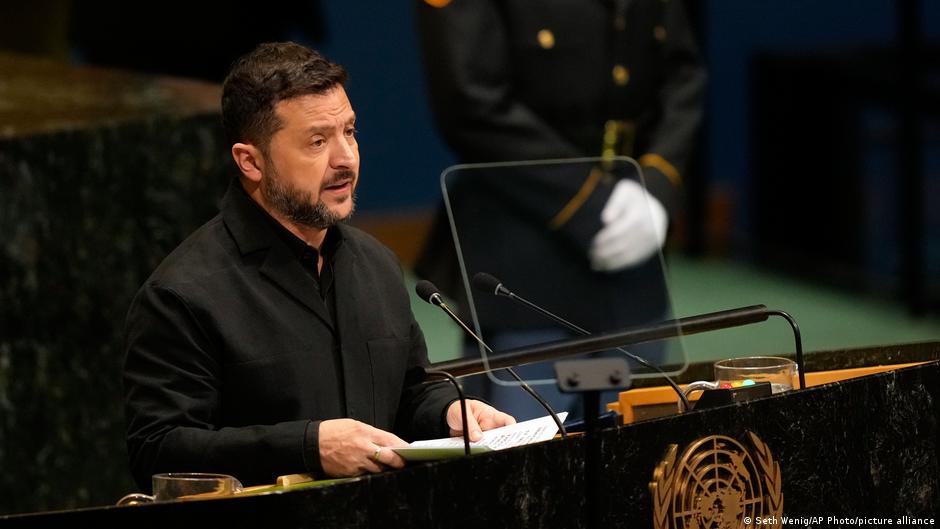
Ukrainian President Volodymyr Zelensky told the United Nations General Assembly in New York on Wednesday, September 23, that Russian President Vladimir Putin is the “patient zero” from whom the idea of war is spreading around the world. For households, savers and everyday investors, the warning was not only geopolitical. Zelensky framed the war as a continuing source of instability that can move through energy bills, fuel prices, currencies and broader market confidence.
According to Zelensky, wherever the idea of war spreads, it brings “only pain, instability, new risks and, of course, new crises.” His central message was that Putin must be stopped from acting further and from spreading what the Ukrainian president called evil. The address came as Ukraine continues to argue that the economic machinery supporting Russia’s war is as important as the battlefield itself.
“Our target is Russia’s ability to finance this war and prolong it,” Zelensky said, according to the remarks reported from the UN session.
That sentence matters for consumers because the war’s financial lifelines run through the same markets that influence everyday costs. Oil, gasoline, diesel, refineries, ports and power infrastructure are not abstract assets for families. They shape transport costs, grocery prices, winter heating bills and the inflation outlook that central banks and investors follow closely.
Energy Pressure and Household Budgets
Zelensky said that for the first time in Russia’s history, what he described as the country’s pride, its oil industry, is operating “on its last legs.” He called it hard to imagine a more humiliating defeat for a country with a permanent seat on the UN Security Council and a deep pride in oil exports. At the same time, he stressed that oil itself is not Ukraine’s goal, and neither are gasoline, diesel fuel, factories or ports as ends in themselves.
The distinction is important. Ukraine is presenting pressure on Russian energy infrastructure and revenues as a way to reduce Moscow’s capacity to keep funding the war. But for consumers in Europe, the United States and beyond, any disruption or fear of disruption in energy markets can still feed into pump prices, utility bills and inflation expectations. Even when direct supply effects are limited, uncertainty can raise risk premiums, influence currency movements and complicate household planning.
Zelensky also warned that if Russia continues attacking Ukraine’s energy system and heating infrastructure, Kyiv will try to ensure that Russia’s “General Winter” changes sides this winter, a reference to potential retaliatory strikes. The phrase underscored the seasonal stakes. Winter energy security affects not only military logistics and national resilience, but also ordinary budgets, especially for families already dealing with rent, food, transport and borrowing costs.
For investors, the consumer angle is equally direct. Energy volatility can affect inflation-linked bonds, airline and transport shares, commodity currencies and companies with heavy fuel or electricity exposure. A winter of intensified strikes could also shape risk appetite toward European assets and emerging markets more broadly, particularly if the war continues to drive uncertainty around infrastructure and supply chains.
War Costs, Labor Losses and Market Risk
Zelensky said that from January through August, Russian armed forces lost 248,964 people on the battlefield in Ukraine. He added that Putin is paying with 248 people for every kilometer and asked whether anyone still considers him rational. The Ukrainian president also said citizens of 47 other countries are fighting on Russia’s side and are also dying on the battlefield.
Those figures were presented as evidence of the human cost of Russia’s campaign, but they also speak to the economic logic of a prolonged war. Large battlefield losses can put pressure on labor markets, public finances and social spending. For Russia, sustaining the war means maintaining military recruitment, equipment replacement and state spending. For other countries, the consequences can show up in defense budgets, aid commitments, refugee costs and energy-security investments.
Zelensky’s remarks also pointed to a future risk that investors and policymakers are only beginning to price: the potential role of artificial intelligence in battlefield decisions. He warned that as soon as next year there is a real possibility that decisions on the battlefield could begin to be made by artificial intelligence, and not only by people. “We need peace before we reach this point,” he said.
For households, that may sound distant from monthly bills. But technological escalation can lengthen conflicts, accelerate arms spending and increase uncertainty. Markets tend to dislike wars that become harder to interpret and harder to contain. A conflict shaped by autonomous or semi-autonomous decision-making could add a new layer of risk to defense stocks, cybersecurity spending, sanctions policy and global capital flows.
Why Everyday Investors Should Watch the UN Signals
The speech came against a backdrop of intensified Russian attacks. According to an analysis by AFP cited in the source report, the first 18 days of September saw more Russian strikes than any full month since the start of the war in Ukraine, with the exception of March 2022. That comparison places the current phase of the war near the most intense early period of the invasion.
At the same time, Russian Foreign Minister Sergei Lavrov told the UN Security Council that there would be no “pause” in hostilities. For consumers and investors, that reduces the likelihood of quick relief from the war-related pressures that have repeatedly affected energy, food, fiscal policy and market sentiment since 2022.
The personal finance takeaway is not that households can predict the next oil move or currency swing from a single speech. It is that the war remains a live economic variable. Families with tight heating budgets, drivers exposed to fuel prices, savers holding foreign currencies and small investors with energy, defense or European market exposure all have reason to watch whether the conflict escalates into the winter.
Zelensky’s UN address cast the war as a danger spreading beyond Ukraine’s borders. For Money Desk readers, the message is also practical: geopolitical risk can arrive through bills, savings accounts, retirement portfolios and exchange rates long before it appears as a line item in a household budget.



