Zelensky Says North Korea Plans to Send 10,000 More Troops to Russia
The reported deployment could deepen the war’s financial fallout for households, currencies and investors already exposed to geopolitical risk.
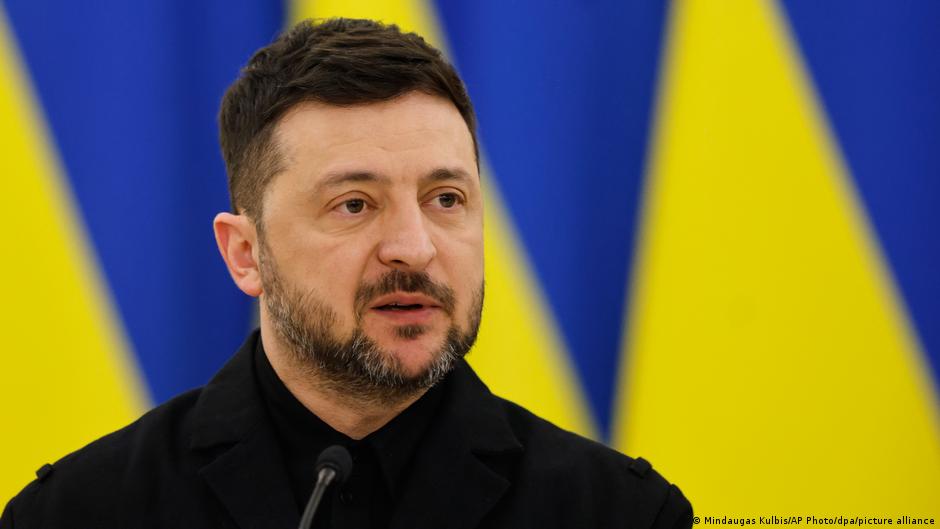
Ukrainian President Volodymyr Zelensky said North Korea is preparing to transfer about 10,000 more troops to Russia, a development that could add pressure to a war already weighing on household budgets, currency markets and everyday investors across Europe and beyond.
Speaking in his evening address on Monday, September 28, Zelensky cited “new data” from a report by Ukraine’s military intelligence agency, the Main Directorate of Intelligence of the Ministry of Defense. According to the Ukrainian president, more than 8,000 North Korean soldiers are already on Russian territory.
Zelensky said North Korean service members are now being selected for training and later transfer to Russia. He argued that Russian authorities plan to expand the recruitment of foreigners to take part in the war against Ukraine.
“It is important that the governments of the countries from which Russia is bringing people into its army counteract this. We will inform every government,” Zelensky said.
For households, the significance is not only military. A broader international role in the war can reinforce uncertainty in energy, food and defense markets, areas that flow directly into consumer prices, taxes and savings decisions. Even when front-line developments appear distant, prolonged conflict can affect fuel bills, mortgage expectations, pension fund performance and the value of currencies used by consumers and travelers.
Why the Troop Claim Matters for Personal Finances
The war in Ukraine has already been one of the major geopolitical factors shaping European budgets since Russia’s full-scale invasion. Reports of further North Korean involvement may not immediately change grocery prices or savings rates, but they can influence the risk calculations of governments, companies and financial markets.
If the conflict becomes more dependent on outside manpower and support, investors may price in a longer war. That can support defense stocks while adding caution around European assets more exposed to energy shocks, trade disruption or fiscal strain. For households, those market moves can show up inside retirement accounts, investment funds and workplace pension plans, even for people who do not directly buy individual shares.
Currency markets are also sensitive to geopolitical escalation. The euro, the dollar and regional currencies can move when investors seek safety or reassess Europe’s economic outlook. A weaker local currency can make imported goods more expensive, while a stronger safe-haven currency can affect travel costs, overseas investments and remittances. The source article does not report any immediate market reaction, but the financial channel is clear: longer wars generally raise uncertainty, and uncertainty has a price.
Zelensky’s remarks also intersect with public spending. If European and allied governments perceive an expanded Russian manpower pool supported by North Korea, pressure may grow for higher defense budgets and continued aid to Ukraine. Those decisions can influence taxes, borrowing and spending priorities, all of which eventually matter to households balancing wages, benefits and public services.
What Intelligence Services Have Said
According to South Korean intelligence estimates cited in the Russian-language source, North Korea has already sent about 15,000 service members to support Russia in the war. In return, Pyongyang is believed to receive money, military technology and security guarantees from Moscow.
Zelensky said in August that North Korea intended to station between 30,000 and 50,000 fighters on Russian territory. His latest statement, focused on an additional roughly 10,000 troops, adds another data point to Kyiv’s claims that Russia is seeking to widen the pool of foreign personnel available for the war.
For consumers and small investors, the key issue is not the exact military deployment alone, but what it signals about duration. A war that draws in more outside manpower can become harder to forecast, and harder-to-forecast conflicts tend to keep a risk premium embedded in energy contracts, insurance costs, shipping assumptions and government bond markets.
That matters for savers because bond yields influence mortgage rates and the returns available on deposits and fixed-income funds. It matters for equity investors because companies with exposure to Europe, energy-intensive production, logistics or defense may see different earnings expectations. It matters for anyone with a household budget because inflation often arrives through channels that appear technical at first, including fuel, freight, exchange rates and public spending.
Diplomatic Strain Between Kyiv and Seoul
Zelensky’s statement about Russia’s plans to attract additional North Korean troops came against the backdrop of a dispute between Kyiv and Seoul that had flared several days earlier.
South Korean President Lee Jae Myung sharply criticized the Ukrainian authorities after Zelensky publicly reported the transfer to Seoul of two North Korean soldiers captured during fighting by Ukrainian forces in Russia’s Kursk region. Lee said Zelensky had violated an agreement on confidentiality.
Zelensky’s office responded that no agreement existed between the countries to keep that information secret. Seoul called that claim a lie. On September 28, South Korea’s foreign ministry summoned Ukraine’s acting ambassador. According to Yonhap, South Korea’s deputy foreign minister conveyed Seoul’s “firm position” to the Ukrainian diplomat.
The diplomatic dispute is relevant for financial markets because South Korea is a major economy and a key U.S. ally in Asia, while Ukraine remains heavily dependent on international coordination. Any visible friction between partners can complicate the communication around sanctions, military intelligence and regional security. For ordinary investors, that does not translate into a simple buy-or-sell signal, but it does add another layer of political risk to monitor.
Households do not need to react to every battlefield claim by reshuffling savings. But the broader pattern is worth watching: more foreign troops, more complex alliances and more pressure on government budgets can all feed into the economic background against which families make decisions on mortgages, cash savings, pensions and currency exposure.
The practical takeaway for consumers is caution rather than panic. The source report does not provide evidence of an immediate financial shock. It does, however, describe a potential expansion of foreign support for Russia’s war effort, and that is the kind of development that can prolong uncertainty. For household budgets, prolonged uncertainty often matters as much as any single headline.



