Yabloko’s Novgorod Result Keeps Ballot Access in Play for Russia’s Voters
The party’s 6.2 percent showing in Novgorod could shape future voter choice, a factor that matters for households weighing political and economic risk.
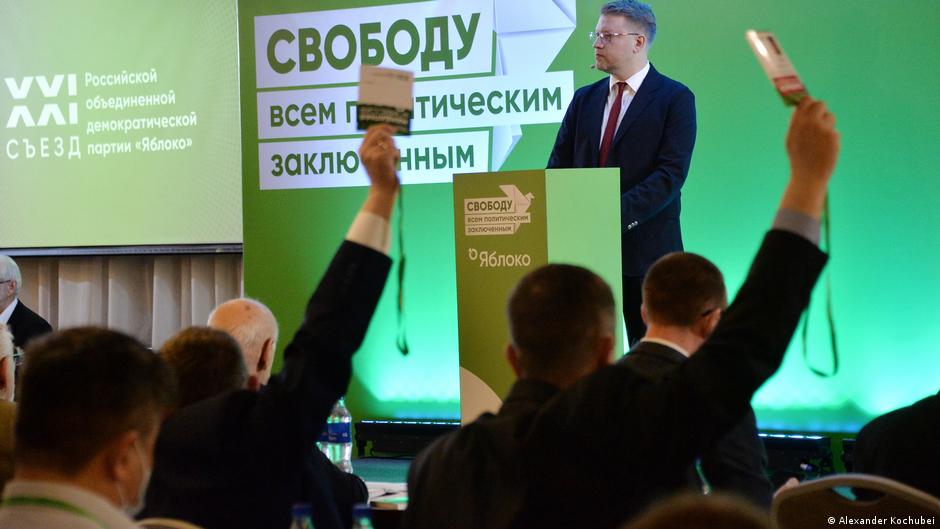
Russia’s liberal Yabloko party is on course to enter the Novgorod regional legislature, a result that carries significance beyond the distribution of seats in one regional parliament. According to Russia’s Central Election Commission, the party had 6.2 percent of the vote after 96.86 percent of protocols had been counted, clearing the five percent threshold required to win representation in the Novgorod Regional Duma.
For households, savers and small investors watching Russia’s political environment, the immediate budget impact is indirect. No new tax, pension or currency measure follows automatically from the Novgorod count. But the result matters because ballot access rules can influence how much political competition voters see in future elections, including national contests that shape fiscal policy, public spending priorities, regional subsidies and the broader investment climate.
The Central Election Commission reported the figures overnight into Monday, September 21. Yabloko’s result in the election to the eighth convocation of the Novgorod Regional Duma marks an improvement from the 2021 contest at the same level, when 3.83 percent of voters backed the party. This time, the 6.2 percent preliminary result puts it above the threshold and gives it a path into the regional legislature.
Why a regional seat matters for future elections
The practical importance of the Novgorod outcome is that representation in a regional parliament may allow Yabloko to continue taking part in State Duma elections without collecting signatures. For ordinary voters, that procedural point has real consequences. Signature requirements can be a costly and difficult hurdle for parties, affecting whether voters see a wider field on the ballot or a narrower one dominated by larger, better-resourced organizations.
An anonymous source in Yabloko told DW that the party was pleased with the preliminary result in Novgorod and emphasized its practical value. The source said that having a deputy in a regional parliament would allow Yabloko to keep participating in State Duma elections without collecting signatures. Before these elections, the source said, the party had three factions: Pskov, St. Petersburg and Karelia, but its lists were removed there.
“For the party, it also has a very practical meaning: having a deputy in a regional parliament will allow Yabloko to continue participating in State Duma elections without collecting signatures,” the source said.
In the broader Novgorod vote, United Russia had 38.37 percent, according to the same data. The Communist Party was at 14.54 percent, the Liberal Democratic Party at 12.01 percent, New People at 9.87 percent, A Just Russia at 7.7 percent, and the Party of Pensioners at 5.55 percent. Yabloko’s 6.2 percent places it among the parties clearing the threshold, though still far behind the governing party’s tally.
For consumers and households, regional legislatures are not abstract institutions. They can influence local spending priorities, social support, public services, regional programs, transport, utilities and other issues that eventually show up in household budgets. The presence or absence of opposition voices may affect debate over those choices, even when the balance of power remains heavily tilted toward larger parties.
Political risk and the money lens
The election result also speaks to political risk, an important concept for everyday investors as well as institutions. Political competition, legal barriers to participation, and the treatment of opposition groups can influence confidence in a country’s policy environment. That confidence can matter for savings decisions, business planning, capital flows and the perceived stability of assets denominated in national currency.
The campaign in Novgorod unfolded under difficult conditions, according to the Yabloko source cited by DW. The source said the party’s entire list on the ballot was marked with a label related to “foreign agent” status because the head of the list, party deputy chair Anna Cherepanova, had been recognized as affiliated with a “foreign agent.” The source also said Cherepanova herself was removed from the election because of an administrative case under Article 20.3 of Russia’s Code of Administrative Offenses.
Despite those obstacles, the source argued that neither the ballot marking nor the removal of the list leader prevented the party from showing a strong result. For voters, the episode underscores how procedural and legal decisions can affect political choice. For households viewing politics through an economic lens, such developments are part of the broader environment in which financial expectations are formed.
On August 10, Russia’s Supreme Court removed Yabloko’s federal list from the State Duma election in response to a lawsuit by Rodina. Rodina accused the party, among other things, of copyright violations and illegal payments for election campaigning. Even so, Yabloko candidates in single-mandate districts are taking part in the vote.
The party’s position on the war in Ukraine also distinguishes it from other Russian parties. Of all Russian parties, Yabloko was the only one to oppose the war in Ukraine. After the party was sidelined, Russian President Vladimir Putin had “excluded from the electoral process the last significant voice of opposition,” Juergen Hardt, the CDU/CSU parliamentary group’s foreign policy representative in the Bundestag, said in a comment to DW.
For Money Desk readers, the key point is not that a regional result immediately changes personal finances. It is that political access and electoral rules shape the policy landscape in which budgets, pensions, savings and investment decisions are made. When ballot access narrows or expands, the range of economic priorities represented in legislatures can narrow or expand as well.
With 96.86 percent of protocols counted, Yabloko’s 6.2 percent result in Novgorod is therefore more than a local political statistic. It is a signal about whether one opposition party can preserve a foothold that may matter in future national elections, and about how much political choice voters may have when economic policy is next on the ballot.



