U.S. Strike on Caribbean Boat Adds Risk Layer for Consumers and Markets
The reported attack, which killed four people, extends a campaign that has raised legal concerns and could affect household costs through security and trade risks.
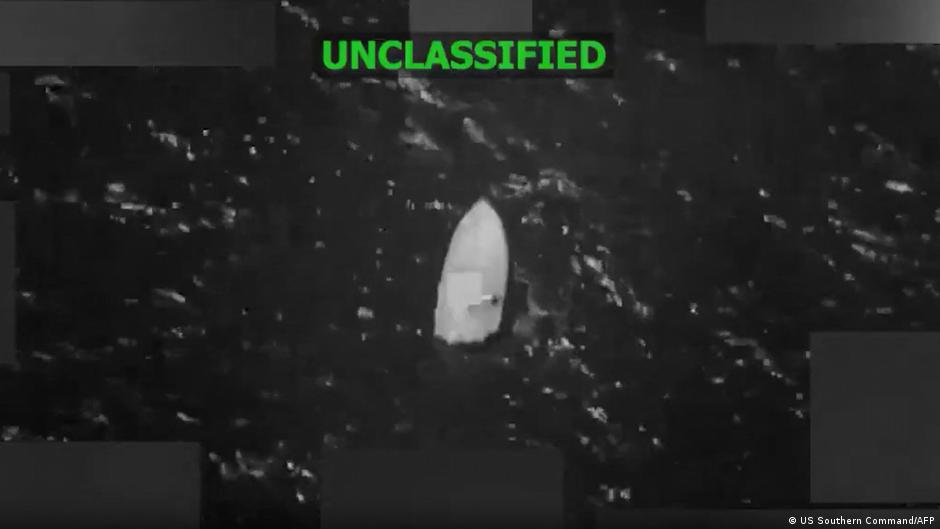
U.S. forces said they carried out a deadly strike on a speedboat in the Caribbean Sea that they said was transporting drugs, killing four people in the latest episode of a military campaign that has drawn international legal scrutiny and widened geopolitical risk in a region closely tied to U.S. consumers, trade routes and energy markets.
U.S. Southern Command said on Saturday, September 19, that American forces conducted what it described as a “lethal strike” against a fast-moving boat traveling along routes used for illegal drug transportation in the Caribbean Sea. The command said the vessel was linked to drug trafficking based on intelligence, and that four “narco-terrorists” were killed in the operation.
“Credible intelligence confirmed this vessel’s involvement in drug trafficking,” the military said, adding that four people were killed in the operation.
A video posted on X showed a moving vessel that then disappeared in a bright flash. The U.S. side did not present evidence proving the vessel’s involvement in drug trafficking.
For households, the immediate event may feel distant from everyday budgeting. But military activity in the Caribbean can still matter for consumers and small investors because the region sits near shipping lanes, energy infrastructure and currency-sensitive emerging markets. Even when direct economic effects are limited, repeated strikes can add a risk premium to markets already watching inflation, fuel prices and global security tensions.
Why Caribbean Security Matters for Wallets
The Caribbean is not only a law-enforcement theater. It is also part of the broader economic map that shapes U.S. consumer prices. Cargo routes, insurance costs, regional tourism flows and energy shipments can all be affected when investors and companies reassess security risks. A single strike is unlikely to change grocery bills or gas prices by itself, but a long-running campaign can contribute to the background uncertainty that businesses price into transport, insurance and planning.
That matters at a time when many households are already sensitive to small changes in living costs. Higher shipping or insurance costs, if they become persistent, can eventually show up in prices for imported goods. Energy markets can also react to perceived instability near key maritime corridors or oil-producing countries, even before any physical disruption occurs. For drivers and commuters, the channel to watch is not the strike itself but whether broader tensions push up crude oil or gasoline futures.
Currency markets may also absorb the risk. Caribbean and Latin American currencies can move when investors become more cautious about regional political and security conditions. For U.S. consumers, that can influence travel budgets, remittance values and the cost of imported goods. For everyday investors holding international funds, emerging-market bond funds or Latin America-focused exchange-traded funds, these events can become part of the volatility picture.
The Associated Press reported that, including this case, the total number of people killed in U.S. military strikes on vessels of suspected drug traffickers in the Caribbean Sea has reached at least 231. According to the agency’s count, 69 such strikes have been carried out as part of a campaign that has been under way for more than a year.
Those figures suggest the campaign is not an isolated enforcement action, but an ongoing military policy. That distinction matters for markets because investors tend to look beyond individual incidents and ask whether a pattern could shift diplomatic relations, trade conditions or budget priorities. Sustained operations may also raise questions about U.S. defense spending, border and drug policy, and the legal framework for using military force against alleged traffickers.
Legal Scrutiny Adds Policy Uncertainty
The campaign has already attracted criticism from international human rights officials. On October 31, 2025, Volker Türk, the United Nations High Commissioner for Human Rights, said U.S. attacks on vessels “allegedly linked to drug trafficking” violate international law. Türk called for immediate, independent and transparent investigations into the attacks.
That legal concern is not just a diplomatic issue. Policy uncertainty can influence markets when it raises the chance of court challenges, congressional scrutiny, sanctions disputes or changes in military posture. Investors often discount assets exposed to regions where legal or political risk is harder to model. For households, those effects are indirect, but they can surface through retirement accounts, mutual funds and exchange-traded funds with exposure to defense, energy, shipping, insurers or Latin American markets.
The White House has framed the campaign in stark terms. On October 23, 2025, at a press conference at the White House, U.S. President Donald Trump said American forces would “kill people” who bring drugs into the country from Venezuela. That statement placed the operations within a broader U.S. confrontation over narcotics flows and Venezuela, a country whose politics and oil sector have long been watched by energy traders.
For consumers, the personal-finance takeaway is not to overreact to a single headline. Household budgets should not be rewritten because of one reported strike. But people with exposure to fuel costs, international travel, remittances or emerging-market investments may want to follow whether the campaign escalates, whether legal challenges intensify, and whether regional governments respond in ways that affect trade or currencies.
Everyday investors should also be careful about assuming that defense or energy stocks automatically benefit from security headlines. Market reactions depend on scale, duration, policy response and whether tensions threaten actual supply chains. A measured approach means checking portfolio concentration, understanding whether funds hold Latin America or energy exposure, and avoiding short-term trades based on incomplete operational information.
The U.S. military says the latest strike targeted a drug-trafficking vessel. The available public material, including the video released on X, does not include proof presented by the U.S. side to establish the vessel’s involvement. That gap is likely to remain central to legal and diplomatic debate as the campaign continues, and it is one reason the issue belongs not only on foreign-policy pages but also on the radar of consumers and investors watching risk ripple through budgets and markets.



