US Expands Sanctions on Cuban Leadership, Intensifying Economic Pressure Amid Crisis
New US Treasury sanctions target Cuban President Diaz-Canel and Raul Castro's family amid deepening economic crisis and strained US-Cuba relations.
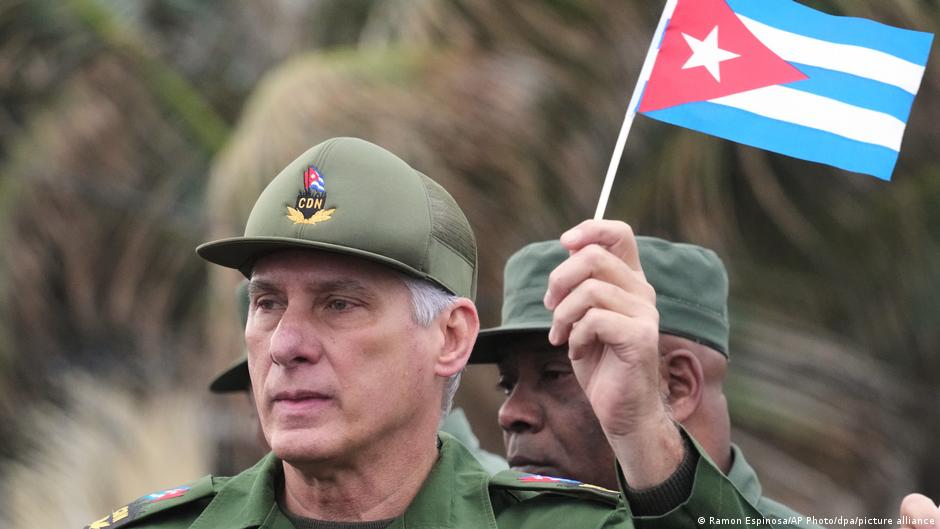
The United States has widened its sanctions against Cuba's leadership, extending measures to encompass President Miguel Diaz-Canel and several members of former leader Raul Castro's family. This move is part of an escalating strategy of economic pressure amid prolonged diplomatic tensions between Washington and Havana.
Impact on Cuban Economy and Households
Since July last year, the US State Department had already imposed sanctions on President Diaz-Canel. However, the new sanctions announced by the US Treasury on June 4 target not only the Cuban president but also his wife and stepson, as well as Raul Castro's son and one of his grandsons. These actions further intensify economic restrictions that compound the severe hardships faced by Cuban citizens.
Raul Castro, brother of revolutionary leader Fidel Castro and 95 years old, no longer holds official government positions but remains influential in key decision-making processes. Last month, the US formally accused him of involvement in the 1996 destruction of two civilian aircraft, which resulted in four fatalities.
These sanctions come amid Cuba's worst economic crisis since the Soviet Union's collapse. The island nation, located just 145 kilometers south of Florida, continues to suffer from frequent electricity outages and fuel shortages. The longstanding US embargo, in place since 1962, severely restricts trade and foreign investment, limiting the government's ability to stabilize the economy.
Moreover, in January, the US military detained Venezuelan President Nicolas Maduro and brought him to the US, leading to the cessation of Venezuela's oil exports to Cuba—Venezuela having been the main supplier of fuel to the island. This disruption has exacerbated Cuba's energy and economic challenges, directly affecting households by increasing the cost and scarcity of essential goods.
"The expanded sanctions deepen the economic strain on Cuban families already grappling with shortages and rising costs," said an economic analyst focusing on Caribbean markets.
For everyday Cuban consumers and small investors, these developments mean tighter budgets, constrained savings, and diminishing purchasing power. The limited availability of foreign currency and increasing inflation risk further eroding household financial stability.
US officials have framed these sanctions as part of a policy to pressure the Cuban government into political reforms. However, Cuban authorities accuse the US of seeking pretexts for military aggression against the island. US President Donald Trump has repeatedly threatened to "take control" of Cuba, further heightening geopolitical uncertainty.
The sanctions' ripple effects extend beyond Cuba's borders, influencing currency markets and remittance flows. Cuban-Americans and other diaspora communities may face increased difficulties sending money home, which is a vital source of income for many families on the island.
As Washington continues its campaign to isolate and financially strain Cuba's leadership, Cuban households bear the brunt of these policies. The ongoing crisis underscores the complex intersection of geopolitics and personal finance that shapes life for millions in Cuba.