US-Denmark Greenland Deal Raises Arctic Stakes With Budget Questions
Washington says the arrangement will cost US taxpayers nothing, but its wider impact could still reach household budgets, currencies and investors.
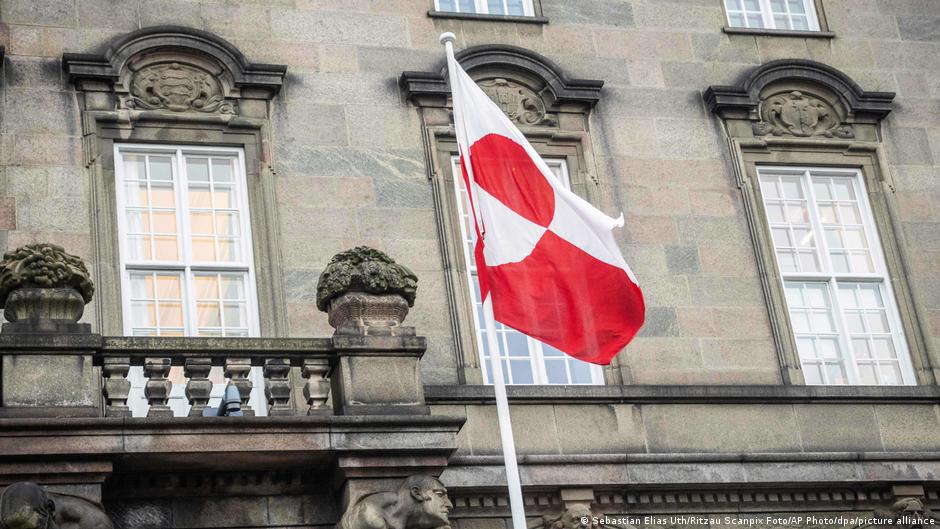
The United States has reached an agreement with Denmark and Greenland to expand the American military presence on the island, President Donald Trump said, presenting the arrangement as a major security breakthrough that would not add costs for US taxpayers.
In a post on Truth Social on Friday evening, September 18, Trump said the parties had reached understandings on the “security of Greenland.” According to the president, the agreement would give the United States “permanent control over security and all other needs in Greenland,” including an indefinite right to do what Washington considers necessary to secure and protect both the island and the United States.
For households and everyday investors, the immediate consumer impact is not a new tax bill or a direct spending package. Trump and Secretary of State Marco Rubio both stressed that the deal would come at no cost to Americans. But the announcement touches several areas that matter to personal finance: federal spending priorities, defense-sector investment, Arctic trade routes, rare earth resources, currency sentiment and the broader cost of geopolitical risk.
Trump said the United States would immediately begin expanding its military presence in several parts of Greenland. He also said that, without US approval, “opponents of the United States” would be unable to establish military bases in Greenland or make “sensitive investments” in the autonomous Danish territory.
Rubio called the Greenland arrangement a “huge victory” for the United States and Americans, saying it would secure US interests in the Arctic without cost to taxpayers.
Why Greenland Matters to Household Money
Greenland is not a traditional consumer-finance story, but the island sits at the intersection of security, resources and strategic infrastructure. Those factors can eventually influence prices, portfolios and currencies, even if the connection is indirect.
Military expansion can affect defense contractors and companies tied to infrastructure, logistics, energy systems and Arctic operations. Everyday investors with retirement accounts or index funds may already have exposure to those sectors. If Washington follows through with a larger presence, markets may look for clues about which firms could benefit from military construction, communications systems, transport and surveillance needs in the region.
The announcement also matters because Greenland is known to be rich in rare earth resources, a point repeatedly noted by officials close to Trump, according to the source article. Rare earths are used in electronics, clean-energy technology, defense systems and advanced manufacturing. Any shift in control, access or investment rules around Greenland could become relevant to supply chains that affect consumer goods, from smartphones to electric vehicles, as well as companies tied to mining and materials.
Trump argued that the deal was about US security. During his first term, he had said he wanted to buy Greenland. After returning to the White House, he increased pressure on Denmark and its European allies, even threatening them with large customs duties. Those tariff threats are important for consumers because tariffs can raise import costs and feed into retail prices, depending on how businesses absorb or pass along the expense.
Denmark and Greenland Welcome the Deal, With Caveats
The governments in Copenhagen and Nuuk welcomed the understandings with Washington. Danish Prime Minister Mette Frederiksen said the agreement would benefit NATO by strengthening “our common security in the Arctic and North Atlantic region.”
At the same time, the joint statement from Denmark and Greenland emphasized that the understandings recognize Denmark’s “sovereignty and territorial integrity” and “the right of the people of Greenland to self-determination.”
Greenland Prime Minister Jens-Frederik Nielsen said the agreement “ensures and strengthens the security of Greenland, the Kingdom of Denmark, the United States and the Western alliance.” He added that it also recognizes Greenland’s interests and the autonomous region’s place in international cooperation.
Those assurances matter politically and financially. For investors, the stability of the legal and diplomatic framework around Greenland will be important. Resource development, defense contracts and infrastructure projects all depend on whether the arrangement is viewed as durable, lawful and supported by the governments involved.
A Deal Announced, But Possibly Not Yet Signed
One important detail is that the statement presented by Nuuk and Copenhagen was titled as a press release on an “expected agreement” with the United States. That wording may indicate that the documents themselves have not yet been signed.
That caveat adds uncertainty. Under Trump, negotiations between various countries and Washington have repeatedly collapsed at the last moment, after which the White House was accused of trying to change the terms of agreements “at the last minute.” For markets and household financial planning, such uncertainty can matter because unresolved geopolitical deals can move currencies, commodities and sector-specific stocks before the details are final.
Rubio, in comments to Fox News Digital, described the Greenland deal as a major victory. He said it would “forever guarantee” US security interests in the Arctic without any cost to American taxpayers. He also said Denmark and Greenland understood the limits of their own defense capabilities.
“Denmark and Greenland understand that they do not have the necessary financial resources to defend Greenland in the event of an attack or threat. The United States has the necessary resources for this,” Rubio said, according to Fox News.
The message from Washington is that the United States can shoulder the security role without sending a bill to households. Still, consumers may want to watch whether future budget documents, defense appropriations or infrastructure contracts reflect new Greenland-related commitments. A deal described as cost-free can still have financial effects if it changes procurement, basing priorities or the allocation of existing funds.
What Everyday Investors Should Watch
The most immediate market signals are likely to come from defense, logistics, mining and rare earth companies, as well as firms connected to Arctic infrastructure. Currency markets may also monitor the diplomatic fallout among the United States, Denmark, Greenland and European allies, particularly if tariff threats return to the foreground.
For consumers, the key risk is not a sudden household charge. It is the possibility that Arctic security competition becomes another factor shaping government spending, trade tensions and supply-chain costs. If the agreement holds, it could strengthen the US strategic position in the Arctic. If it falters, it could add another source of volatility to transatlantic relations.
The deal may also mark the end of Trump’s years-long push for control over Greenland, an island located off the coast of North America but belonging to Denmark. Whether it becomes a settled security arrangement or another flashpoint will determine how much it matters beyond foreign policy and into the financial lives of ordinary Americans.



