U.S. Charges Russians in Terror Financing Case With Wider Market Implications
The New York indictment highlights how geopolitical security cases can ripple into household budgets, currencies and investor risk calculations.
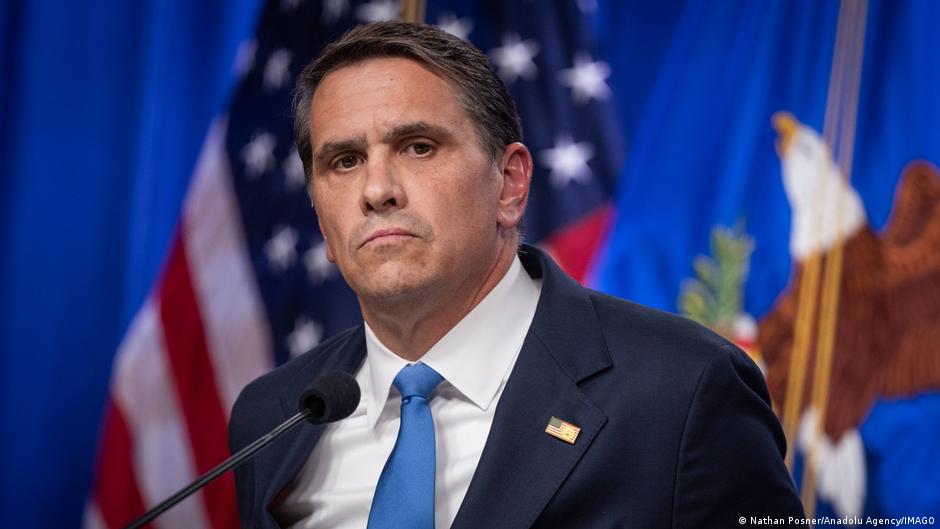
U.S. prosecutors have charged several Russian nationals and associates in the Southern District of New York with suspected terrorism financing and conspiracy to carry out contract killings around the world, including on U.S. soil, according to a Justice Department press release made public on Tuesday, September 15.
For households and everyday investors, the case is not only a national security story. It is another reminder that geopolitical risk can quickly become a financial variable, shaping currency sentiment, sanctions expectations, compliance costs for banks and the way savers think about exposure to global markets.
According to U.S. authorities, Yuri Khrameev and his son Kirill Khrameev worked for RIS Network, which prosecutors describe as a global network involved in organizing killings and operating in the United States. Prosecutors allege the network acted at the direction of Russian security services, financed attacks against countries allied with Ukraine, and prepared assassinations of Russian dissidents.
The indictment, summarized in the Justice Department release, says the accused paid people in the United States and other countries to conduct preliminary surveillance and carry out targeted killings. Prosecutors also allege they directed accomplices to commit and attempt terrorist attacks against civilian and military infrastructure in European countries that support Ukraine or are perceived as supporting it. The FBI took part in the investigation.
U.S. officials allege the defendants tried to recruit U.S. citizens and foreigners to carry out killings on behalf of the Kremlin.
John Eisenberg, the assistant attorney general for national security, said the accused attempted to recruit Americans and foreign nationals for murders commissioned by the Kremlin. ABC News, citing U.S. Attorney General Todd Blanche, reported that the charges also involve alleged attempts to murder an unnamed Russian dissident whom the defendants believed was in Washington, D.C.
Why A Security Case Matters To Personal Finance
Cases involving alleged state-linked networks often carry consequences beyond the courtroom. Even before any conviction, allegations of foreign-directed terrorism financing can increase scrutiny on cross-border transactions, banks, remittance channels and entities connected to sanctioned or high-risk jurisdictions. That can translate into more compliance checks, delayed payments, and higher costs for financial institutions that may ultimately be passed on to consumers.
For households, the most visible effects of geopolitical tension often appear indirectly: higher energy uncertainty, currency volatility, more expensive international transfers, and sudden changes in investor sentiment. A single indictment does not determine exchange rates or market direction. But allegations involving Russian security-linked activity, attacks in Europe and countries supporting Ukraine add to the risk backdrop that investors and central banks already monitor.
Currency markets are especially sensitive to geopolitical stress. The U.S. dollar often attracts demand in periods of international uncertainty, while regional currencies can weaken if investors perceive higher security or sanctions risks. For American consumers, a stronger dollar can make some imports or overseas travel cheaper, but it can also weigh on U.S. companies that earn revenue abroad. For households holding foreign assets, retirement funds or international equity funds, those currency moves can affect returns even when stock prices themselves have not changed much.
The case may also matter for savers with exposure to emerging-market funds, Europe-focused investments, defense stocks, energy companies or global banks. Those sectors can move when investors reassess security risks linked to the war in Ukraine and alleged Russian activity abroad. Everyday investors do not need to react to each indictment, but they do need to understand that geopolitical risk is part of portfolio risk, especially in diversified funds that hold international assets.
The Alleged Network And The Defendants
The Justice Department describes RIS Network as a unit of the Russian state apparatus involved in attacks abroad, including killings. According to U.S. authorities, the network has focused on Russian dissidents and defectors and, more recently, on countries considered allies of Ukraine.
Three of the accused are described by U.S. authorities as holding senior positions inside RIS Network. Yuri Khrameev, also known by the nickname Colonel Yuri, is identified as a former colonel in Russian security services who allegedly took part in recruiting multiple people for killings targeting Russian dissidents. His son, Kirill Khrameev, is described by U.S. prosecutors as an officer of Russia’s Federal Security Service, the FSB.
Another defendant, Oemis Romagoza Durruti, a Cuban national living in Russia, is suspected of coordinating attacks for the network. Also named among those suspected of recruiting people to carry out network assignments are Cuban national Yaidel Delgado Suarez, known by the nickname Viking, and Venezuelan citizen Angel Eduardo Castro.
U.S. authorities say the five named defendants face up to 20 years in prison on terrorism financing charges. Yuri Khrameev, Suarez and Castro are also charged with conspiracy to commit murder for hire, an offense carrying a potential sentence of up to 10 years. The defendants are currently wanted.
What Consumers And Investors Should Watch
For consumers, the direct legal question is whether prosecutors can prove the charges in court. For personal finance, the broader question is whether the case becomes part of a larger policy response. New sanctions, expanded financial blacklists, or tighter enforcement around Russia-linked transactions could affect banks, payment processors and companies doing business across borders.
Households with relatives abroad may see more friction in international payments if compliance filters tighten. Investors may see more volatility in companies tied to energy, European infrastructure, defense, cybersecurity and global banking. People with retirement accounts should remember that broad index funds may include foreign companies or U.S. multinationals exposed to currency and geopolitical shifts.
The practical response is not panic trading. It is checking concentration risk, understanding foreign exposure, and keeping emergency savings in a stable, accessible form. As the Ukraine-related security environment continues to affect policy and markets, personal finance decisions increasingly depend on understanding how geopolitical events travel through currencies, prices and portfolios.