United Russia Lead Points to Policy Continuity for Russian Households
With most ballots counted, the ruling party’s projected Duma dominance signals limited political change for consumers, savers and investors.
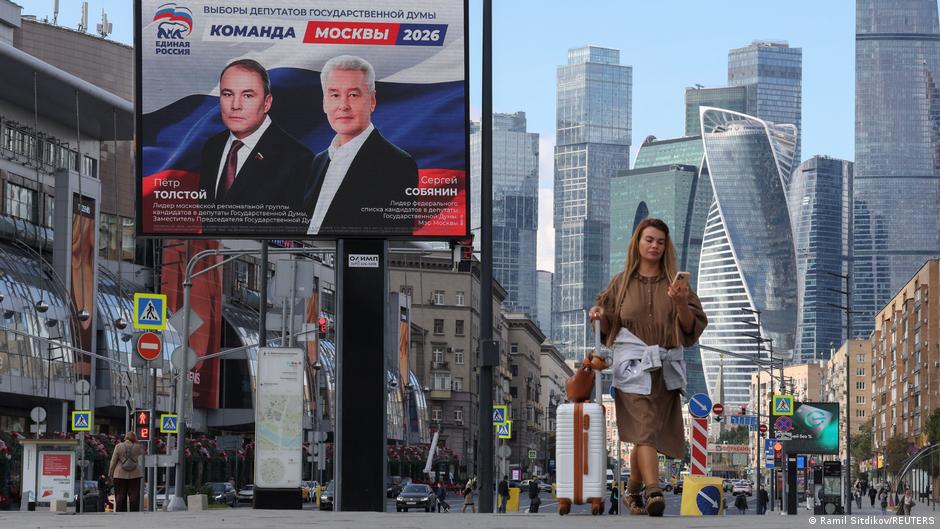
Russia’s ruling party, United Russia, is on course to win the country’s State Duma election, according to figures released by the Central Election Commission after 82.19 percent of protocols had been processed. The result points to a continuation of the policy environment that has shaped household finances, savings decisions and investor expectations in Russia.
United Russia was credited with 57.76 percent of the vote in elections to the ninth convocation of the State Duma, the lower house of parliament. The figures were reported by Russia’s Central Election Commission in the early hours of Monday, September 21, according to the Russian state news agency TASS.
The Communist Party of the Russian Federation was in second place with 13.89 percent. The Liberal Democratic Party of Russia followed with 8.77 percent, while New People had 7.97 percent. A Just Russia stood at 4.99 percent, meaning it was at risk of failing to clear the 5 percent threshold required for party-list representation, according to the commission’s data.
United Russia had 57.76 percent of the vote after 82.19 percent of protocols were processed, the Central Election Commission said.
For ordinary households, the immediate financial implication is less about a sudden market shock than about continuity. A large parliamentary majority for the governing party would reduce the likelihood of a sharp change in fiscal policy, social spending priorities or the broader regulatory stance affecting wages, pensions, benefits, utilities and consumer prices.
United Russia’s result, if confirmed in final tallies, would represent a stronger party-list performance than in the 2021 Duma election, when it received 49.82 percent of the vote. The party’s candidates were also leading in 208 of 225 single-mandate districts. On that basis, the party of power is expected to secure more than 301 seats in parliament, the number needed for a constitutional majority.
Why a Constitutional Majority Matters for Money Decisions
A constitutional majority matters for consumers and investors because it strengthens the ability of the governing party to pass legislation and amend core rules without depending heavily on opposition support. In practical household terms, that can influence tax rules, welfare policy, public-sector pay, pensions, banking regulation and measures aimed at supporting or restricting different parts of the economy.
For savers, the result suggests that expectations around the ruble, inflation management and domestic financial regulation will remain closely tied to the existing political course. Families holding savings in rubles, foreign currency or bank deposits are likely to interpret the vote as another signal that economic management will continue within the same institutional framework rather than pivoting toward a new political agenda.
Everyday investors may also read the outcome as a sign that sectors closely linked to state policy will remain central. Russian markets have long been sensitive not only to corporate earnings and commodity prices but also to sanctions risk, capital controls, budget spending and state-directed investment. A stronger governing majority could reinforce the role of political decisions in shaping returns for retail investors exposed to domestic equities, bonds or funds.
The election took place as Russia continued to face international criticism over its political environment. This round of three-day parliamentary voting was also held in territories of Ukraine occupied by Russia. The only major party that had opposed the war, Yabloko, was removed from the election. Germany and the European Union criticized the parliamentary elections in Russia, pointing to what they described as their staged character and to repression against the opposition.
Those political conditions are relevant to personal finance because geopolitical tensions and questions over legitimacy can feed directly into sanctions pressure, cross-border payment restrictions, currency volatility and the cost of imported goods. For households, such pressures can show up in everyday ways: higher prices for imported products, fewer available financial services, restricted investment choices and uncertainty over the future purchasing power of savings.
Consumer Impact Is Likely to Be Gradual
The reported results do not by themselves change a household budget overnight. Rent, grocery bills, loan payments and deposit rates are shaped by a wider set of forces, including inflation, wages, central bank policy, public spending and the exchange rate. But elections can still matter because they set the political boundaries within which those decisions are made.
If United Russia secures a constitutional majority, the government will have a clearer path to maintain or adjust programs affecting household income. That could include decisions on social transfers, regional funding, public-sector salaries and support for families, pensioners or other groups. The source figures do not specify any new measures, but the projected seat count indicates that the ruling party would have the parliamentary capacity to pass major legislation.
The position of smaller parties also matters. A Just Russia’s reported 4.99 percent leaves it close to the threshold, while New People’s 7.97 percent keeps it among the parties listed by the Central Election Commission as clearing that level at the point reported. The composition of the Duma can affect how consumer issues are debated, even when the governing party retains decisive control.
For Russian households, the key takeaway is that the election result points toward continued dominance by the current political establishment. That means the financial choices facing consumers, whether to hold ruble savings, seek currency diversification, delay major purchases, invest domestically or preserve cash, will continue to be shaped by the same broad political and economic risks already present before the vote.
Final results could still adjust the exact percentages and seat totals, but the figures released after 82.19 percent of protocols had been processed show a commanding lead for United Russia. For families and small investors, the most important question now is not only who controls the Duma, but how that control translates into policy on inflation, incomes, savings and the value of money in daily life.



