UN Peacekeeping Forces at 25-Year Low Amid Funding and Geopolitical Challenges
Declining UN peacekeeping personnel and funding deficits increasingly impact global stability and international financial commitments.
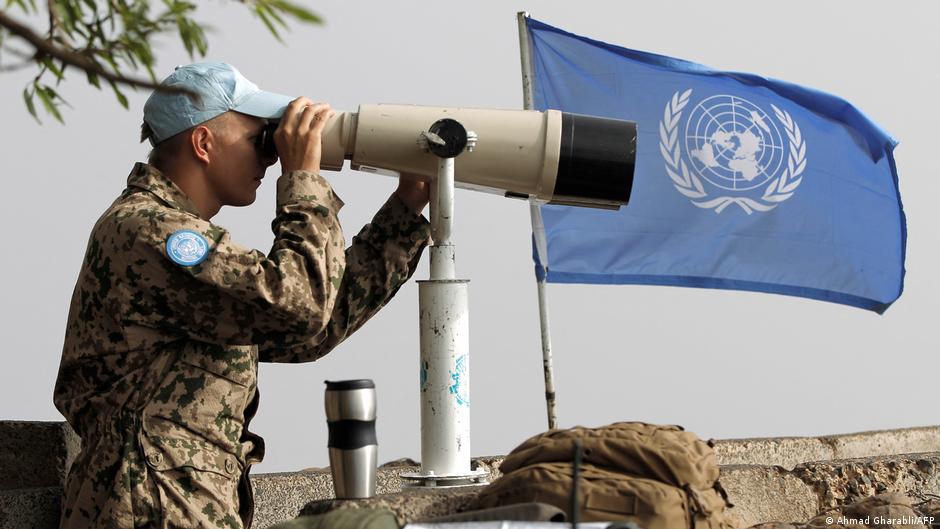
The number of United Nations peacekeepers worldwide has dropped to its lowest point in 25 years, highlighting significant challenges tied to geopolitical tensions and funding shortfalls. According to the latest report by the Stockholm International Peace Research Institute (SIPRI), the UN peacekeeping personnel count at the end of 2025 fell to 78,633, marking a 49% decrease since 2016 and the smallest deployment since 2000.
Financial Strain and Political Pressures Undermine Peacekeeping Operations
SIPRI experts attribute this decline to a decade-long trend exacerbated by intensified political pressures and a deepening financial crisis. The annual personnel reduction in 2025 alone was 17%, the steepest recorded in recent years. This contraction threatens the effectiveness of multilateral conflict resolution efforts and diminishes the role of institutions like the UN.
"If this development continues, we will see a dramatic weakening of multilateral conflict resolution efforts and near-total loss of relevance for institutions such as the UN," warns Yair van der Lijn, SIPRI's program director for peacekeeping operations and conflict resolution.
As a consequence, the number of conflicts globally may rise, with more devastating effects on civilian populations as states retreat from established norms.
Consequences for Household Budgets and Global Finance
While peacekeeping operations may appear distant from everyday financial concerns, their decline has tangible repercussions on household budgets and international financial stability. Many of the major contributors to UN peacekeeping funds are also key players in global markets and currency exchanges. Delayed or incomplete financial contributions—amounting to a $2 billion shortfall in 2025, representing 35% of the peacekeeping budget for 2024-2025—reflect strained government budgets that may subsequently affect currency valuations and investor confidence.
For households, this can translate into fluctuating exchange rates that impact the cost of imports and overseas travel, while governments facing budgetary pressures may adjust fiscal policies, potentially influencing interest rates and inflation. Additionally, reduced international stability can affect global economic growth projections, impacting retirement savings, investment portfolios, and consumer confidence worldwide.
Regional Implications and Ongoing Missions
Throughout 2025, 58 international peacekeeping operations were active across 34 countries or territories, down by four operations from the previous year. The majority of peacekeepers (73%) were concentrated in just five missions, primarily in sub-Saharan Africa. The reduction also included the suspension of the UN mission in Nagorno-Karabakh, highlighting the challenges of mandate renewals amid geopolitical contestation.
Regional organizations such as the African Union and the Economic Community of West African States (ECOWAS) have attempted to fill gaps left by UN force reductions but face similar funding and political obstacles, limiting their effectiveness. These challenges underscore the difficulty in sustaining peace operations crucial to regional security and economic stability.
The Urgent Need for Sustainable Funding and Political Commitment
SIPRI emphasizes that while international support for peacekeeping remains broadly stable, sustained and predictable financing coupled with political consensus is essential to maintain effective multilateral conflict resolution mechanisms. Without these, the global community risks a growing void in peacekeeping capacity that alternative regional efforts cannot adequately fill.
Claudia Pfeifer Cruz, senior researcher at SIPRI, notes, "As UN-led conflict resolution loses significance, an expanding gap emerges that alternative models cannot compensate for." However, she also stresses that the collapse of the multilateral crisis management system is not inevitable if states move beyond mere expressions of support to provide reliable funding and political frameworks for effective peacekeeping missions.
For everyday investors and consumers, these developments signal not only geopolitical instability but also a need to monitor how shifting international priorities may influence economic policies, currency markets, and investment environments globally.