Ukraine Team to Discuss Trump Envoys’ War Plan as Budget Risks Mount
Talks in the United States on October 9 and 10 could shape the financial pressure facing households, currencies and investors.
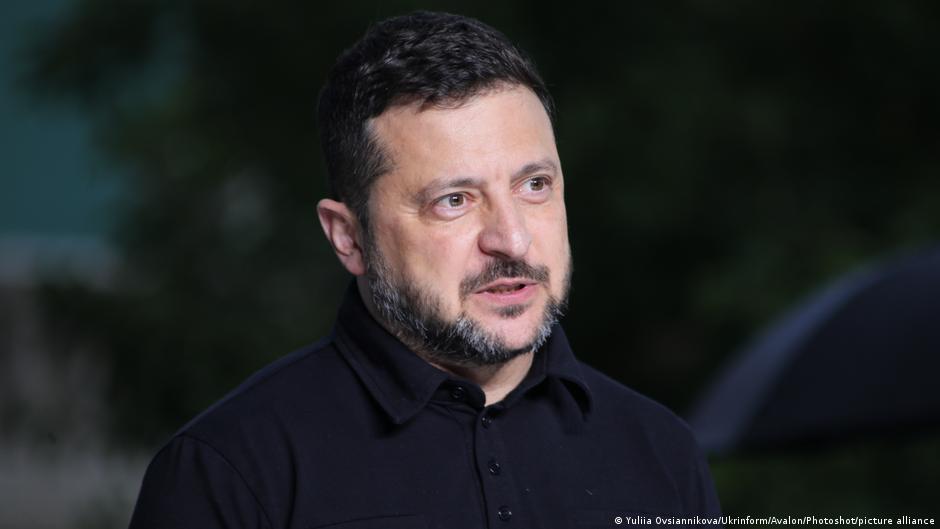
A Ukrainian delegation will hold talks in the United States on October 9 and 10 with special representatives of U.S. President Donald Trump over a new plan aimed at ending the war with Russia, according to Ukrainian President Volodymyr Zelensky.
Zelensky told journalists on Thursday, October 8, that the Ukrainian side would travel to the United States for discussions with Jared Kushner and Steve Witkoff. The talks come at a moment when the course of the war continues to carry direct consequences for household budgets, national currencies, energy costs, defense spending and the calculations of everyday investors watching geopolitical risk.
The Ukrainian delegation will include Kyrylo Budanov, head of the Office of the President; Serhiy Kyslytsia, deputy head of the Office of the President of Ukraine; Davyd Arakhamia, head of the Servant of the People faction in parliament; and Rustem Umerov, head of Ukraine’s Foreign Intelligence Service. Zelensky also said that a European side may join the negotiations.
According to the Ukrainian service of Voice of America, citing a senior U.S. official, the meeting will focus on a new proposal that covers all aspects of the conflict and is intended to bring the war to an end.
Why the Talks Matter for Wallets and Markets
For consumers and investors, the importance of any diplomatic track lies not only in battlefield outcomes but also in the economic chain reaction the war has produced. Prolonged fighting keeps pressure on government budgets, defense allocations, borrowing needs and regional risk premiums. It also affects expectations for currencies and savings, especially in economies closely exposed to Ukraine, Russia, European energy flows and U.S. policy decisions.
A credible path toward ending the war could influence market expectations around reconstruction, sanctions, security commitments and trade. At the same time, a failed process or signs of deeper stalemate could reinforce uncertainty. For households, that uncertainty often shows up indirectly: through inflation expectations, fuel and electricity costs, exchange-rate swings, food prices, and the interest-rate environment shaped by central banks responding to geopolitical stress.
Everyday investors do not need to trade directly in Ukrainian or Russian assets to feel the impact. Global portfolios can be affected through energy companies, defense stocks, agricultural commodities, European banks, emerging-market funds and currencies. A diplomatic proposal that is described as covering “all aspects” of the conflict may therefore draw attention well beyond foreign-policy circles.
Zelensky Pushes Back Against Talk of a Deadlock
The planned discussions follow remarks by U.S. Secretary of State Marco Rubio, who said in an interview with the Greek newspaper Kathimerini that the war in Ukraine had reached a deadlock and that, in his view, there were no prospects for settling the conflict through negotiations.
Zelensky criticized Rubio’s position on October 8, arguing that describing the situation as a diplomatic impasse was inconsistent with pursuing future economic arrangements with Russia.
“We are not in a diplomatic deadlock,” Zelensky said, calling for tougher economic pressure on Russia and sanctions on its weapons.
The Ukrainian leader said it was not possible, on one hand, to negotiate with Russia about future economic projects while, on the other, saying the sides were stuck in a political and diplomatic dead end. He urged partners to close off Russia’s economy, stop feeding it through sales, and impose sanctions on Russian weapons.
For investors, those comments point to one of the central financial questions surrounding the war: whether future diplomacy would ease sanctions risk or intensify it. Sanctions can reshape commodity flows, supply chains, insurance costs and financing channels. They can also affect corporate exposure for companies doing business in or around sanctioned sectors.
Starlink, Air Power and Digital Infrastructure
Zelensky also called on the United States to allow Ukraine to use Starlink over Russian territory. He said such permission would help Ukraine “dominate” in the air and eventually force Russian President Vladimir Putin to sit down at the negotiating table.
The request highlights how digital infrastructure has become part of the financial and military landscape of the war. Satellite communications, data centers and connectivity platforms are no longer just technology-sector issues; they influence battlefield capability, corporate continuity, cybersecurity planning and investor perceptions of resilience.
Zelensky said Ukraine is responding in kind to Russian strikes, including attacks on data centers. He stated that Russia had struck and continued to strike Ukrainian data centers, and that Ukraine had answered, though he said he could not provide all details.
Ukraine’s armed forces struck a Yandex data center in the city of Sasovo in Russia’s Ryazan region with drones during the night of October 8. A fire broke out, and the data center completely stopped operating. No one was injured.
The reported strike adds another layer to the consumer and investor angle. Data centers support cloud services, business operations, digital payments, communications and artificial intelligence infrastructure. When such facilities become targets, markets may reassess operational risks for technology providers and the broader digital economy in conflict-adjacent regions.
For households, the immediate question is less about any single data center and more about the broader direction of the war. If the new U.S.-based talks produce momentum, financial markets may begin to price in a different path for risk, reconstruction and regional stability. If they do not, consumers may continue to face the budget effects of a long war through higher public spending burdens, currency volatility and persistent pressure on everyday costs.