Ukraine Sanctions Russian Vote Organizers as War Politics Reach Wallets
Kyiv’s measures against 44 people tied to Russian Duma voting in occupied regions add another sanctions signal for households, savers and investors.
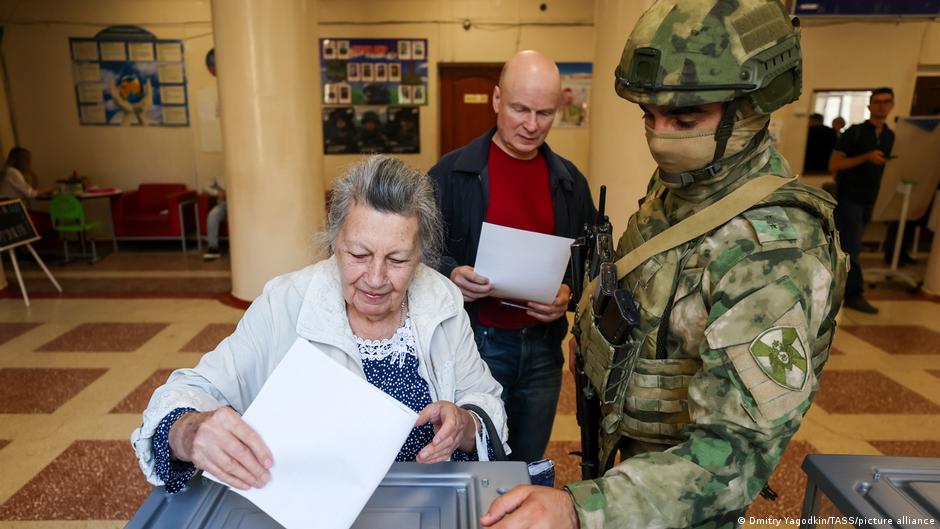
Ukrainian President Volodymyr Zelensky has imposed sanctions on individuals involved in organizing Russian State Duma elections in occupied Ukrainian territories, adding a fresh political and financial pressure point to a war that continues to shape household budgets, savings decisions and currency risks across the region.
The measures, announced on Saturday, September 27, target 44 people connected to the conduct of the Russian parliamentary vote in occupied areas. According to the Office of the President of Ukraine, 38 of those sanctioned hold both Ukrainian and Russian citizenship. Ukrainian officials said some of the individuals had already been “elected” as so-called deputies of illegally formed local councils on temporarily occupied Ukrainian territory.
For consumers and everyday investors, sanctions of this kind matter beyond the formal legal language. They are part of the wider economic architecture of the war: restrictions on individuals, political actors and financial activity can affect banking access, asset movement, business ties and perceptions of risk. Even when measures are directed at a relatively narrow list of people, they signal where governments may draw financial red lines and where future restrictions could follow.
Russia held the State Duma elections from September 18 to 20. For the first time in parliamentary elections, Russian authorities organized voting in occupied parts of Ukraine’s Kherson, Zaporizhzhia, Donetsk and Luhansk regions. Ukraine and Kyiv’s Western allies have recognized the process and its results as illegal.
Ukraine and its Western allies have recognized the voting process and its results as illegal.
The European Union has also said it is ready to impose sanctions on people who helped conduct the vote in occupied Ukrainian territories. That prospect matters for anyone exposed to cross-border transactions, remittances, securities, business counterparties or currency volatility tied to the region. EU measures can widen the practical impact of Ukrainian sanctions by increasing compliance risks for banks, brokers and companies that operate internationally.
Why sanctions matter for household finances
Sanctions are often discussed as geopolitical tools, but their consequences can land in everyday financial life. When governments expand sanctions lists, financial institutions typically increase screening of payments, customers and counterparties. For households, that can mean more scrutiny of transfers involving affected regions, delays in transactions, or additional caution by banks handling accounts linked to sanctioned individuals or territories.
For savers, the broader issue is uncertainty. War-related sanctions can influence expectations around currencies, inflation and capital controls. Ukrainian households, Russian households and families with relatives across borders may all face a more complicated financial environment when political developments reshape access to banking channels and hard currency. Everyday investors also watch sanctions because they can affect market sentiment toward regional assets, companies with exposure to sanctioned areas, and the perceived safety of doing business with certain jurisdictions.
The Ukrainian sanctions were introduced after Russia, for the 2026 State Duma elections, created separate single-mandate districts for Ukrainian regions occupied after 2022. Russian authorities declared several candidates elected in those districts. In the so-called “DNR,” Russia announced the election of First Channel war correspondent Irina Kuksenkova and Alexander Borodai, the former “head” of the self-proclaimed republic. In the so-called “LNR,” Russia declared local parliament “deputies” Denis Kolesnikov and Ivan Sanayev elected.
In occupied parts of Zaporizhzhia region, Russia announced Alexei Tikhomirov as elected, while in occupied Kherson region it announced Elena Dmitruk, described as a deputy chair of the local parliament. All of these candidates ran for United Russia.
In addition to the single-mandate winners, eight more representatives of the “authorities” in occupied Ukrainian territories entered Russia’s State Duma through federal party lists. Among them is Serhiy Arbuzov, a former first deputy prime minister of Ukraine under President Viktor Yanukovych and former head of the National Bank of Ukraine, who was nominated by the party A Just Russia.
Investor risk and currency caution
The immediate sanctions list is specific, but the financial signal is broader. Investors typically read sanctions announcements as markers of legal and reputational risk. If the EU follows through with its own listings, that would add another layer of restrictions for European financial institutions and firms, potentially narrowing the channels through which sanctioned individuals or related entities can move money or maintain commercial relationships.
For households, the most direct lesson is not to speculate on political headlines, but to understand that sanctions can change the rules around money quickly. Families with savings in multiple currencies, relatives in Ukraine or Russia, or financial links to occupied territories may need to pay closer attention to bank compliance notices and official sanctions updates. The same applies to small businesses that rely on payments, suppliers or customers connected to the region.
Kyiv’s move also reinforces the continuing divide between Russia’s attempt to incorporate occupied territories into its political system and Ukraine’s rejection of that process as illegal. That dispute is not only diplomatic. It feeds directly into sanctions policy, which in turn affects financial systems, investment risk and the cost of uncertainty borne by ordinary households.
For consumers already dealing with higher living costs and currency swings linked to the war, the latest sanctions are another reminder that geopolitical decisions can have practical financial consequences. The names on a sanctions list may be political figures, but the effects of sanctions policy are often felt through banks, exchange rates, market confidence and the everyday difficulty of planning around a conflict with no simple financial boundary.



