Ukraine Attack Raises Fresh Budget Risks for Households and Investors
Kyiv says 28 people were killed in a Russian missile and drone barrage that struck homes and renewed scrutiny of sanctions, oil revenue and financial pressure.
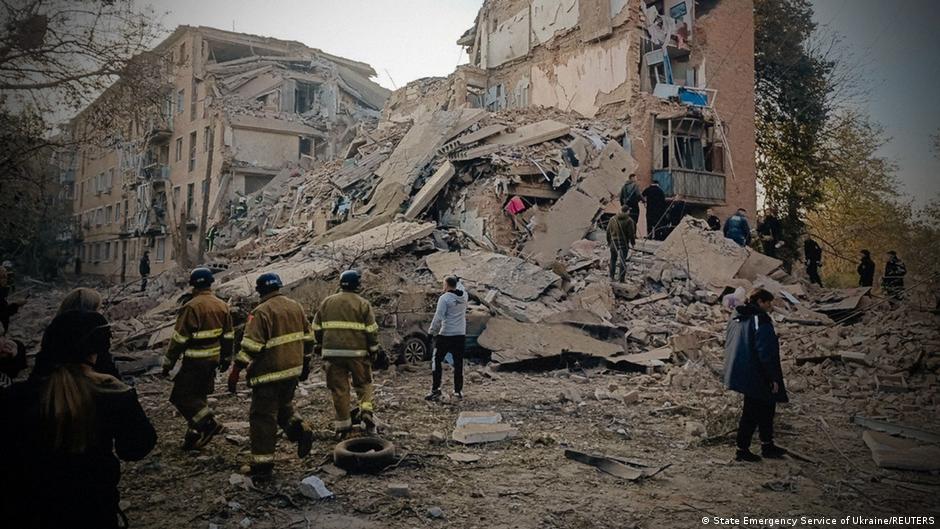
Ukraine reported 28 deaths after a large-scale Russian attack using missiles and drones, a strike that underscored not only the human cost of the war but also the financial pressures facing households, savers and everyday investors across Europe.
Interior Minister Ivan Vyhovskyi said the attack by Russian forces killed 28 people in Ukraine. In a Telegram post on the evening of Wednesday, October 7, he said emergency workers and police had pulled people from rubble, evacuated residents from damaged buildings and rescued people from fire. According to Vyhovskyi, 29 people were saved in those operations.
The cleanup was still continuing more than 14 hours later in Pryluky, where a missile hit a residential apartment building, the minister said. The city, in the Chernihiv region, became one of the clearest examples of how the war is landing directly on civilian households: homes destroyed, families displaced and local emergency services stretched for many hours after the strike.
President Volodymyr Zelensky said later the same evening that 100 people were wounded in the attacks. He described the strike as a combined assault involving many ballistic missiles, many cruise missiles and Shahed drones. Zelensky said additional attacks by Shahed drones and aerial bombs followed during the day.
“The strike was combined: many ballistic missiles, many cruise missiles, Shaheds,” Zelensky said, according to his Telegram post.
The president linked the assault to what he called Russia’s broader drive toward escalation. He said it was important that leaders not remain silent about what happened and about what, in his view, Russia intends to keep doing: escalating, killing and shelling. Zelensky said Russian President Vladimir Putin does not feel that such actions are creating problems for him.
Why the Financial Angle Matters
For households in Ukraine, the financial impact of such attacks is immediate and severe. A missile strike on an apartment building can erase a family’s largest asset in seconds, while also forcing spending on temporary shelter, transport, medical care and replacement of basic goods. Even where lives are saved, the budget damage can be lasting.
The source account did not provide estimates of property losses, insurance coverage or reconstruction costs. But the details it did provide point to the everyday economic burden of war: rescuers working through rubble, people evacuated from destroyed buildings and a large number of wounded requiring care after a single day of attacks.
Vyhovskyi said 20 people were killed in Pryluky, including five children. Three of those children were one year old, according to his figures. Earlier, Vyacheslav Chaus, head of the Chernihiv regional military administration, had reported more than 50 people injured as a result of the attack.
For consumers outside Ukraine, the financial relevance lies in the war’s continuing effect on energy, currencies, public budgets and market sentiment. Zelensky explicitly tied the conflict to Russia’s ability to sell oil and earn in dollars and euros. In his remarks, he argued that weakening sanctions and signals about lifting sanctions on oligarchs send Moscow a message that the war is being normalized.
Zelensky said Putin can still sell oil and that, when he counts profits in dollars and euros, the war still pays off and remains advantageous for him. That claim framed the assault not only as a military event but as a sanctions and revenue question with consequences for European consumers and investors.
For households, energy prices are one of the most visible channels through which geopolitical shocks show up in personal finances. Oil and fuel costs can affect commuting expenses, heating bills, food distribution and the broader cost of goods. The article does not state that this specific attack moved prices, but Zelensky’s comments focused attention on the financial flows that, in Ukraine’s view, continue to support Russia’s war effort.
Currency risk is another concern for ordinary savers and investors. War-related shocks can influence confidence in regional assets, demand for safer currencies and expectations for government spending. The source article did not report movements in exchange rates or markets after the attack, but the scale of the barrage and Zelensky’s appeal to Europe and the Western world placed the event in a broader financial and political context.
Sanctions, Oil Revenue and Everyday Investors
Zelensky described the issue as a problem not only for Ukraine and its people, but for everyone in Europe and the Western world. His argument was that sanctions policy, oil revenue and the perceived cost of escalation are connected. If Moscow can continue to earn hard currency, he suggested, then the financial incentives behind the war remain intact.
That message is relevant for everyday investors watching defense spending, energy exposure, inflation-sensitive assets and European political risk. The war has repeatedly forced households and portfolios to think about issues that once felt remote: sanctions compliance, oil markets, reconstruction costs, government borrowing and the resilience of local infrastructure.
According to Zelensky, Russian forces attacked 13 regions of Ukraine on October 7 using 70 missiles, including many ballistic missiles, as well as Shahed drones. The scale of that attack points to the continuing risk that the conflict can disrupt civilian life and public finances across a wide area in a single day.
The most immediate losses remain personal and local. Families in Pryluky and other affected regions are dealing with deaths, injuries and ruined homes. Emergency services continued to work through debris long after the strike, while officials updated the casualty figures and described the weapons used.
For Money Desk readers, the broader takeaway is that the war’s financial consequences are inseparable from its civilian toll. Household budgets, public spending, energy costs, sanctions policy and investment risk all sit in the shadow of attacks like the one Ukraine described on October 7. The figures reported by Ukrainian officials show a day of heavy casualties, while Zelensky’s comments pointed to the money flows he says allow the war to continue.



