Trump Says Putin Wants Ukraine Peace Deal More Than Zelensky, Stirring Market Focus
The U.S. president’s comments on an energy ceasefire dispute put renewed attention on fuel prices, currency risk and household costs.
U.S. President Donald Trump said Russian President Vladimir Putin is more interested in reaching a peace agreement over Ukraine than Ukrainian President Vladimir Zelensky, a statement that immediately places the war’s energy dimension back at the center of household and investor concerns.
Trump made the comments while answering reporters’ questions late Monday night, ahead of Tuesday, October 13. Asked about Russia’s alleged violation of an energy ceasefire in the war against Ukraine, the U.S. president said the situation first needed to be examined because, in his view, “there were violations on both sides.”
For families and everyday investors, the exchange matters because the war has repeatedly shown how quickly military developments around energy infrastructure can feed into utility bills, fuel costs, inflation expectations and currency volatility. A credible energy truce could ease pressure on European power markets and reduce some geopolitical risk. A failed or disputed ceasefire, by contrast, keeps households exposed to higher heating and electricity costs and leaves savings vulnerable to market swings.
“I really think Putin is more interested than Zelensky in making a deal,” Trump said in response to a reporter’s question.
Energy Ceasefire Claims Carry Household Stakes
The comments followed questions about Trump’s own earlier statement that attacks on energy facilities in the Russia-Ukraine war would stop immediately. Ukrainian officials have challenged that picture, saying Russia did not follow through.
One reporter asked Trump what exactly made him see Putin as ready for compromise if Russia continued attacking Ukraine. Trump replied that he thought the sides would reach an agreement and said he believed Putin wanted a deal more than Zelensky did.
When pressed on Russia’s violation of the energy truce that Trump had announced, the U.S. president said the matter needed to be studied first, adding that violations had occurred on both sides. Asked how he intended to get the Russian president to observe the energy ceasefire, Trump said he believed Putin wanted an agreement and that Zelensky needed to be persuaded to go along with it.
That framing is significant for consumers because energy infrastructure is not an abstract battlefield target. Damage to power plants, grids and heating systems can tighten regional supply, complicate repairs before winter and keep risk premiums embedded in energy prices. Even outside Ukraine, investors may respond to renewed uncertainty by moving money into perceived safe assets, affecting exchange rates and the cost of imported goods.
For U.S. households, the direct impact is less immediate than in Ukraine or neighboring European countries, but the channels are familiar: oil and gas prices, global grain and fertilizer markets, shipping insurance, defense spending expectations and foreign-exchange moves. A stronger dollar can make imports cheaper for Americans but strain global markets; a shock to energy prices can work the other way, feeding inflation and squeezing discretionary budgets.
Zelensky Calls for U.S. Pressure on Russia
Zelensky had earlier urged the United States to influence Russia so that it would begin observing a ceasefire regime in the energy sector. Speaking at the Warsaw Security Forum, the Ukrainian president said Kyiv was waiting to see what concrete steps the Americans were prepared to take.
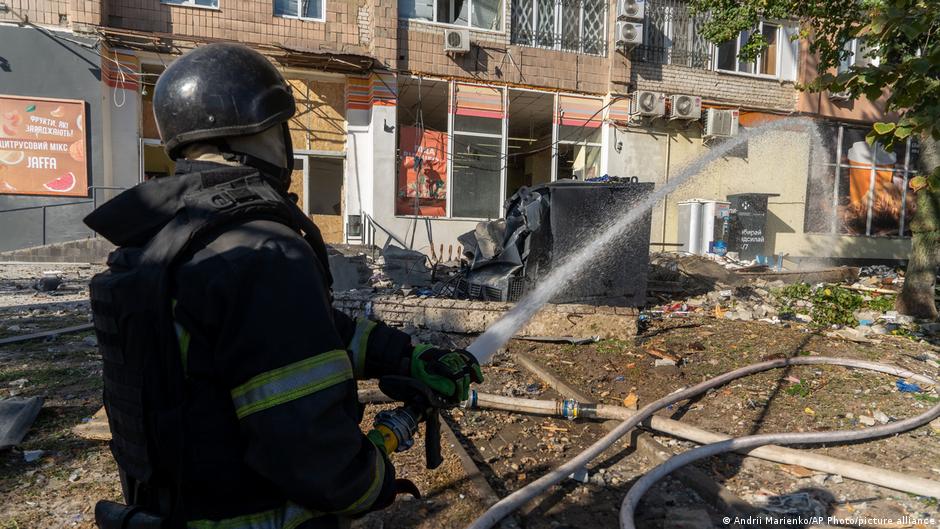
According to Zelensky, Kyiv was very surprised on October 11 by social media reports saying that all attacks on energy facilities in the Russia-Ukraine war would be stopped immediately. He said that directly after the publication of that statement, Russia struck a thermal power plant in Kharkiv, causing further damage to Ukraine’s energy system.
In a Telegram post on the evening of October 12, Zelensky said Ukraine had supported the energy ceasefire and described Kyiv’s position as completely clear. Ukraine, he wrote, was ready to guarantee an energy ceasefire as announced by the U.S. president, while Russia needed to take corresponding steps. Zelensky said that, at that moment, there was no recorded implementation by Russia of the conditions stated by the U.S. president.
He added that much depended on the U.S. position if de-escalation was to work, saying pressure on Russia was necessary and that talks with the American side were continuing at all levels.
For personal finance readers, the key point is that diplomatic language can have practical consequences. If markets interpret Washington as softening pressure on Moscow, risk calculations around European energy supply may change. If investors instead see the United States moving toward stronger enforcement of an energy ceasefire, that could reduce some uncertainty, though it would not automatically remove the broader war premium from energy and currency markets.
Households should also watch how the dispute affects inflation expectations. Energy prices influence transportation, food production and manufacturing costs, which can filter into grocery bills and consumer goods. Central banks pay attention to such pressures because persistent energy shocks can complicate interest-rate decisions, shaping mortgage costs, credit card rates and returns on cash savings.
Everyday investors may see the political statements reflected in familiar assets: energy stocks, European equities, defense shares, the dollar, the euro, gold and government bonds. The source article does not report market moves, and none should be assumed from the comments alone. Still, the dispute over whether an energy ceasefire exists, and who is responsible for breaches, is the kind of geopolitical uncertainty that can quickly influence trading sentiment.
For now, Trump’s remarks leave a contested picture. The U.S. president says he believes Putin wants a deal and suggests violations of the energy truce occurred on both sides. Zelensky says Ukraine backed the energy ceasefire, that Russia has not met the conditions announced by Trump, and that U.S. pressure is needed for de-escalation to work.
Until there is clearer evidence that attacks on energy facilities have stopped, consumers and investors have reason to remain alert. The war’s energy front continues to connect distant military decisions with ordinary financial questions: what families pay to heat homes, how much they spend on fuel and food, and how stable their savings feel in a market shaped by war and diplomacy.