Swiss Voters Reject Sanctions Curbs, Keeping Policy Flexibility Intact
The referendum result preserves Switzerland’s room to align with EU sanctions, a choice with implications for savers, firms and currency markets.
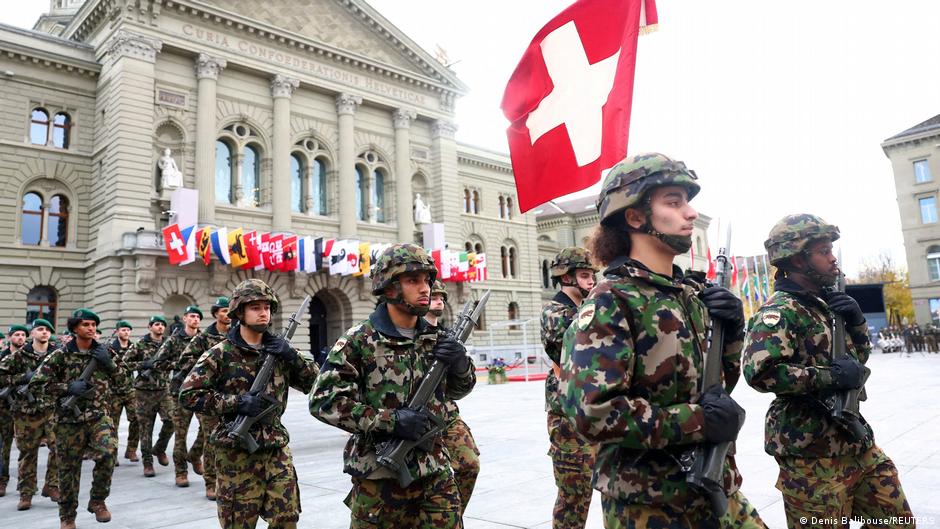
Swiss voters have rejected a proposal that would have sharply limited the country’s ability to impose sanctions unless they were approved by the United Nations Security Council, leaving the government with continued flexibility over measures that can affect banks, exporters, investors and the broader financial climate.
According to official results published on the Swiss government’s website on Sunday, September 27, 70.15 percent of voters opposed the initiative. The measure sought a stricter interpretation of Switzerland’s political neutrality, including a far-reaching restriction on sanctions against countries at war.
For households and everyday investors, the vote matters because Swiss neutrality is not only a diplomatic principle. It is also part of the country’s economic identity, shaping confidence in the Swiss franc, expectations around banking policy and the way Swiss companies operate in global markets. A constitutional change limiting sanctions could have created a more rigid foreign-policy framework at a time when geopolitical decisions increasingly intersect with household budgets, trade costs and investment risk.
Why the sanctions question matters for wallets
The initiative, titled “Preserving Swiss Neutrality,” was put forward by the group Pro Schweiz, which is close to the right-conservative Swiss People’s Party. Its supporters argued that although neutrality is enshrined in the Swiss Constitution, the government had weakened the principle of non-intervention by joining European Union sanctions against Russia over the war in Ukraine.
The proposal would have written the principle of “permanent and armed” neutrality into the constitution. It also sought to prohibit Switzerland from joining or cooperating with military alliances, such as NATO, except in cases where Switzerland itself came under attack. Most significant for economic policy, it would have introduced a broad ban on sanctions, allowing the government to impose economic measures only after approval by the UN Security Council.
That would have been a major constraint. Sanctions can influence the movement of capital, the compliance burden on banks, the risk calculations of investors and the operations of companies with exposure to sanctioned countries. Even when households are not directly involved in cross-border finance, they can feel the effects indirectly through market volatility, pension-fund performance, business costs and currency movements.
The Swiss franc is often treated by global investors as a haven currency. Political decisions that alter Switzerland’s perceived reliability, alignment with partners or ability to respond to international crises can become part of the market narrative around the currency. By rejecting the proposal, voters kept the existing approach in place rather than forcing a narrower sanctions policy into the constitution.
Swiss Foreign Minister Ignazio Cassis argued during televised debates that neutrality has always been applied with a degree of “flexibility.”
Cassis said neutrality should not be equated with “indifference.” In his view, Switzerland should not close its eyes to violations of international law in order to protect its own interests or preserve peace. That argument framed the vote as a question not only of foreign policy, but also of how Switzerland balances principle, security and economic pragmatism.
A broad political defeat for the initiative
With the exception of the Swiss People’s Party, all major political forces in the country opposed the initiative. The scale of the rejection suggests that most voters were unwilling to bind the government to a more restrictive sanctions framework, especially one dependent on UN Security Council approval.
For consumers, that political consensus may reduce uncertainty. Had the initiative passed, businesses and financial institutions would have had to adjust to a constitutional rule that could put Switzerland on a different sanctions track from many European partners. That kind of divergence can raise compliance questions for banks, insurers, exporters and investors, all of which can eventually feed into costs borne by households.
The outcome does not create new sanctions by itself. Nor does it change the fact that Switzerland remains formally neutral. Instead, it preserves the current interpretation, under which the government can apply neutrality with flexibility and decide whether to align with sanctions regimes such as those imposed by the European Union.
That distinction is important for individual investors watching geopolitical risk. Swiss assets are often viewed through the lens of stability, but stability does not mean policy paralysis. The referendum confirms that voters were not prepared to block the government from using economic sanctions as a tool except in cases approved by the UN Security Council.
For households with savings in Swiss francs, pension exposure to global markets or investments in Swiss-listed companies, the immediate impact is more about continuity than disruption. The vote reduces the risk of a sudden constitutional shift in sanctions policy, while leaving broader pressures from the war in Ukraine, energy markets and international trade unresolved.
Food security proposal also rejected
Swiss voters also rejected a separate food security initiative by more than 70 percent. Supporters had proposed increasing the share of food produced domestically to at least 70 percent of consumption, raising production of plant-based products, reducing the use of plant protection products and fertilizers, and strengthening protection for drinking water, soil fertility and biodiversity.
That proposal also carried a consumer-finance angle. A higher domestic production target and tighter environmental rules could have affected farming costs, food supply chains and prices at the checkout. The rejection leaves current policy in place rather than imposing the proposed production and environmental requirements through the initiative.
Taken together, the referendum results show Swiss voters choosing continuity over constitutional tightening in two areas that touch daily economic life: the country’s stance toward sanctions and the rules shaping food production. For families, savers and small investors, the message is that Switzerland’s existing policy flexibility remains intact, even as geopolitical and cost-of-living pressures continue to test household budgets.



