Serbian Unrest Raises Concerns Over Economic Stability and Household Finances
Anti-government protests in Serbia disrupt daily life, affecting savings, currency stability, and consumer confidence.
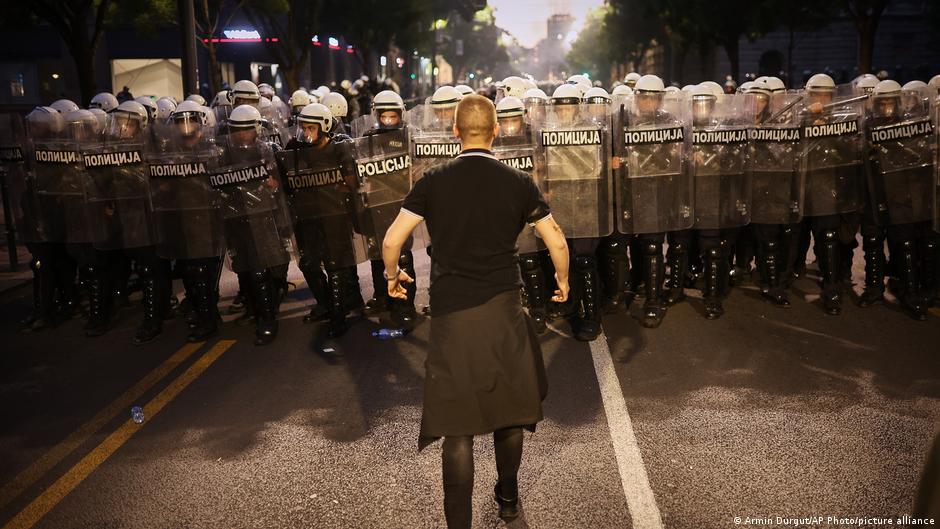
Recent anti-government protests in Serbia, which escalated into violent clashes in Belgrade, are reverberating beyond the political sphere to impact everyday financial stability and household budgets across the country. The unrest followed a series of demonstrations sparked by concerns about government corruption and infrastructure failures, affecting consumer confidence and the local currency's stability.
Economic Impact of Protests on Serbian Households
The protests erupted near Pionirski Park in central Belgrade, where thousands of university students and their supporters gathered. With police deploying tear gas and sound grenades against protesters wielding homemade explosives and projectiles, the situation quickly escalated. Authorities detained 23 individuals after the clashes, and tensions remain high.
Beyond the immediate social unrest, these events have significant implications for Serbia’s economy and the financial wellbeing of its citizens. The disruptions in transportation, including the cancellation of all trains to and from Belgrade by the national railway company, have impeded business operations and daily commutes, directly affecting household incomes and expenses.
“Attacks on law enforcement are criminal offenses, and those responsible will be held accountable,” declared the Belgrade prosecutor’s office, emphasizing the government's stance amid ongoing turmoil.
The protests, which began in November 2024 following a deadly construction failure at a railway station that killed 16 people, have underscored public frustrations with perceived corruption and mismanagement. These grievances have prompted demands for political change, but also injected uncertainty into the economic environment.
Currency Volatility and Inflation Concerns
Economic analysts warn that prolonged instability could pressure the Serbian dinar, leading to currency volatility. This scenario would increase the cost of imports and exacerbate inflation, eroding household savings and purchasing power. For many Serbian families already struggling with tight budgets, this could mean higher prices for everyday goods and services.
Moreover, the uncertainty around the timing of parliamentary elections and political leadership further complicates financial planning for individuals and businesses alike. President Aleksandar Vučić has affirmed that elections will proceed in 2026 despite calls for earlier polls, yet the political landscape remains unsettled.
Implications for Everyday Investors and Consumers
The unrest comes at a time when many Serbians are cautious about their financial futures. Consumer confidence, a key driver of economic growth, is vulnerable to disruption from political crises. Savings rates may be affected as households prioritize liquidity to navigate uncertain times.
For everyday investors, the protests and resultant economic instability could translate into increased market volatility and risk. Those with exposure to local equities or government bonds may see fluctuations linked to political developments and public sentiment.
In summary, while the protests have primarily targeted political grievances, the cascading effects touch upon economic stability, household budgets, and the broader financial ecosystem. Serbian citizens face a challenging period ahead, balancing civic engagement with managing their personal finances amid ongoing uncertainty.