Serbia Election Uncertainty Raises Stakes for Household Finances
A mass opposition rally and tight polling have put political stability, consumer confidence and everyday investors in focus before Sunday’s vote.
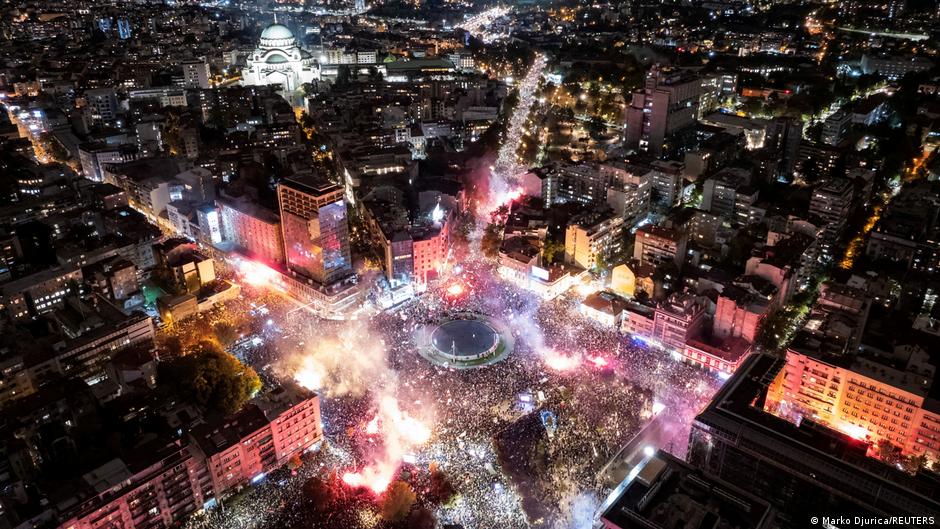
About 150,000 people gathered in Belgrade ahead of Serbia’s snap parliamentary election, according to organizers, as a closely contested vote raises questions about political stability and the financial outlook for Serbian households, savers and small investors.
Supporters of the Serbian opposition staged the demonstration in the capital on Thursday, October 22, in advance of the parliamentary election scheduled for October 25. The reported attendance figure was cited by AFP.
Demonstrators called for an end to the rule of Aleksandar Vučić, who has held the presidency since 2014 and intends to remain in power despite announcing that he would resign. Protesters also urged voters to support the Student List, a movement that emerged during a wave of student-led demonstrations and has since become a significant political force.
For consumers, the immediate issue is uncertainty. The source does not identify any specific tax, spending, interest-rate or currency proposals from the competing groups. Yet a tight election and the possibility of a change in the balance of power can affect household sentiment, decisions on major purchases and the willingness of individuals to commit savings to local investments. The vote’s financial consequences will ultimately depend on the policies and governing arrangements that follow it.
Tragedy and corruption claims reshaped the political contest
The early election follows nearly two years of protests sparked by a deadly incident at the railway station in Novi Sad in November 2024. A canopy at the station collapsed after the facility had been renovated only shortly beforehand, killing 16 people.
Serbia’s independent media and opposition identified corruption as one of the main causes of the tragedy. The allegation helped fuel large demonstrations in which students became the principal driving force. The Student List grew out of that protest movement.
The Student List is asking voters to replace conventional political representation with scientists, activists and public figures.
The movement has no clear leader, and its election candidates will not include professional politicians. Instead, students want academics, activists and other public figures to represent them. That unconventional structure could appeal to voters seeking institutional change, although it also gives households and markets fewer familiar political figures through whom to assess the movement’s prospective economic approach.
Most Serbian opposition parties have withdrawn from the race and called on voters to support the students, consolidating much of the anti-government vote behind the Student List.
Tight polling increases uncertainty for savers and investors
A poll by the New Serbian Political Thought project, published on October 20, indicated that the Student List could finish ahead of Vučić’s Serbian Progressive Party, or SNS. The survey put support for the Student List at 44.5%, compared with 42.7% for the SNS.
An equivalent poll in early October recorded 44.4% support for the Student List and 41.7% for the governing party. The figures suggest that the student movement’s backing remained broadly steady while support for the SNS increased by one percentage point between the two surveys.
Such a narrow gap leaves uncertainty over the composition and durability of the next government. For everyday investors, the key considerations after the ballots are counted will include whether a stable administration can be formed and whether the result points to continuity or a broader shift in economic governance. Currency holders and savers may likewise watch for any changes in confidence, though the polling alone does not establish that the election will move Serbia’s currency or financial markets.
Vučić seeks a return to the premiership
Vučić’s resignation has been one of the students’ central demands since protests began in 2024. He has repeatedly said that he would take that step, but in practice he intends to change offices rather than leave power: on October 25, he will seek the position of prime minister.
An SNS victory would therefore keep Vučić in power. Under Serbia’s Constitution, the prime minister has broader formal authority than the president, although Vučić became the most prominent face of the governing forces during his presidency.
He previously served as prime minister from 2014 to 2017, leaving the post after winning the presidential election. Representatives of his party have continuously held the premiership since then.
For household finances, the election’s importance lies less in the title Vučić holds than in whether the result produces continuity, a transfer of power or a period of political deadlock. Families managing monthly budgets, savings and investments will need to distinguish between short-term political uncertainty and any concrete policy changes announced by the government that emerges from the vote.



