Saudi Missile Interception Adds New Pressure on Oil Routes and Household Costs
The reported Houthi attempt to strike Riyadh highlights risks to fuel prices, shipping costs and investor exposure to energy volatility.
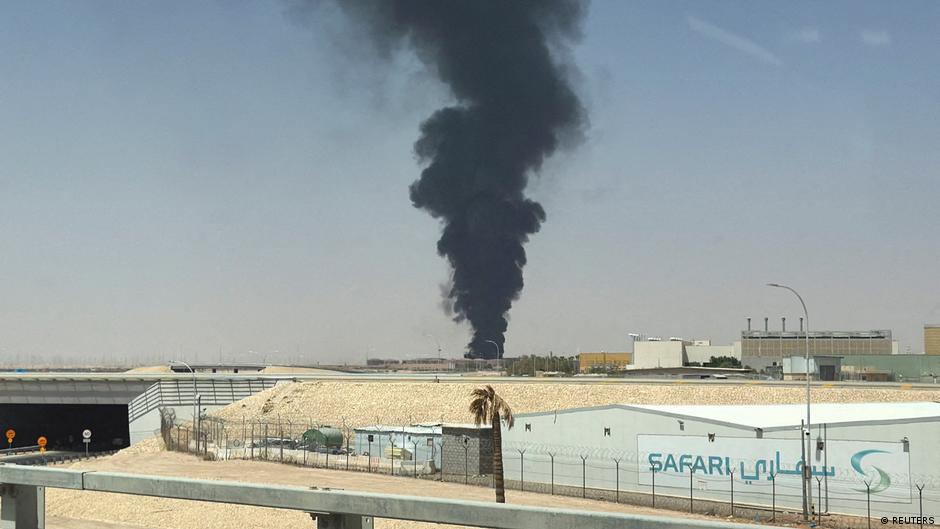
Saudi Arabia said Yemen’s Iran-aligned Houthi rebels attempted to strike Riyadh with a ballistic missile, an escalation that matters well beyond the battlefield because of what it could mean for oil flows, fuel bills and consumer prices.
Air raid sirens sounded overnight in the Saudi capital, and some residents heard an explosion. The Saudi-led Coalition to Restore Legitimacy in Yemen said on Saturday, September 19, that the missile was “intercepted and destroyed,” according to coalition spokesman Brig. Gen. Turki al-Maliki, who posted the statement on X. Saudi authorities reported no casualties or damage.
The Houthis, however, said they had used drones, cruise missiles and ballistic missiles to strike “important facilities” in Riyadh and Aramco infrastructure in Yanbu, the Red Sea port that has become even more important for Saudi exports as security risks have grown around regional shipping lanes.
For households, the immediate question is not only whether the attack caused damage, but whether repeated disruption raises the cost of moving energy to global markets. Even when missiles are intercepted, oil traders, airlines, shipping companies and refiners respond to perceived risk. Those costs can filter through to gasoline, diesel, heating bills, airfares and the price of goods moved by sea and road.
Why Yanbu Matters for Consumers
After the start of the U.S. and Israeli war with Iran, tanker passage through the Strait of Hormuz became significantly more difficult. Saudi Arabia increased exports through the East-West pipeline, which ends at Yanbu, giving the kingdom an alternative route to move crude toward the Red Sea.
That alternative is now under pressure. On September 11, the Financial Times reported that Saudi Arabia had halted operations on the East-West pipeline after a drone attack launched from Iraqi territory. On September 18, Bloomberg reported that Saudi Aramco had notified at least two European refineries that it would not supply them with oil in October. According to Bloomberg, the pipeline was expected to be partially restarted within days and fully restored within about a month and a half.
The source of the overnight smoke seen near Riyadh airport was not immediately clear. AFP, citing its correspondent, reported that a fuel tank belonging to Saudi Aramco had caught fire and that the blaze was extinguished. It remained unclear whether that incident was connected to the attempted missile strike. Aramco did not respond to journalists’ request for comment.
Saudi authorities also said the Houthis tried to attack civilian infrastructure, including sites in Yanbu, but that those attempts were thwarted. That pattern is important for consumers because the Red Sea route has become a pressure point for oil markets at a time when energy supplies are already being rerouted away from more dangerous chokepoints.
Even intercepted attacks can raise the market price of risk when they target routes tied to fuel, freight and refinery supply.
Budget Risks: Fuel, Food and Freight
For families, the most visible impact of oil-route instability usually appears first at the pump. Crude oil prices are only one part of retail gasoline costs, but when supply reliability is questioned, refiners and distributors can face higher input costs, insurance expenses and logistical complications.
Those pressures can also spread to groceries and household goods. About 12% of global cargo traffic passes through the Bab el-Mandeb Strait, which connects the Red Sea with the Arabian Sea and is a major route for oil trade. On September 11, Reuters and AFP reported that the Houthis had captured strategically important islands in that strait. The Houthis said shipping through Bab el-Mandeb was “safe for all commercial vessels except Saudi ones.”
That distinction may not reassure consumers. If insurers, shipowners or energy companies see heightened risks to Saudi-linked cargo, they may adjust routes, premiums or delivery plans. Longer routes and higher insurance costs can raise freight expenses, and those expenses can eventually be embedded in retail prices.
The situation is especially sensitive because the Strait of Hormuz has already become harder for tankers to use. After the narrowing of that route, Bab el-Mandeb and Yanbu gained strategic importance for Saudi Arabia. Any threat to those alternatives reduces flexibility in the global energy system.
In recent weeks, the route’s capacity has declined because of Houthi attacks on Saudi tankers in the Red Sea. In August, around 2.5 million barrels a day were shipped through Yanbu, the lowest level since 2013, according to the International Energy Agency.
What Everyday Investors Should Watch
For investors with retirement accounts, index funds or energy holdings, the key issue is volatility. Oil shocks can lift shares of some producers while weighing on airlines, transport companies, chemical firms and retailers that depend on predictable fuel and shipping costs. Currency markets can also react when energy import bills rise for consumer economies or when investors seek safer assets during geopolitical stress.
The latest reported missile attempt follows other claims and counterclaims. On September 16, the Saudi-led coalition said the Houthis attacked Mecca, a holy city for Muslims, with a drone that was shot down on approach. The Yemeni rebels denied the accusation. Reuters has also reported that the Houthis took control of the port of Mokha on Yemen’s coast along the Bab el-Mandeb Strait. According to Reuters, the Houthi advance is being directed by Iran’s Islamic Revolutionary Guard Corps. Sources in Tehran say Iran is seeking to open a new front in its confrontation with the United States.
For consumers and savers, the practical takeaway is that Middle East security risk is again tied directly to household finance. A single intercepted missile may not change monthly budgets by itself. But repeated attacks on oil infrastructure, pipelines, ports and shipping lanes can make energy prices less predictable, complicate refinery supply, and keep inflation-sensitive costs elevated.
Households do not need to trade oil futures to feel the effects. The link can run through gasoline receipts, airline tickets, delivery charges, utility bills and portfolio swings. As Saudi Arabia works to restore pipeline capacity and protect Red Sea export routes, everyday investors will be watching whether this remains a contained security incident or becomes another source of pressure on global prices.



