Russia’s Three-Day Duma Vote Opens With Risks for Markets and Households
The parliamentary election comes amid war, occupied-territory voting and scrutiny over procedures that could affect confidence in Russia’s economy.
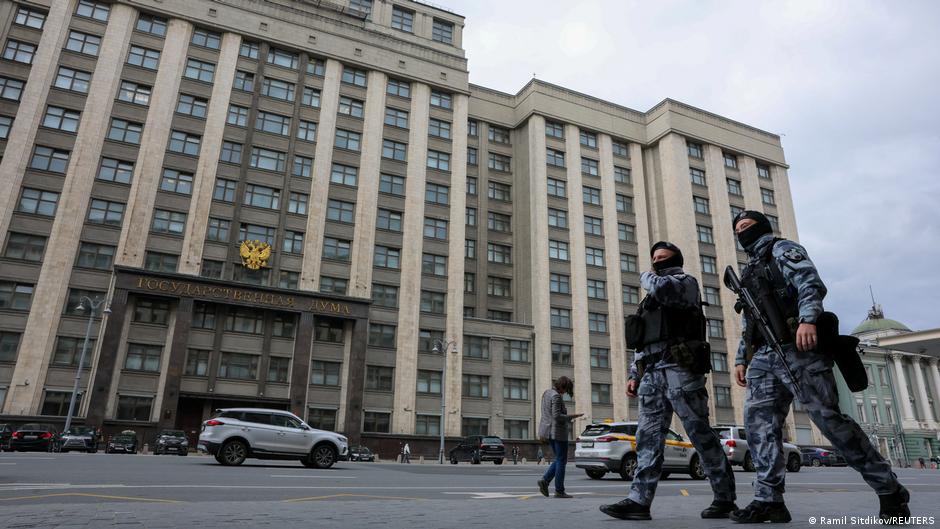
Russia officially opened three days of voting for the State Duma on Friday, September 18, beginning at 8:00 a.m. local time in the country’s eastern regions of Kamchatka and Chukotka. Polling stations across Russia are set to remain open until 8:00 p.m. local time each day, with voting scheduled to continue through September 20.
For Russian households, savers and everyday investors, the election is more than a political event. The composition of the lower house of parliament will shape the formal backdrop for fiscal decisions, public spending priorities, regulation and the broader policy environment in which families manage wages, savings, debt and exposure to the ruble. While the source article does not cite market moves or economic forecasts, the vote is taking place in a context defined by the ongoing war in Ukraine, voting in Russian-occupied territories, and questions over the transparency of the electoral process.
The new State Duma will have 450 deputies. Half are expected to be chosen in single-mandate districts, where voters select an individual candidate. The other 225 seats will be distributed through party lists. Ten parties appear on the party-list ballot after Yabloko, a party that had consistently criticized the war, was removed from participation on formal grounds. Some Yabloko candidates remain in the race in single-mandate districts in several Russian regions.
Why the Vote Matters for Household Finances
In a personal-finance context, parliamentary elections can matter because lawmakers approve budgets, taxes, social spending and parts of the regulatory framework that affect consumers. In Russia’s case, the practical financial significance is tied to a wartime economy in which state priorities, sanctions pressure, currency stability and household purchasing power are closely watched by families and investors.
The article notes that none of the ten parties represented in the 2026 State Duma election has condemned the continuing war in Ukraine. That means voters are not being offered a party-list option that directly challenges the central policy environment shaping many of Russia’s financial pressures. For households, this narrows the range of electoral outcomes that might signal a different direction on public spending, sanctions exposure or the war-related burden on the economy.
Previous State Duma elections were held in 2021. This time, the vote has been expanded to Russian-occupied territories of Ukraine. According to representatives of various Russian structures cited in the source, participants in Russia’s full-scale invasion of Ukraine and residents of regions occupied by Russia voted early from late August through September 17.
That extension of voting into occupied areas adds another layer of uncertainty for observers assessing the legitimacy and verifiability of the results. For investors and savers, uncertainty around institutions can feed into broader questions about the predictability of policy. Even when households are not trading securities directly, confidence in institutions can affect decisions such as whether to hold savings in rubles, foreign currency, cash, bank deposits or hard assets.
Questions Over Verification
Observers cited in the source article say that even setting aside the question of the legitimacy of voting in occupied regions, Russia’s Central Election Commission organized the process there in a way that makes the results almost impossible to verify. Authorities did not publish information about members of regional election commissions or the addresses of polling stations, and open video monitoring was not organized. The use of portable ballot boxes was also permitted.
The Central Election Commission also allowed local election commissions, when necessary, to print ballots on site and not immediately transfer them to higher-level bodies after counting. These details matter because election administration is part of the broader governance picture watched by domestic and foreign analysts when judging the reliability of state institutions.
Observers say the voting arrangements in occupied regions make the results practically impossible to verify.
Before the election began, pro-government media resources in Russia began circulating videos suggesting that footage of fraud or ballot stuffing at polling stations could be generated by artificial intelligence. Ella Pamfilova, the chair of Russia’s Central Election Commission, also said such technologies could allegedly replace live images from polling stations in real time.
For ordinary consumers, the immediate link between artificial intelligence claims and household budgets may seem distant. But allegations and counter-allegations over election footage can influence public trust, which is a key ingredient in financial behavior. People deciding how much to save, how much to spend, or whether to move money into another currency often respond not only to official rates and prices, but also to their assessment of stability and credibility.
Opposition Strategy and Limited Choices
The removal of Yabloko from party lists is one of the central political facts in the article. Although the party was initially admitted to the election, it was later barred on formal grounds. Individual Yabloko members continue to participate as single-mandate candidates, but some later faced pressure and removals from the race on various grounds, often linked to old photos and social media posts, including mentions of Alexei Navalny.
Shortly before the vote, opposition figures Yulia Navalnaya and Maxim Katz urged Russians to vote for the strongest single-mandate candidates who are not members of United Russia. Yabloko criticized that idea and instead advised voters to spoil their ballots.
For citizens looking at the election through a financial lens, the key issue is whether the vote produces any meaningful shift in the governing environment that affects incomes, savings and investment choices. The structure described in the source suggests limited formal space for anti-war political representation on party lists, while the single-mandate races remain a focal point for tactical voting debates.
The election will run through September 20, with polling stations closing at different times according to local time zones. As results emerge, households and small investors will be watching less for campaign promises than for signs of continuity or change in the policies that affect inflation, the ruble, bank savings, consumer confidence and Russia’s broader economic isolation.



