Russian Strikes Deepen Costs for Ukrainian Households and Businesses
Fatal attacks, damaged homes, power cuts and a factory shutdown are adding to the financial strain facing Ukrainian families and workers.
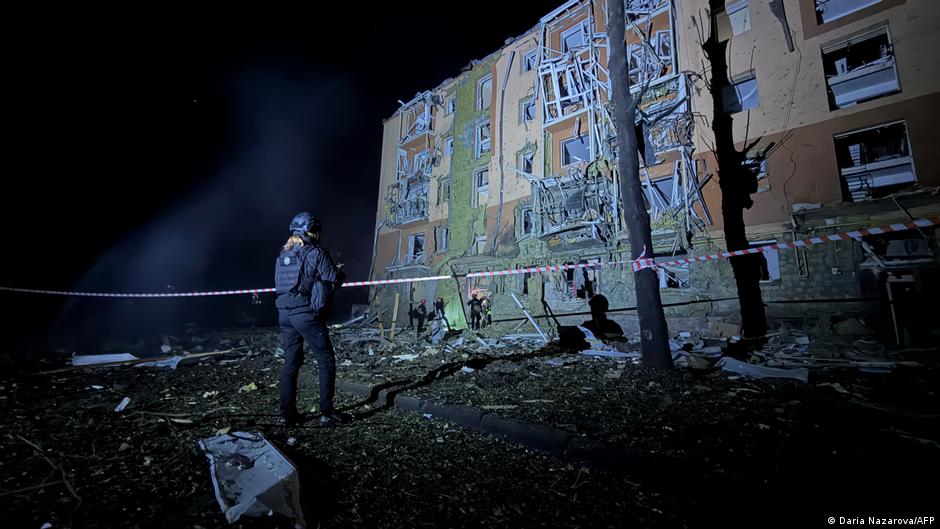
Russian drone and missile attacks across several Ukrainian regions late on Saturday, October 17, and overnight into October 18 killed two people, injured others and damaged homes and critical infrastructure, according to local authorities.
Beyond the immediate human toll, the strikes created fresh financial pressure for households already contending with the costs of war. Damage to private residences can leave families facing urgent spending on repairs or temporary accommodation, while unstable electricity supplies disrupt heating, refrigeration, communications and the ability of many people to work from home.
One person was killed and four others were injured in an evening drone attack on Poltava, regional military administration head Vitaliy Diakivnych wrote on Telegram. Four private homes were damaged in the city, along with another five houses in the Tereshky rural community.
For the affected homeowners, the destruction represents a direct blow to household wealth. Residential property is often a family’s most valuable asset, and wartime damage can force residents to redirect savings toward emergency repairs, replacement furnishings and basic necessities. Even households whose homes remain intact can incur additional expenses when local services are interrupted.
Power disruptions raise everyday costs
In Zaporizhzhia, a drone struck a multistorey residential building overnight, regional military administration head Mykhailo Semikin said. A 27-year-old woman was killed, and another woman was injured.
Three people were injured in Russian ballistic missile strikes on two districts of Kharkiv on Saturday evening, according to Mayor Ihor Terekhov. The head of the Kharkiv regional military administration said two men, aged 66 and 42, were wounded in the Slobidskyi district and taken to hospital. A 26-year-old woman was injured in the city’s Osnovianskyi district.
Medical treatment, travel to hospitals and time away from employment can compound the economic impact on injured residents and their relatives, even where public assistance is available. Such costs are especially difficult for households with limited cash reserves or income that depends on uninterrupted daily work.
In the Vinnytsia region, the attack damaged critical infrastructure and triggered emergency electricity outages, regional military administration head Nataliia Zabolotna said on Telegram.
“In the near future, the situation with electricity supply will remain unstable,” she said.
Power instability carries practical consequences for family budgets. Residents may need to spend more on batteries, charging services, alternative lighting or backup power. Small shops and self-employed workers can also lose revenue when payment terminals, machinery or internet connections are unavailable. Repeated outages may spoil refrigerated food, creating another unplanned expense for consumers and retailers.
In the Chernihiv district, 19,000 customers were left without electricity following the evening strikes, representatives of regional power supplier Chernihivoblenergo said. Critical infrastructure in Dnipro was also attacked, according to regional military administration head Oleksandr Hanzha.
The incidents underline how attacks on energy networks spread financial damage beyond the sites that are directly hit. Large outages can affect thousands of household budgets at once, interrupting wages, retail activity and essential services. They also increase uncertainty for savers and everyday investors, who must plan around war-related risks to employment, property and business operations.
Factory suspension puts incomes and supply chains at risk
In Lutsk, a plant operated by German company Kromberg & Schubert suspended operations after a strike. The facility produces electrical wiring systems for vehicles.
A shutdown at an industrial employer can affect workers through lost shifts or uncertainty over future pay, while suppliers and nearby businesses may experience weaker demand. Because the plant makes components for the automotive sector, any prolonged interruption could also weigh on production schedules elsewhere in the supply chain, although no estimate of the disruption’s duration or financial impact was provided.
Russia’s Defence Ministry said the plant was targeted because it was used for the “repair of automotive equipment in the interests of the Armed Forces of Ukraine.”
For consumers, the latest attacks reinforce the need to preserve accessible emergency funds where possible and to prepare for interruptions to power, work and transport. They also highlight risks that can influence confidence in local businesses and the Ukrainian currency. No specific currency movement or quantified economic loss was reported in connection with the attacks, but damage to housing, utilities and manufacturing adds to the broader burden borne by families, employers and public services.



