Russia Labels StopTime Musicians ‘Foreign Agents,’ Raising Financial Risks
The designation adds financial and administrative pressures for singer Naoko and guitarist Alexander Orlov after they left Russia.
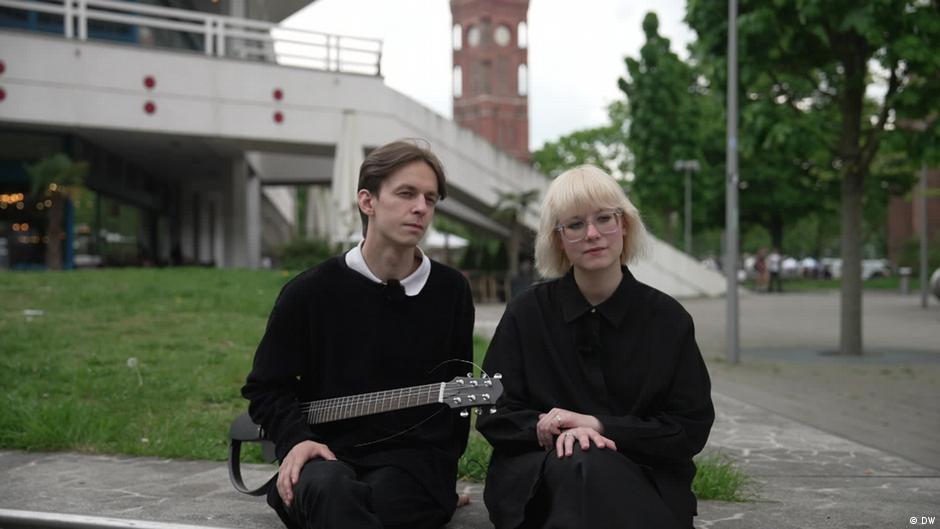
Russia’s Ministry of Justice has added two members of the street music group StopTime to its register of “foreign agents,” a designation that can carry significant administrative and financial consequences. The musicians are 19-year-old vocalist Diana Loginova, who performs under the name Naoko, and her husband, 23-year-old guitarist Alexander Orlov.
The decision was published on the ministry’s website on Friday, October 16, exactly one year after the musicians received their first administrative detention. Loginova and Orlov subsequently left Russia after a series of consecutive arrests.
For households, savers and everyday investors, the case illustrates how political and regulatory decisions can create immediate personal-finance pressures. A formal designation may affect the practical management of income, contracts and routine payments, while legal representation, relocation and compliance obligations can add costs. The source article does not disclose the musicians’ earnings, savings or specific financial arrangements.
Ministry cites anti-war position and music-related activity
In its explanation, the Justice Ministry said Loginova had opposed the war in Ukraine, disseminated what the authorities described as false information about Russian government decisions and policies, and interacted with people designated as “foreign agents.” The ministry alleged that Orlov had, among other things, actively participated in distributing materials with an anti-Russian orientation.
The designation came exactly one year after Loginova, Orlov and then-drummer Vladislav Leontyev received their first administrative detention.
The ministry also added the movement Malinovy Klin — Independent Kuban to the register on October 16. The authorities claimed that the organization had, among other activities, called for a violation of Russia’s territorial integrity.
StopTime began performing on the streets of St. Petersburg in spring 2025. Until January 2026, the group also included drummer Vladislav Leontyev. Its concerts were announced on social media and featured songs by Noize MC, Monetochka, Zemfira and the band Pornofilmy. Russia’s Justice Ministry has designated all of those performers as “foreign agents.”
At one performance in October 2025, StopTime played Noize MC’s song “Swan Lake Cooperative.” A St. Petersburg court had ruled in May that the song constituted information prohibited in Russia.
Detentions preceded departure from Russia
The musicians’ first administrative case concerned a concert near the Ploshchad Vosstaniya metro station. Police said 70 people attended. Loginova, Orlov and Leontyev were found guilty of organizing a mass event that resulted in a disruption of public order and were placed under administrative detention.
Immediately after their first detention periods expired, the authorities filed new reports against the performers. These successive proceedings, sometimes described as “carousel” protocols, kept them in custody almost until mid-November. Loginova and Orlov left Russia after their third consecutive detention. Leontyev remained in the country and consequently departed the group.
Why the case matters for personal finances
For individuals earning money from performances, online audiences or creative work, regulatory status can become a household-budget issue rather than merely a political label. Administrative proceedings may require spending on lawyers, documentation and compliance, while interrupted performances can reduce regular income. Moving abroad can create additional expenses involving housing, travel and the transfer of day-to-day financial arrangements.
Currency exposure can also become more relevant after relocation. Someone who earns in one currency but pays rent and living costs in another may see their purchasing power change as exchange rates move. The musicians’ specific currencies, accounts and income sources were not reported, so no direct estimate of their exposure can be made.
The episode also highlights concentration risk for small creators whose earnings depend heavily on one country, one performance circuit or a limited number of digital platforms. When access to live venues or domestic audiences is disrupted, emergency savings and diversified income sources can become especially important. These are general consumer-finance considerations; the available information does not establish what financial safeguards Loginova and Orlov had in place.
For retail investors assessing Russia-related assets, the designation is not itself a market event of measurable scale. It does, however, offer another example of regulatory and political risk affecting individuals and cultural activity. Such risks are difficult to price and can influence confidence, cross-border mobility and the predictability of private earnings, even when no immediate impact on stocks, bonds or the ruble can be quantified from a single case.



