Putin’s Nuclear Threats Add Fresh Budget Risk for Households and Markets
The Russian president’s latest Valdai remarks underscored how war rhetoric can ripple into currencies, energy costs, savings and investor confidence.
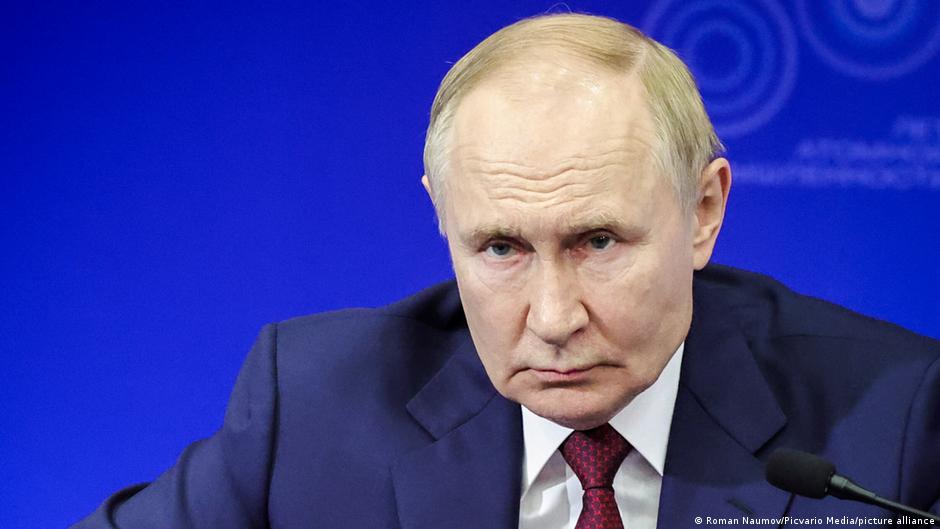
Russian President Vladimir Putin used a high-profile policy forum on Thursday evening, October 1, to again accuse the West of aggression against Moscow, deny that Russia started the war in Ukraine and warn of a scenario that could have “fatal consequences” for the world. For households, savers and everyday investors, the remarks matter less as theatre than as another reminder that geopolitical risk remains embedded in prices, currencies and financial planning.
Speaking at the plenary session of the Valdai Discussion Club, which was moved this year from Sochi to the Moscow region because of security concerns, Putin described the situation in Europe and the wider world as “very dangerous.” He pointed to weapons in the arsenals of several countries that are capable of destroying all living things and, when posing to himself the question of whether he was confident such weapons would not be used, answered in the negative.
That language lands in a financial environment where consumers are already sensitive to war-driven shocks. Escalation risks can feed into energy markets, defense spending expectations, currency volatility and risk appetite. Even without immediate market moves, statements about nuclear weapons and possible strikes in Europe can make households more cautious about borrowing, saving and investing.
Why Geopolitical Rhetoric Reaches Household Budgets
Putin compared nuclear weapons to a gun hanging on a theatre stage that, under dramatic convention, must eventually fire. He said the laws of the struggle for survival apply not only in nature but also in social communities, while adding that Russia could be forced into extreme measures. At the same time, he said efforts should be made to ensure that “this gun” does not fire.
“If we want to live — and everyone wants to live — let us live together,” Putin said, while warning that further escalation could leave no school textbooks and no one to study them.
For consumers, the practical channel is uncertainty. When the probability of severe conflict is perceived to rise, financial markets often demand a higher risk premium. That can affect the value of retirement accounts, the exchange rates used by travelers and importers, and the cost outlook for fuel and heating. In Europe especially, any suggestion of wider military confrontation can weigh on confidence and complicate inflation expectations.
Putin also again addressed Russia’s war in Ukraine, now in its fifth year, claiming that Russia “did not start the war” and that Moscow’s invasion of Ukrainian territory was a response to actions by NATO and Ukraine. “The truth is that it was not we who wanted and started to fight, but they started to fight against us,” he asserted. He accused the West of encouraging “aggressive nationalism and Russophobia” in Ukraine for years, saying the goal was to turn the country into a “tool” against Russia. He also claimed that “radicals in Kyiv” were pushed toward a “coup” and that NATO allegedly planned to place bases on what he called Russia’s “historical territories.”
Those claims fit a familiar Kremlin narrative, but the market relevance is straightforward: the longer the war continues, the longer households and investors must account for geopolitical disruptions. War can influence public budgets, sanctions exposure, commodity flows and insurance costs. For small investors, that does not automatically argue for sudden portfolio changes, but it does argue for attention to diversification and liquidity rather than overconcentration in a single currency, sector or geopolitical outcome.
Territory Claims, AI and the Risk of Wider Escalation
Commenting on the course of the war, Putin claimed that Russian forces captured 3.5 times more territory over the past month than in the previous one. He also said Russia currently controls 89% of Donetsk region. According to the Institute for the Study of War, Russia currently controls 81% of Donbas.
Kyiv had said several days earlier that during three seasons of the counteroffensive operation “Vivaldi,” Ukrainian forces recaptured 176 square kilometers of Ukrainian territory. At Valdai, Putin again expressed confidence that Russia would take all of those territories and said Ukraine had no reason to hold on to them.
He also called for a new convention on the conduct of warfare, citing the rapid development of artificial intelligence technologies. Putin referred to the case of Soviet officer Stanislav Petrov, who in 1983 did not give the order to launch a nuclear strike even though protocol required him to do so. In Putin’s view, artificial intelligence would have acted differently.
For financial markets, the AI element adds a newer form of risk to an older nuclear concern. Automated decision-making in military settings can raise fears of miscalculation, especially in a conflict already involving long-range strikes, air defenses and competing warnings. Consumers may not trade directly on such speeches, but banks, insurers and asset managers price risk in ways that eventually affect everyday costs.
Asked about the possibility of strikes on military enterprises in Europe, Putin said Russia would “not necessarily” do so but would “monitor threats.” He said Moscow views the involvement of Western countries in strikes on Russian territory as a direct threat.
The Valdai event itself reflected that security backdrop. This year’s meeting was moved from Sochi to the Moscow region, where Russia has concentrated more air-defense systems. The British newspaper Financial Times, citing four sources, reported that the decision was made because of safety concerns amid intensified Ukrainian attacks. Two of the sources said the venue change took place at the insistence of Putin’s security service.
For households, the key takeaway is not to forecast catastrophe, but to recognize that war rhetoric remains a live input into financial life. Currency swings, energy uncertainty and market volatility are not abstract geopolitical concepts; they show up in grocery bills, travel budgets, pension statements and savings decisions. Putin’s remarks did not create those pressures on their own, but they reinforced why consumers and everyday investors continue to face a world where political risk is part of the household balance sheet.