Putin Backs Using Medically Unfit Volunteers as Russia Seeks More Manpower
The proposal adds a consumer-finance dimension to Russia’s war effort as households face recruitment pressure, mobility risks and savings uncertainty.
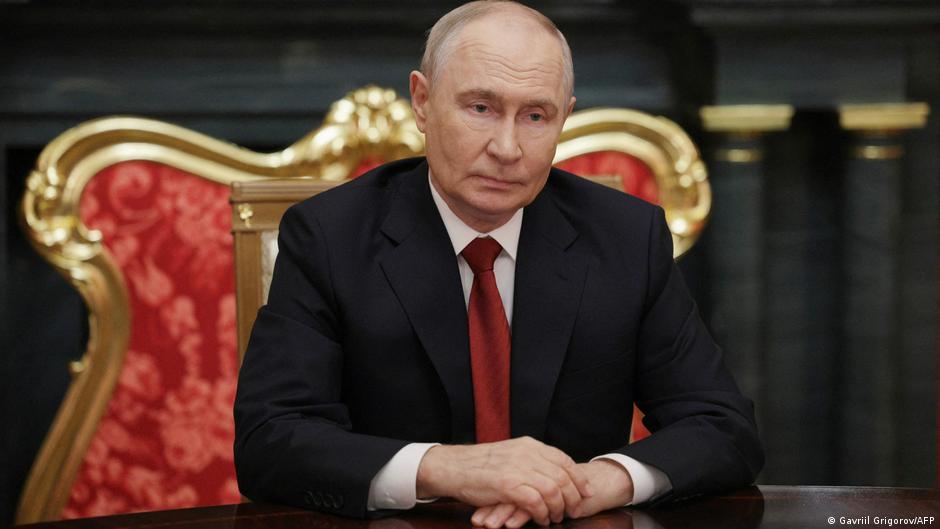
Russian President Vladimir Putin has backed a proposal to allow volunteers deemed completely unfit for military service to take part in tasks linked to the war against Ukraine, including guarding rear-area facilities from drone attacks. The idea, raised by pro-Kremlin war correspondent Yevgeny Poddubny, would affect citizens assigned health category “D,” a classification that means a person is considered absolutely unfit for military service.
The proposal was discussed at a meeting of the leadership of the United Russia party, according to reports cited in the Russian-language source article. Poddubny said the request had come from fighters who received the category after combat wounds and argued that such people could carry out duties in regional units, for example helping repel Ukrainian drone attacks away from the front line. Putin supported the proposal at the same meeting.
For Russian households, the significance goes beyond military staffing. Any broadening of who may be drawn into defense-related duties can affect family budgets, employment decisions, insurance needs, savings behavior and plans to move money or people across borders. Even when measures are framed as voluntary or limited to rear-area security, families often respond by preserving cash, delaying major purchases and reassessing currency exposure.
What Category “D” Means for Families
Under Russia’s current rules, category “D” is assigned to people with severe chronic illnesses and disabilities. The source article lists conditions including active tuberculosis, HIV infection, cancer, schizophrenia, missing limbs, blindness and deafness. Citizens in this category are removed from military registration, and their personal files are sent to the archive. Under existing Russian law, they cannot sign a contract with the Defense Ministry.
That legal backdrop matters for personal finance because category “D” has traditionally functioned as a hard boundary for military obligations. If policymakers look for ways around or beyond that boundary, even for limited defensive duties, households may treat it as a signal that the state is searching more aggressively for available manpower. That can shape everyday financial behavior, especially among families with men of service age, veterans, people with disabilities, and households already reliant on government payments or regional benefits.
Putin said there was “no scenario that would require mobilization,” while also describing mobilization fears as an information attack ahead of State Duma elections.
The comments came as Putin again addressed rumors of a new mobilization wave in Russia. At the plenary session of the Eastern Economic Forum in Vladivostok on September 3, he said there was no scenario requiring mobilization and called the discussion an information attack by the enemy ahead of State Duma elections aimed at influencing the result. The source article notes this was his second statement on the matter: after a Shanghai Cooperation Organization summit in Bishkek, he dismissed such fears with a coarse Russian phrase meaning they were nonsense.
Budget Risks From Recruitment Pressure
For consumers, official denials may not remove the practical uncertainty. The 2022 decree on partial mobilization has not formally been canceled and remains in force, according to the source article. Russians have reported summonses, military training call-ups and intensified recruitment for the war against Ukraine. Pro-war Z-channels reported in July that a compulsory draft to the front could affect 1.2 million Russians and could be accompanied by informal arrangements with Russia’s neighbors that would make it impossible for draft-age men to leave for adjacent countries.
Those reports have direct budget implications. A household that fears a breadwinner could be mobilized may increase emergency savings, reduce discretionary spending or shift assets into currencies perceived as easier to move. Families may also face sudden costs connected to travel, legal advice, medical documentation, caregiving or lost income. For renters and mortgage borrowers, any interruption to earnings can quickly become a balance-sheet problem.
War-related labor demand also intersects with local government finances. The source article cites the Institute for the Study of War as saying Russian military losses in August exceeded 40,000 people for the second consecutive month. It also cites the Financial Times as reporting, based on sources, that the Kremlin and Russia’s Defense Ministry instructed Russian regions to secure the recruitment of 409,000 contract soldiers by the end of 2026 for participation in the war. To meet that target, the authorities are increasing pressure on local officials, the article says.
That regional pressure can filter down to consumers through hiring campaigns, sign-up bonuses, administrative pressure on employers and local budget priorities. If regions are pushed to deliver contract recruits, they may compete with civilian employers for labor or channel more attention and resources into recruitment systems. That can affect wages in some local markets while worsening staffing shortages in others. It can also change the perceived risk profile for families deciding whether to keep savings in rubles, foreign currency, bank deposits or physical cash.
Everyday Investors Watch the Ruble and Local Risk
For everyday investors, the most relevant issue is not only whether a new formal mobilization is announced. It is whether incremental measures suggest a longer and costlier manpower campaign. Markets and households often react to accumulated signals: expanded eligibility, stronger regional recruitment targets, reports of border restrictions, and rising casualty estimates. Each signal can raise the perceived risk of future state intervention in labor markets, travel and household finances.
The proposal to involve category “D” volunteers in anti-drone defense does not, by itself, create a new nationwide mobilization. The source article describes it as a proposal supported by Putin, focused on people considered fully unfit for military service and on tasks such as guarding rear-area facilities from drones rather than serving on the front line. But because existing law does not allow such citizens to sign Defense Ministry contracts, any move to implement the idea would require a legal or administrative pathway.
For Russian families, that distinction is central. A narrow volunteer mechanism would carry different financial consequences than a broader compulsory one. Still, the discussion arrives amid continued uncertainty over the mobilization decree, reports of recruitment pressure, and large manpower targets for the regions. In practical terms, households are likely to keep treating military policy as a financial risk, not just a political headline.
The consumer takeaway is that manpower decisions can become household finance events. They can influence employment security, debt repayment, savings buffers, cross-border planning and currency choices. Putin’s support for using medically unfit volunteers in rear-area drone defense adds another variable to that calculation at a moment when Russian households are already weighing official assurances against reports of summonses, military training and intensified recruitment.