Prison Hospital Return Puts Yuri Dmitriev Case Back in Financial Focus
A reported failure to diagnose suspected stroke symptoms raises questions about medical access, legal costs and compensation in politically charged Russian cases.
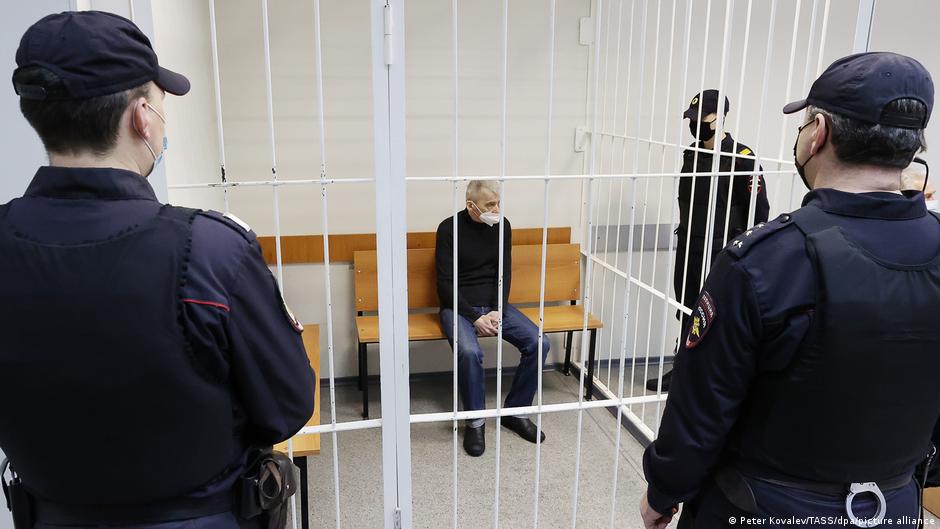
Russian historian Yuri Dmitriev, the former head of Memorial in Karelia, has been returned from a prison hospital to his penal colony without a diagnosis after being sent for treatment with signs of a possible stroke, according to a human rights group. The case is not only a matter of legal and human rights concern; it also illustrates the financial strain that long-running prosecutions, poor medical access and unpaid compensation can place on prisoners, their families and supporters.
The human rights project For Human Rights said on Telegram on Tuesday, October 13, citing an unnamed representative of Dmitriev's support group, that the historian had been sent to a prison hospital with suspected stroke symptoms. The hospital, however, reportedly lacked the equipment needed to make a diagnosis.
"He is not feeling very well. There was a suspicion of a stroke, but no diagnosis was made: the hospital has no diagnostic equipment."
According to the same account, Dmitriev was given a course of injections, but it was not known what medication he received. He was prescribed bed rest until October 28, the representative said, but staff at the colony were allegedly unaware of that instruction and were not allowing him to lie down. The representative later added that the colony may already have received the information about the bed-rest order.
Dmitriev was emergency hospitalized on September 25 from penal colony No. 18 in Potma, Mordovia, to a medical correctional facility in the settlement of Barashevo. The online outlet Current Time reported that Dmitriev had severe weakness, impaired coordination and could not stand on his own.
Why the Case Matters for Household Finances
For households watching cases like Dmitriev's from abroad or inside Russia, the financial implications are often less visible than the courtroom headlines. A prisoner's illness can trigger urgent spending by relatives and supporters: legal consultations, travel, food parcels, medicine, documentation, advocacy and attempts to obtain independent medical review. When the state system does not provide clear diagnosis or treatment, families can face uncertainty over what must be paid for privately, what can be delivered, and what cannot be accessed at all.
Dmitriev's support representative also said he had been placed in a punishment cell several times. The stated reasons included an unfastened top button on his shirt, sitting on a bed and feeding a cat. Such disciplinary measures can carry practical consequences for prisoners and their support networks, potentially affecting communications, visits and the flow of basic assistance. For families, each disruption can mean more time, more paperwork and more cost.
The case also has a currency angle. In March 2026, the European Court of Human Rights in Strasbourg ordered Russia to pay Dmitriev 2,000 euros in compensation for moral harm caused by excessively long pre-trial detention and the absence of a fair trial. Kremlin spokesman Dmitry Peskov said at the time that Moscow did not recognize the ECHR decision. For Dmitriev and his supporters, that means a formal award denominated in euros exists on paper, but its practical value depends on whether it can be enforced or paid.
For ordinary savers and families, that distinction is important. A court award in a hard currency such as the euro may appear to offer protection against local inflation or currency swings, but if the paying authority refuses to recognize the ruling, the compensation may not translate into usable funds. The Dmitriev case therefore highlights a broader personal-finance lesson familiar to households dealing with cross-border claims: legal entitlement and actual cash recovery can be very different things.
A Long Legal Process With Continuing Costs
Dmitriev is known for compiling and publishing Books of Remembrance for victims of political repression in Karelia in the 1930s and 1940s, as well as materials on the history of the construction of the White Sea-Baltic Canal. He also discovered mass burial sites of repression victims in Sandarmokh and Krasny Bor.
His criminal prosecution began in 2016, when the first case was opened against him on suspicion of producing pornographic images of his adopted daughter. A court acquitted him, but a new case was opened in 2018. On July 22, 2020, a court in Petrozavodsk sentenced Dmitriev to 3.5 years in a strict-regime colony on charges of sexual violence against a minor. In September 2020, the Supreme Court of Karelia toughened the sentence to 13 years in a strict-regime colony.
Dmitriev was also accused of producing child pornography, committing indecent acts and illegally possessing a weapon. On December 27, 2021, the Petrozavodsk City Court issued a final sentence for Dmitriev, then 65, of 15 years in a strict-regime colony, taking into account the earlier term.
Dmitriev has denied guilt. On March 15, 2022, the Supreme Court of Karelia rejected his appeal. His supporters have argued that the prosecution was connected to his human rights activity and his work restoring the memory of victims of repression. The European Union, as well as scholars and artists from several countries, called for his release.
For everyday investors assessing Russia-related legal and political risk, the case is a reminder that institutions, enforcement and recognition of court decisions matter as much as headline judgments. For families and civil society groups, it shows how health, detention and litigation can become long-term financial burdens, especially when compensation is contested and medical care is uncertain.
The immediate issue remains Dmitriev's health. According to the report from his support circle, he was returned to the colony without a confirmed diagnosis after suspected stroke symptoms, with no clarity on the injections he received and with questions over whether his prescribed bed rest will be observed.



