Palestinian Election Delay Extends Uncertainty for Households and Investors
Mahmoud Abbas moved long-awaited Palestinian elections to September 2027, adding another layer of political risk for families, savers and markets.
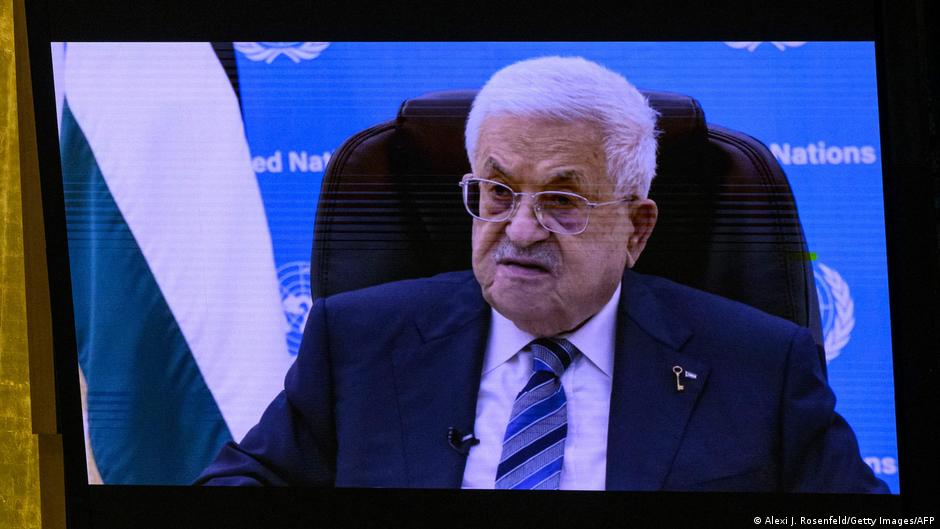
Palestinian parliamentary and presidential elections have been postponed from late November to September 11, 2027, according to WAFA, delaying what would be the first nationwide vote in the Palestinian territories in more than two decades.
The decision by Mahmoud Abbas, the 90-year-old head of the Palestinian National Authority, affects voting in the West Bank, East Jerusalem and the Gaza Strip. A presidential election is now scheduled for the same day as the parliamentary vote.
For households, workers and small businesses across the territories, the delay is more than a constitutional matter. Political uncertainty feeds directly into daily financial life: employment prospects, access to cash, household purchasing power, the cost of imports and the ability of families to plan savings or investments all depend heavily on security conditions, freedom of movement and confidence in public institutions.
WAFA cited Israeli military restrictions, the expansion of Jewish settlements, attacks by armed settlers and a lack of freedom of movement as reasons for the postponement. In Gaza, it also pointed to instability and the delayed deployment of international security forces.
Israeli Foreign Minister Gideon Saar accused Abbas of misleading the international community and making false claims that Israel had created obstacles to voting. Saar said Abbas was trying to avoid responsibility and accountability.
Mahmoud Abbas is trying to evade responsibility and accountability, Saar said.
Criticism of the delay also came from within Fatah, the Palestinian national liberation movement to which Abbas belongs. That internal dissent matters for consumers and investors because political divisions can complicate governance, slow reconstruction decisions and weaken confidence in future economic arrangements.
Why the delay matters for household budgets
The postponement comes after years of conflict, restricted movement and institutional uncertainty that have already weighed on family finances. When political timelines stretch further into the future, households often face a harder time making ordinary economic decisions: whether to hold cash, spend on repairs, convert savings, invest in a small business or wait for clearer conditions.
In the Palestinian territories, those choices are shaped by an unusually complex financial environment. Families may depend on wages, remittances, aid flows or small trade, while businesses often rely on permits, cross-border access and predictable transport. Any disruption to movement can affect the availability and price of food, medicine, fuel and construction materials. That puts pressure on budgets even when a political development does not immediately change income.
The election delay also intersects with expectations over Gaza’s postwar administration. In mid-January, the White House said the second stage of the Trump plan to end hostilities in Gaza had begun. Under that phase, a National Committee is expected to take over administration of the region until the Palestinian National Authority is ready to assume the role.
For ordinary residents, that governance handoff is central to questions about public services, salaries, reconstruction contracts and aid delivery. A delayed national vote may leave families and businesses waiting longer for clarity over who will set rules, distribute resources and oversee rebuilding.
Currency, savings and investor confidence
Political uncertainty in the region can also influence how households think about currencies and savings. The source article does not specify currency movements, banking measures or inflation data. Still, in practical personal-finance terms, prolonged uncertainty often makes families more cautious, especially where income is unstable and access to goods depends on security conditions.
Everyday investors watching the Middle East may also read the postponement as another sign that the political settlement remains fragile. The Palestinian elections were set to be the first nationwide vote in more than 20 years, making them a potentially important marker for institutional legitimacy. Pushing them to 2027 extends the period during which investors, lenders and donors must make decisions without a renewed national mandate.
That matters for anyone exposed to regional risk through emerging-market funds, energy-sensitive assets, defense shares, sovereign debt or currencies linked to Middle East stability. The article does not give market prices or forecasts, but the political facts it describes are part of the broader risk picture investors follow.
The broader context remains the sharp escalation that began on October 7, 2023, when Hamas, recognized as a terrorist organization by the European Union and the United States, launched a large-scale attack on Israel. Militants fired a major barrage of rockets, entered Israeli territory and carried out the deadliest massacre of civilians in the history of the modern Israeli state, killing about 1,200 people.
They also seized about 250 hostages and took them to the Gaza Strip. Some hostages were exchanged or freed, while others died. Israel responded by declaring war on Hamas.
In October 2025, Israeli authorities and Hamas agreed to a ceasefire under a peace plan developed by the administration of U.S. President Donald Trump. The United States, Turkey, Qatar and Egypt acted as guarantors of the arrangements between Israel and Hamas. During the first stage, Hamas militants returned all surviving Israeli hostages in exchange for the release of Palestinian prisoners from Israeli jails.
Earlier, in April, Deir al-Balah in the Gaza Strip held its first municipal elections in 20 years. Candidates on most electoral lists were close to Fatah or were independents.
For now, the national political timetable has moved further out. The next key date is September 11, 2027. Until then, households, savers and small investors face an extended period in which political legitimacy, security arrangements and economic recovery plans remain closely tied together.