Ongoing Protests in Kyiv Demand Reinstatement of Defense Minister Amid Political Changes
Ukrainians rally for leadership stability in defense ministry, raising concerns about reform continuity and political appointments.
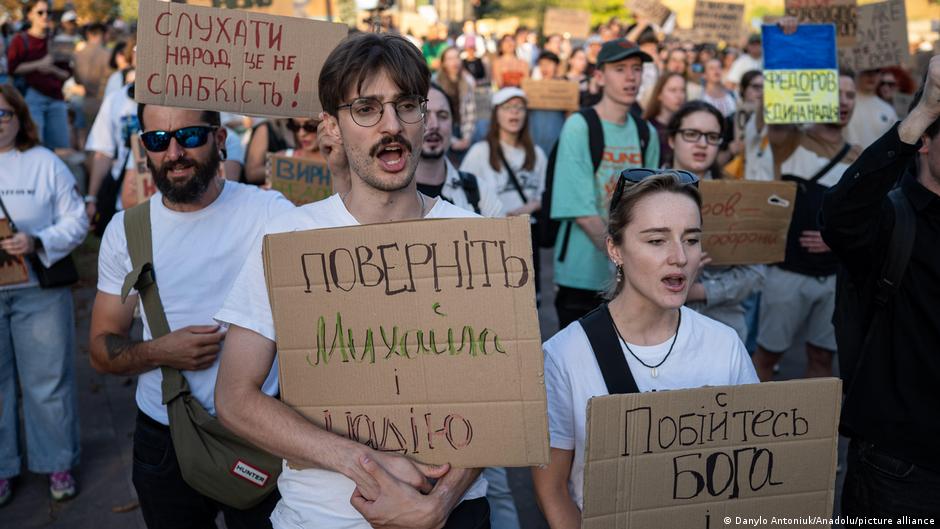
On August 16, hundreds of protesters once again took to the streets of Kyiv and other Ukrainian cities, demanding the reinstatement of Mykhailo Fedorov as Minister of Defense. This marks the 32nd consecutive day of such demonstrations, reflecting sustained public concern over recent government appointments and reform progress.
Protests Highlight Consumer and Economic Concerns Amid Political Uncertainty
The protests, centered around Kyiv's Freedom Arch and proceeding through major city streets including Khreshchatyk and Alley of the Heavenly Hundred Heroes, drew participants across age groups with a significant youth presence. Demonstrators criticized President Volodymyr Zelenskyy’s recent decisions, including appointing former Defense Minister Rustem Umerov as head of foreign intelligence and Vitaliy Kim, former Mykolaiv Regional Governor, as Minister for Veterans Affairs.
“Do not interfere with Mykhailo in the military niche,” chanted protestors, underscoring their demand for leadership continuity in defense reforms.
The ongoing political turbulence and calls for reform continuity have tangible impacts on household budgets and personal finance. Defense sector reforms influence national stability, currency confidence, and ultimately, inflation and consumer prices. Political uncertainty can contribute to currency volatility, which affects everyday investors and savers, especially as the Ukrainian hryvnia faces external pressures amid conflict.
For households, any disruption in governance and reforms within the defense sector indirectly affects economic stability. Inflationary pressures may rise with continued conflict intensity and administrative changes, straining household budgets and reducing disposable income. Currency fluctuations also impact the cost of imported goods, affecting everyday expenses for consumers.
In response to the protests, a delegation delivered a petition to the President’s office, urging continuation of reforms initiated under Fedorov and greater governmental responsiveness to public dialogue. Similar demonstrations took place in cities including Lviv, Dnipro, Lutsk, Rivne, Poltava, Odesa, Vinnytsia, Khmelnytskyi, and Chernivtsi, illustrating widespread concern.
Veteran Dmitry Kozyatinsky, one of the protest organizers, emphasized the urgency of appointing ministers for defense and foreign affairs, positions currently unfilled, which adds to the political uncertainty affecting economic outlooks.
For consumers and investors, these political developments highlight the importance of monitoring governmental stability as a key factor influencing exchange rates, inflation trajectories, and investment climate in Ukraine.