North Korea Missile Launch Adds New Risk for Asian Markets and Savers
South Korea said Pyongyang fired at least one ballistic missile toward the Sea of Japan after a border blast injured three soldiers.
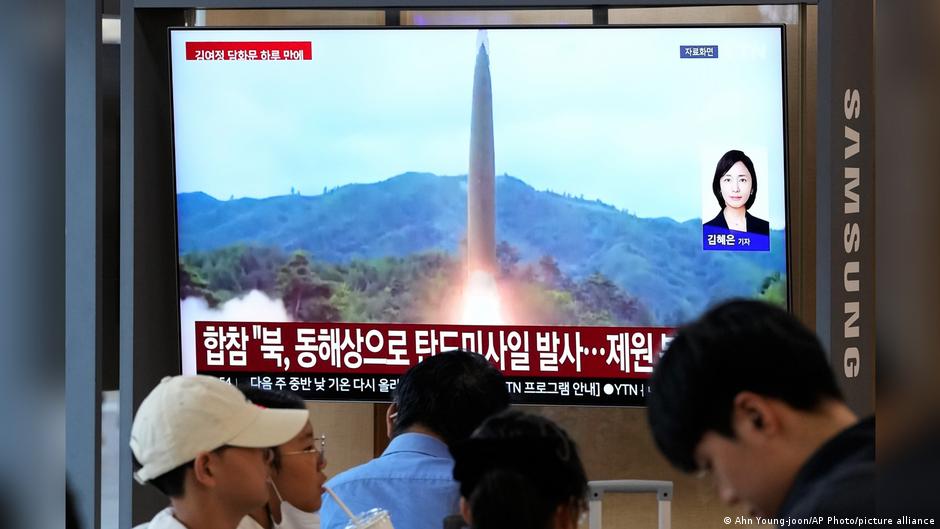
North Korea fired at least one ballistic missile toward the Sea of Japan, South Korea’s military said Saturday, October 3, adding a fresh geopolitical risk for households, savers and everyday investors already watching currencies, energy costs and Asian market sentiment.
South Korea’s Joint Chiefs of Staff said Seoul, Washington and Tokyo were maintaining a high level of military readiness while closely sharing information on North Korean ballistic missiles. The launch followed a September 21 explosion in the border area between North and South Korea that injured three South Korean soldiers.
South Korean military sources, cited by AFP, believe the earlier incident resulted from the detonation of North Korean anti-personnel mines. Seoul’s defense minister, Kang Shin Chul, accused Pyongyang of violating the armistice and said South Korea intended to take response measures. The Joint Chiefs of Staff demanded an apology from North Korea.
“South Korea, the United States and Japan are maintaining a high level of combat readiness while closely exchanging information on North Korean ballistic missiles,” Seoul said.
North Korea rejected the accusation over the border explosion. Kim Yo Jong, the sister of North Korean leader Kim Jong Un, called the South Korean claim “extremely low and dirty,” according to North Korea’s state news agency KCNA.
Why Households and Investors Watch Korean Peninsula Tensions
For consumers, a missile launch is not only a security headline. It can also become a financial one if tensions unsettle markets, pressure regional currencies or affect investor appetite for risk. South Korea and Japan are major economies with globally important manufacturers, technology companies, banks and exporters. Any increase in perceived risk on the Korean Peninsula can ripple through exchange rates, equity markets and household confidence, even when the immediate military impact is limited.
Everyday investors with broad index funds may have exposure to South Korean or Japanese companies through international equity funds, emerging-market funds, Asia-focused portfolios or retirement accounts. South Korea is deeply connected to semiconductor production, consumer electronics, autos and shipping. Japan is a major global investor and currency market anchor. When tensions rise, traders often reassess risk in the region, which can affect share prices and fund valuations in the short term.
Currency moves matter for households as well. A weaker regional currency can make imported goods more expensive inside affected economies, while shifts in the yen or won can affect travel costs, electronics prices, supply-chain contracts and the earnings of multinational companies. For U.S. consumers, the connection may be indirect, but it can appear in prices for imported technology, vehicles, components and other goods if instability feeds into broader supply concerns.
Missile launches can also influence the behavior of investors seeking safer assets. During periods of geopolitical stress, some investors move toward assets they view as havens, including certain government bonds or major currencies. Such shifts can affect yields, mortgage-rate expectations, savings returns and portfolio balances, though the direction and scale depend on how markets interpret the seriousness of the event.
The Border Incident Raised the Stakes
The missile launch came after a tense sequence near one of the world’s most militarized borders. The September 21 explosion in the border zone injured three South Korean soldiers. Seoul believes the blast was caused by North Korean anti-personnel mines. South Korea’s defense minister accused Pyongyang of violating the armistice that ended active fighting in the Korean War and said Seoul would take response measures.
North Korea’s denial and sharply worded response underscore the risk that a security incident can quickly become a diplomatic confrontation. For financial markets, that matters because uncertainty can be costly even before any direct economic damage occurs. Investors tend to price not only what has happened but what could happen next: additional launches, military responses, sanctions pressure or disruption to trade and travel sentiment.
The Korean Peninsula remains technically at war. The Korean War ended in 1953 with an armistice agreement, not a formal peace treaty. North and South Korea are separated by the demilitarized zone, with a demarcation line running through the middle of the mined strip. The area is one of the most heavily fortified and mined borders in the world.
For personal finance decisions, the key point is not to react impulsively to a single headline. Missile launches and border incidents can produce short-term volatility, especially in regional stocks and currencies, but household portfolios are usually built for longer horizons. Investors may want to check whether their exposure to Asia, emerging markets or defense-linked assets matches their risk tolerance, but sudden portfolio shifts can lock in losses or increase concentration risk.
Savers and travelers may feel the effects differently. Currency swings can change the cost of planned trips to Japan or South Korea, while import-sensitive households may eventually notice price changes if tensions persist and affect supply chains. Businesses that rely on Korean or Japanese suppliers may also face renewed pressure to review inventory, contracts and currency hedging.
For now, the immediate facts remain limited: South Korea says North Korea launched at least one ballistic missile toward the Sea of Japan, and Seoul, the United States and Japan are coordinating closely. The financial question is whether the episode remains a contained security event or becomes another source of persistent uncertainty for markets, currencies and household budgets.



