Macron Says Russian Mobilization Scenario Is Credible, Raising Europe Risk
France says Moscow could call up around 300,000 people, a development that would heighten security concerns with implications for households, markets and savings.
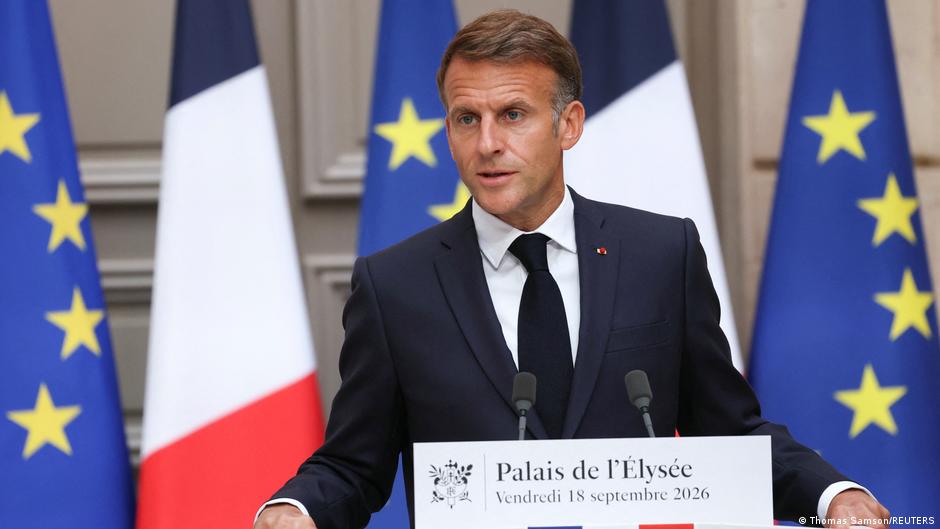
French President Emmanuel Macron said France considers it plausible that Moscow could mobilize around 300,000 people, warning that hostile activity across Europe has intensified and that the continent may be treated by Russia as a strategic rear area for Ukraine.
Speaking on Thursday, September 24, on TF1 and France 2, Macron said Russian authorities had waited for their elections, held from September 18 to 20 for the State Duma, before moving toward the next stage. According to Macron, “today it is clear that Russia will do this,” though he added that it remains unclear whether any mobilization would be publicly announced or carried out covertly.
For households and everyday investors, the immediate issue is not only the military question itself, but the wider economic risk that follows from any escalation: pressure on energy prices, currency volatility, public spending priorities and the security costs that governments and companies may pass on to consumers. A larger Russian mobilization, if it occurs, would reinforce the sense that the war and its spillover risks are becoming a longer-term feature of European economic life.
Why the Mobilization Warning Matters for Consumers
Macron said there had been “several signs” suggesting Russia was preparing such a move. He described the mobilization scenario as one that France sees as credible, commenting on intelligence from the United States, Europe and Ukraine.
“This is a scenario that seems credible to us,” Macron said, referring to intelligence assessments from the United States, Europe and Ukraine.
The possible mobilization of about 300,000 people would be significant for markets because it could signal that Moscow is preparing for an extended campaign rather than a quick de-escalation. For European consumers, that kind of signal can affect expectations around inflation, energy bills and government support programs. Even when the direct fighting remains outside the European Union, the financial consequences can show up in heating costs, fuel prices, insurance premiums and tax debates.
Macron also warned that, in recent weeks, “hostile actions across Europe have increased.” He said he had gathered representatives of political forces the previous week to warn them about the development of the threat and its consequences for France. That warning points to a broader risk environment in which governments may need to spend more on cyber defense, intelligence, infrastructure protection and military readiness.
Such spending can become a household-budget issue. If governments prioritize defense and critical infrastructure, they may face harder choices over subsidies, social programs, tax policy and borrowing. For savers, those choices matter because they can influence interest-rate expectations, bond markets and the fiscal outlook of European states.
Europe as a Target and the Cost of Hybrid Threats
According to Macron, Russia sees Europe as “the strategic rear of Ukraine” because Europeans are helping Ukrainians and because Kyiv is striking oil refineries and facilities in Russia in an effort to force Moscow to end the war. “And therefore Europe can become a target,” he said.
Macron said attacks are taking place in the information sphere through the spread of falsehoods and in cyberspace. Earlier, on September 18, the French president said the country was preparing a plan to protect critical infrastructure amid the growing threat of hybrid attacks from Russia.
For consumers, hybrid attacks can carry very practical costs. Cyberattacks on companies, banks, transport systems or utilities can disrupt services, raise security expenses and increase the cost of doing business. Those expenses may eventually be reflected in prices, fees or lower investment returns. Disinformation campaigns can also affect public confidence, which matters in financial markets and in the day-to-day decisions households make about spending, saving and borrowing.
The source article notes that Russia had previously been accused of interference in elections and of using migrants as a tool of pressure on Europe. European intelligence services are now said to suspect a Russian trace in acts of sabotage, arson, attacks on critical infrastructure and violations of airspace.
Sources cited by the outlet said many incidents, particularly cyberattacks and hacks, are not publicly reported, meaning the scale of Russia’s hybrid attacks is considerably larger than what is visible. That makes the risk harder for ordinary investors to price. Public markets often react most sharply to known shocks, but unreported or underreported incidents can still build into higher structural costs for companies and states.
Currency markets may also be sensitive to any escalation. The euro and other European currencies can come under pressure when investors see rising geopolitical risk, especially if the risk threatens energy supplies or industrial production. Households planning travel, international purchases or remittances may feel exchange-rate moves directly, while investors with global portfolios may see gains or losses depending on currency exposure.
Energy remains one of the most immediate channels through which geopolitical escalation reaches family finances. The article specifically refers to Ukrainian strikes on oil refineries and facilities in Russia. Any broader military escalation or retaliation risk can add uncertainty to fuel and energy markets, even before a concrete supply disruption occurs. That uncertainty can feed into petrol prices, heating bills and the cost of goods transported across Europe.
For everyday investors, Macron’s comments are a reminder that geopolitical risk is not separate from portfolio risk. Defense shares, energy companies, cybersecurity firms, government bonds and European equities may all respond differently to signs of escalation. At the household level, the practical response is less about trying to trade every headline and more about understanding exposure: cash reserves, debt costs, currency risk and whether savings are too concentrated in one market or sector.
Macron did not say whether a Russian mobilization announcement is imminent, and he stressed uncertainty over whether it would be public or hidden. But his remarks place the issue firmly within Europe’s security and economic planning. For consumers, the takeaway is that the costs of war can travel well beyond the battlefield, reaching household budgets through prices, taxes, currencies, cybersecurity and market volatility.