Lithuania Backs Property Curbs on Russian and Belarusian Buyers
The proposed ban would limit purchases near strategic sites, adding another layer of financial and residency risk for affected households.
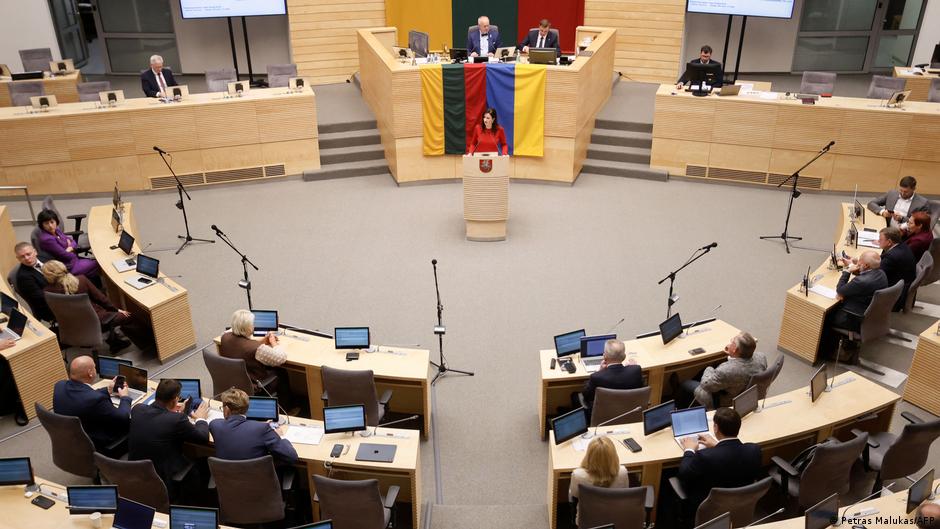
Lithuania’s government has approved a draft law that would bar citizens of Russia and Belarus from buying property near strategically important facilities, even if they hold a valid residence permit. The measure, presented as part of the country’s effort to counter espionage, could reshape property planning, savings decisions and long-term household security for thousands of residents from the two countries.
Lithuanian National Radio and Television reported on Wednesday, September 30, that the restrictions would apply to areas located close to sites deemed strategically significant. The ban would not apply when ownership is acquired through inheritance, leaving family transfers outside the proposed restriction. If approved by Lithuania’s national parliament, the Seimas, the amendments would take effect on January 1, 2027.
For households, the practical effect is straightforward: a home purchase that may have been part of a savings plan, relocation strategy or retirement decision could become legally impossible in certain locations. Buyers who already face visa, residency and sanctions-related rules would need to assess not only price, mortgage access and currency exposure, but also whether a property sits near a protected site.
Property Plans Meet Security Policy
The draft law states that the ban should “significantly reduce” intelligence activity and “hybrid operations” in Lithuania, including surveillance of military exercises or tracking troop movements. Similar restrictions are already in force in Latvia and Finland, while Estonia is still planning to introduce a comparable ban.
“The restrictions will also apply to people with a valid residence permit, but they will not apply where ownership is acquired by inheritance.”
The consumer finance angle is especially important because property is often the largest asset on a household balance sheet. For Russian and Belarusian citizens living in Lithuania, the proposed rule could narrow the set of available homes, reduce flexibility in choosing where to live and complicate decisions about whether to hold savings in cash, keep funds in bank deposits, or invest in real estate.
According to Lithuania’s Central Register data for May of the current year, 5,104 Russian citizens and 2,781 Belarusian citizens with temporary or permanent residence permits had acquired real estate in Lithuania, including near strategically important sites. The draft law does not state in the source text that existing ownership would be unwound, but new purchases in covered areas would face the proposed prohibition if the legislation passes.
That distinction matters for everyday investors. Existing owners may focus on resale value, liquidity and future buyer demand, while would-be buyers may have to redirect savings toward other neighborhoods, rental housing or non-property assets. Any legal restriction on who can buy in a specific area can alter demand, though the source article does not provide estimates of price effects.
Residency Rules Add Financial Uncertainty
The proposed property restrictions sit within a broader tightening of Lithuania’s legal regime for citizens of Russia and Belarus. In late April, the Seimas voted 95 to six to extend until December 31, 2027, a sanctions law targeting citizens of both countries. The law was originally adopted on May 3, 2023.
Under that sanctions framework, Lithuania suspended the acceptance of applications from Russian and Belarusian citizens for Schengen and national visas. Russian citizens are barred from acquiring real estate in Lithuania, bringing cash Ukrainian hryvnia into the country and obtaining electronic resident status.
The rules also affect temporary residence permits. A temporary residence permit for Russian citizens is annulled if authorities establish that the person visited Russia or Belarus more than once during the previous three calendar months. Exceptions apply where travel was caused by objective reasons or connected with work in international transport.
For families, that creates a budgeting problem as much as a legal one. A household deciding whether to buy, rent, keep savings in euros or plan travel must factor in the possibility that residency status could be affected by cross-border trips. That can influence emergency savings needs, school planning, employment choices and whether money is kept liquid rather than tied up in a home.
Lithuania’s move also follows regional actions. In June, Latvia’s Seimas approved a restriction on the issuance of residence permits to citizens of Russia and Belarus. For consumers and small investors, the broader Baltic and Nordic direction suggests that real estate access, residency rights and sanctions policy are increasingly linked.
Defense Debate Extends the Risk Backdrop
The source article also places the property measure in a wider security context. On September 22, members of Lithuania’s Seimas supported a proposal to repeal the constitutional ban on storing weapons of mass destruction, including nuclear weapons, on Lithuanian territory. According to LRT, 99 lawmakers supported the decision, 13 opposed it and five abstained.
For that constitutional amendment to be adopted, it must pass several rounds of voting. The first round is scheduled for October 6, and the final one for January 12, 2027.
Lithuanian President Gitanas Nauseda also wrote on X that U.S. troops scheduled to rotate in after previously departing American forces were already on their way to Lithuania. He said he had just received confirmation that a new contingent of U.S. military personnel was heading to the country, and thanked U.S. President Donald Trump for the decision.
For households and investors, none of these developments automatically dictates a financial move. But they do reinforce a key point: in Lithuania and the surrounding region, security policy is increasingly shaping the personal finance environment. Property eligibility, residency status and cross-border mobility are now part of the financial checklist for affected Russian and Belarusian citizens, alongside mortgage affordability, savings protection and currency risk.