Latvian Pair Held at RAF Molesworth as Base Security Raises Budget Risks
The alleged breach at a NATO and U.S. intelligence site underscores how security shocks can filter into currencies, travel costs and household finances.
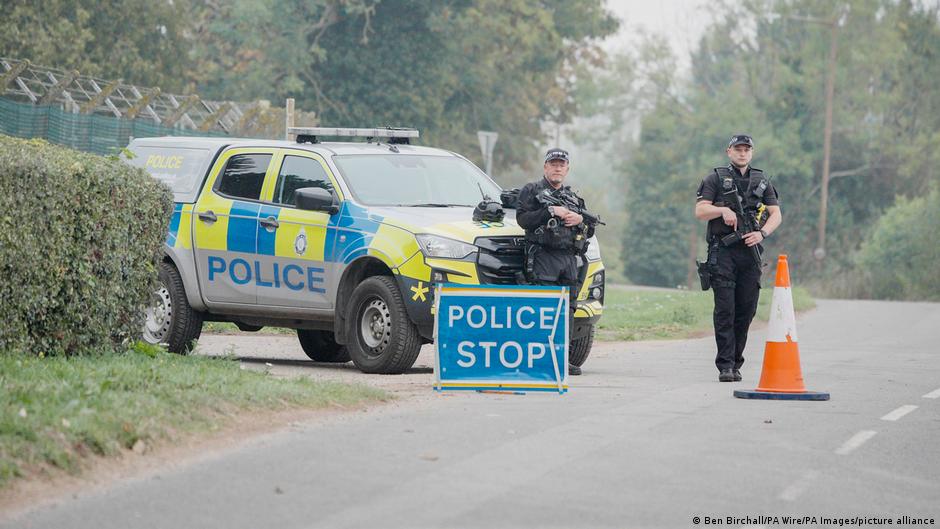
British counterterrorism police have detained two Latvian citizens after they allegedly entered RAF Molesworth, an air base in southeast England that hosts NATO and U.S. intelligence centers. Police said the men, aged 32 and 36, damaged fencing around the site and were suspected of intending to “cause damage to the United Kingdom.”
The incident took place overnight into October 8 and is now under investigation. For households and everyday investors, the immediate facts are security-related, but the broader context matters: even contained incidents at strategic military sites can add to uncertainty around public spending, transport disruption, insurance costs and currency sentiment.
RAF Molesworth is not a consumer-facing institution, yet events around such facilities can ripple into ordinary financial life when they feed perceptions of geopolitical risk. The United Kingdom is already operating in an environment where households are sensitive to changes in energy prices, mortgage costs, travel expenses and the value of the pound. Security incidents do not automatically move markets, but they can become part of the risk backdrop investors and policymakers monitor.
Why Security Incidents Matter for Household Budgets
For families, the most direct costs from national security incidents usually come indirectly. Heightened security can mean more public spending on policing, counterterrorism operations and military-site protection. Over time, if such spending rises significantly, it competes with other budget priorities and can shape tax and spending debates. There is no official estimate in this case of any added cost, and authorities have not suggested a wider threat. Still, the Molesworth breach arrives at a moment when consumers are attuned to how state decisions eventually show up in household finances.
Insurance is another channel. Businesses near sensitive infrastructure, logistics operators and travel providers can face higher risk assessments when security concerns intensify. Those costs can be passed on through prices, although not every incident results in a measurable premium change. Consumers may feel the effect only if repeated events lead insurers, transport firms or suppliers to reassess their exposure.
Currency markets also watch security developments, particularly when they intersect with broader geopolitical tensions. The pound is driven mainly by interest rates, inflation, growth expectations and fiscal policy, but risk sentiment can matter at the margins. For U.K. households, sterling weakness can make imported goods, foreign holidays and dollar-priced commodities more expensive. For savers and retail investors, it can affect overseas funds, global equity holdings and cash kept in different currencies.
Police said the detained men were suspected of intending to “cause damage to the United Kingdom.”
That language is serious, but officials have also said that at this stage there is nothing indicating a connection between the Molesworth incident and a separate security scare at RAF Fairford in late September. The distinction matters for consumers and markets because isolated events generally carry less financial significance than a pattern involving multiple strategic sites.
A Separate Fairford Case Adds to the Risk Backdrop
The Fairford episode involved a local resident reporting “suspicious” activity near the Royal Air Force base. Police later found three vans containing “some amount” of gasoline, cordoned off the area and evacuated residents of a nearby village. Seven suspects were detained and later released under certain conditions.
Following that incident, the United States decided to withdraw B-1 bombers that had been stationed at RAF Fairford. U.S. President Donald Trump explained the move by citing “threats” from people he said were “connected to Iran.” British police, however, have said nothing currently points to a link between Fairford and the latest detention at Molesworth.
For everyday investors, the key issue is not whether a single breach changes the investment outlook. It usually does not. The more relevant question is whether repeated security alerts begin to influence government priorities, defense cooperation, foreign exchange expectations or energy-market risk. Defense and security headlines can support shares in some contractors while weighing on travel, leisure or consumer confidence if the public perceives a broader threat. No such market impact has been established from the Molesworth case, but the episode fits into the type of geopolitical monitoring now common in household investment decisions.
Consumers with pension funds or diversified portfolios may already have exposure to defense, aerospace, infrastructure and energy companies. Security incidents can therefore affect portfolios in uneven ways: some holdings may benefit from expectations of higher spending, while others could be vulnerable to disruptions or weaker sentiment. Retail investors should avoid reacting to a single event in isolation, especially when investigations are still at an early stage and officials have released limited details.
The same caution applies to currency decisions. Households planning travel, remittances or overseas purchases may be tempted to respond quickly to alarming headlines, but exchange rates are rarely determined by one security incident. Interest-rate expectations, inflation data and central bank guidance remain the larger forces. Still, households with near-term foreign-currency needs may want to watch sterling volatility if security concerns become part of a wider geopolitical story.
For now, the confirmed facts are narrow. Two Latvian citizens were detained after allegedly entering RAF Molesworth and damaging fencing. Police say the suspected aim was to harm the United Kingdom, and an investigation is underway. Authorities have not identified a link to the RAF Fairford incident, where seven people were detained and later conditionally released after vans with gasoline were found near the base.
The financial takeaway is measured rather than dramatic. Security breaches at military and intelligence sites are first and foremost law-enforcement matters. But when they involve NATO, U.S. assets and claims of threats connected to foreign actors, they also become part of the environment in which households make decisions about savings, travel, insurance, currencies and long-term investments.



