Former German Foreign Minister Annalena Baerbock to Join Columbia University Faculty in New York
Baerbock will teach public administration and global leadership in a role impacting academic and international policy discourse.
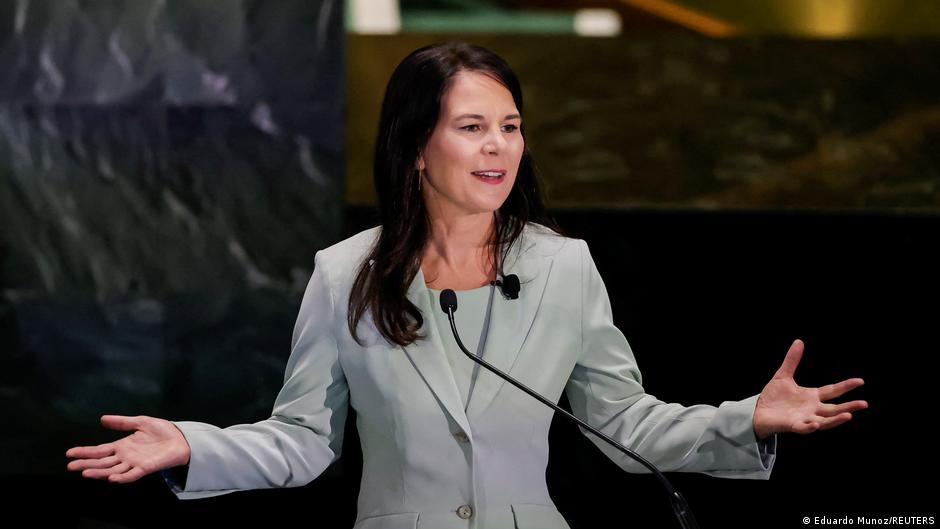
Following her tenure as Chair of the United Nations General Assembly, former German Foreign Minister Annalena Baerbock is set to take up a teaching position at Columbia University in New York. This transition marks a new phase in Baerbock's career as she shifts from high-profile international diplomacy to academia and public engagement.
Academic Role and Its Broader Implications
Baerbock will serve as co-director of the Master of Public Administration in Global Leadership program at Columbia's School of International and Public Affairs (SIPA). The position is practice-oriented, focusing on leadership in global governance rather than traditional academic research. She will also contribute as a visiting lecturer and public speaker during a three-year tenure.
"The diversity of New York offers a sense of relief and opportunity that resonates deeply," Baerbock once remarked, reflecting on her appreciation for the city during her UN role.
Her move is timely, as global economic and political shifts increasingly influence household finances worldwide. Individuals managing savings and investments face growing uncertainty amid fluctuating currencies and policy changes influenced by international relations experts like Baerbock.
Having led foreign policy for Germany and chaired the UN General Assembly since September 2025 – a one-year mandate with limited renewal prospects – Baerbock's appointment reinforces the trend of political figures transitioning into influential academic roles. This provides everyday investors and consumers with insights into the policy decisions shaping economic stability.
Her successor at the UN General Assembly, Bangladesh's former Foreign Minister Khalilur Rahman, will assume office in early September, continuing the tradition of leaders shifting between diplomacy and governance education.
From Politics to Academia: A Historical Pattern
Baerbock's career path echoes that of Joschka Fischer, another prominent German Green party figure and former Foreign Minister and Vice-Chancellor. After leaving government in 2005, Fischer lectured at Princeton University and advised global energy projects and corporations, bridging the gap between public policy and private sector interests.
The transition from politics to academia often allows former leaders to influence the next generation of policymakers and business leaders. For consumers and investors, the implications are significant: the policies and leadership philosophies developed and disseminated through academic programs contribute indirectly to shaping economic environments and financial markets.
As global citizens and investors navigate the complexities of international relations, Baerbock's new role may provide valuable perspectives on leadership in a rapidly evolving world economy, impacting currency stability, investment climates, and ultimately household financial security.