Foreign Retailers in Russia Face Asset Controls as Metro and Auchan Lose Grip
Temporary management of Western retail assets in Russia is raising consumer questions over prices, savings behavior and access to familiar chains.
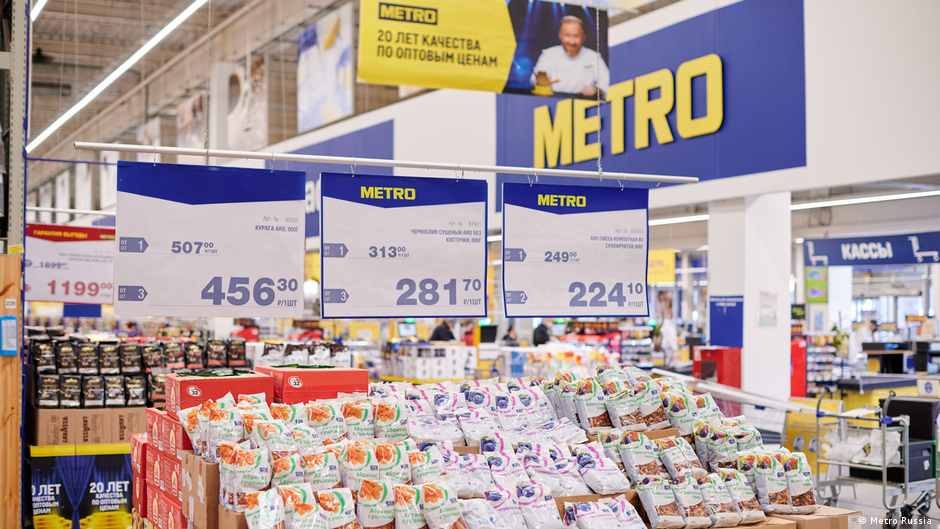
Foreign retail groups that built large businesses in Russia are increasingly losing the ability to control their local assets, a development with consequences that reach beyond corporate boardrooms and into household budgets. According to the source material, temporary management has been introduced over assets linked to France’s Auchan and Leroy Merlin, Germany’s Metro and other companies. In practical terms, that means some owners have lost access to assets they previously controlled.
The central question now is whether the Russian businesses of foreign retailers face nationalization or a continued period of state-directed temporary management. For consumers, the answer matters because large retail chains shape everyday spending: groceries, household goods, repair supplies and wholesale purchases all feed directly into monthly budgets. When ownership or control becomes uncertain, shoppers may not immediately see a change at the checkout, but they are exposed to a less predictable retail environment.
Foreign retail chains are losing the ability to manage their assets in Russia one after another, with temporary management introduced over assets of Auchan, Leroy Merlin, Metro and other companies.
The source also notes a striking development involving Globus. Former German Chancellor Gerhard Schroeder has joined the supervisory board of the former Russian subsidiary of the German holding Globus. That move underlines how politically sensitive the fate of Western retail operations in Russia has become. The issue is no longer only whether a foreign parent company can operate stores; it is also whether those businesses need influential protectors or governance figures to navigate an increasingly difficult environment.
Why households should care
For Russian households, the immediate concern is not the corporate legal structure itself, but whether stores remain open, product ranges stay broad and pricing remains competitive. Large foreign retailers have often operated at scale, using supply networks and purchasing systems that can influence the availability and cost of everyday goods. If management changes disrupt those systems, consumers may face a narrower selection, altered supplier relationships or more uncertainty in pricing.
Even without a sudden visible shock, uncertainty around major chains can change consumer behavior. Families may become more cautious with discretionary spending, shift more purchases to domestic chains, or stock up on goods they fear could become less available. Such decisions can affect savings patterns. A household that spends more upfront on nonperishable goods or home-improvement supplies has less cash available for deposits, debt payments or emergency reserves.
The question also touches currencies and personal financial planning. Foreign retailers operating in Russia are linked, directly or indirectly, to cross-border ownership, international supply chains and corporate cash flows. When the status of those assets becomes unstable, households and small investors may interpret it as another signal that currency risk and geopolitical risk remain part of ordinary financial life. That perception can influence whether savers prefer to hold cash, bank deposits, foreign currency, durable goods or other assets.
Everyday investors face a governance signal
For everyday investors, the asset-control measures send a broader warning about property rights and governance risk. The source material describes owners being deprived of access to some assets after temporary management was imposed. Investors do not need to hold shares in these particular retailers to feel the relevance. When prominent foreign companies lose control of local operations, it can affect how investors assess the risks of doing business in Russia and of investing in companies exposed to Russia.
That risk is not limited to institutional portfolios. Retail investors with savings tied to funds, brokerage accounts or pension-like products may be exposed to companies with international operations, suppliers or counterparties. The fate of businesses such as Metro, Auchan, Leroy Merlin and Globus therefore becomes part of a larger calculation: how much political risk is embedded in apparently ordinary commercial activity?
For consumers, there is also the issue of competition. Large retail chains can help keep prices in check when they compete on scale, private-label goods, logistics and supplier terms. If control changes lead to operational disruption or less competitive pressure, households may lose some of the benefits associated with a varied retail market. That does not automatically mean prices rise or goods vanish, but it does add another layer of uncertainty for shoppers already trying to manage routine expenses.
The involvement of a figure such as Schroeder in the supervisory board of the former Russian Globus subsidiary may be read by consumers and investors as a sign that governance arrangements around these businesses are becoming more complex. For a household deciding where to shop, that may feel remote. For a saver deciding how to protect purchasing power, however, it is part of the same landscape: assets, brands and supply chains that once looked stable can become subject to political and administrative decisions.
The source frames the situation as a dossier on what is happening to Western retailers’ businesses in Russia. From a personal-finance perspective, the key point is that retail control is not just a corporate ownership story. It can influence consumer confidence, shopping habits, currency preferences and the way households think about financial resilience. When major retailers lose direct control over local assets, the effects may spread slowly, through availability, pricing expectations and trust, rather than through one dramatic event.
For now, the facts presented are limited but significant: temporary management has been introduced over assets connected to several foreign retail groups; some owners have lost access to those assets; and the former Russian subsidiary of Globus now has Schroeder on its supervisory board. The unresolved question is whether temporary control becomes a bridge to nationalization or remains a separate administrative mechanism. For families managing food bills, home expenses and savings, that distinction may determine how stable the retail landscape feels in the months ahead.



