Fire at Ryazan Plant With Yandex Data Center Raises Cloud Resilience Questions
A reported fire at the Sasta machine-tool plant in Russia’s Ryazan region briefly coincided with Yandex Cloud power disruptions.
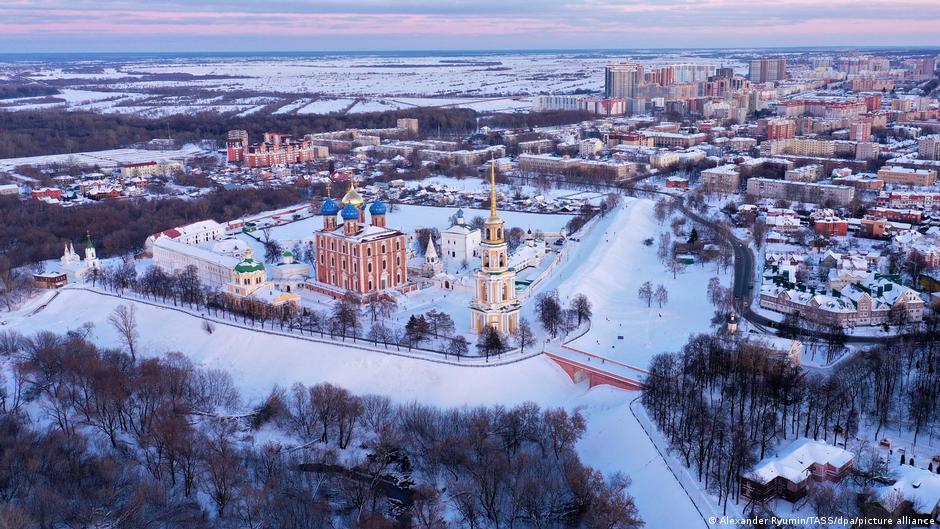
A fire broke out in Sasovo, in Russia’s Ryazan region, on the grounds of the Sasta plant, where a data center operated by Yandex DC is located, according to the Russian outlet Astra. The enterprise manufactures CNC metalworking machines, a type of industrial equipment used to produce precision components.
For households and everyday investors, the incident is a reminder that cloud infrastructure is now tied not only to technology stocks and corporate IT spending, but also to ordinary consumer life: payments, media services, workplace tools, online shopping, phone connectivity and savings products increasingly depend on data centers staying online. Even a short disruption can feed concerns about service reliability, especially when infrastructure is located near industrial sites that may carry geopolitical and sanctions-related risks.
Astra said its conclusion was based on OSINT analysis of the Sasta machine-building plant site, where the Yandex DC data center is located. The outlet wrote that employees of the data center had shown its equipment last month and directly stated that it was in Sasovo, Ryazan region. The report was published on Astra’s Telegram channel overnight on Thursday, October 8.
“Last month, the data center workers themselves showed its equipment and directly stated that it is located in Sasovo, Ryazan region,” Astra said, according to the source article.
Why a Local Fire Can Matter to Consumers
The source article does not report the scale of the fire, the cause, casualties or physical damage to the data center. It does, however, note that Astra later drew attention to a message about interruptions in the power supply of a separate availability zone of the Yandex Cloud platform. According to the same account, Yandex Cloud said 40 minutes after those messages appeared that the situation had stabilized.
For consumers, a 40-minute stabilization window may sound brief. But cloud outages can affect a wide range of routine services if businesses rely on a single provider, a single region or a single availability zone. Small retailers, app developers, media platforms and financial technology services may all depend on cloud availability for logins, payment routing, customer records, order processing or digital content delivery.
That matters for household budgets because disruptions can create small but real costs: missed sales for self-employed workers, delays in online orders, interruptions to remote work, or temporary difficulty accessing digital services. The article does not say such effects occurred in this case, and it does not identify specific consumer-facing services affected. The broader personal finance lesson is about concentration risk: households often experience cloud failures indirectly, through the apps, banks, telecom services and workplaces they use every day.
The incident also lands in a market environment where investors often treat cloud platforms as high-margin, durable infrastructure businesses. Any report involving a major data center can become relevant to investors assessing operational resilience, insurance exposure, business continuity planning and the cost of maintaining redundant infrastructure. The source article does not provide financial figures, market reaction or company statements beyond the reported stabilization message, so the investment implications remain limited to risk assessment rather than measurable loss.
Industrial Site, Sanctions and Infrastructure Risk
Astra reported that Sasta specializes in CNC metalworking machines and that its equipment is used in the defense, aerospace, transport and heavy industries. The outlet characterized the company’s importance to Russia’s military-industrial complex as lying not in the production of finished weapons, but in supporting the production base: its machines are needed to manufacture high-precision metal parts and assemblies.
The article also states that the enterprise is under sanctions from Canada, Switzerland, the European Union, the United Kingdom, Australia, New Zealand and Japan. For investors and currency watchers, sanctions matter because they can increase operating uncertainty around suppliers, payments, spare parts, insurance and access to foreign technology. The source does not state that sanctions caused or contributed to the fire, nor does it say they affected Yandex Cloud’s power issue. But sanctions can still form part of the broader risk picture around infrastructure located on or near strategically sensitive industrial assets.
For households with savings exposed to emerging-market funds, technology shares or broad global equity products, these incidents can seem distant. Yet geopolitical and infrastructure risks often filter into portfolio performance through currency volatility, valuation discounts, supply-chain concerns and the cost of capital for companies operating in higher-risk environments. The article provides no exchange-rate data and no securities-market data, so no direct market move can be attributed to this episode from the source alone.
The report also places the incident against a wider backdrop of attacks on data and communications infrastructure. It notes that on the evening of September 25, Russian armed forces began striking infrastructure belonging to the Ukrainian telecommunications operator Cosmonova, including a data center. As a result, internet and television disruptions occurred in Kyiv, according to the source article.
On October 3, Ukrainian President Volodymyr Zelensky commented on strikes on Ukrainian data centers, saying they affected people and were not military infrastructure. He asked how anyone could strike data centers and mobile communications, adding that such communications are used not only in Ukraine but also in Moscow.
That context underscores the consumer-finance angle: data centers are no longer remote technical facilities with little bearing on daily life. They support communications, work, media, payments and the digital records behind many household financial decisions. When power instability, fire or military strikes intersect with cloud infrastructure, the consequences can move quickly from industrial news to consumer inconvenience, business disruption and investor risk calculations.
In this case, the reported Yandex Cloud issue was described as stabilized within 40 minutes, and the source article does not establish damage to the data center. Still, the episode highlights a practical point for consumers and everyday investors: digital convenience depends on physical infrastructure, and that infrastructure can sit inside wider industrial, sanctions and geopolitical risk zones.



