Fed Raises Key Rate for First Time in Three Years, Pressuring Borrowers
The quarter-point increase lifts the federal funds rate to 3.75-4% as officials prioritize inflation control over cheaper credit.
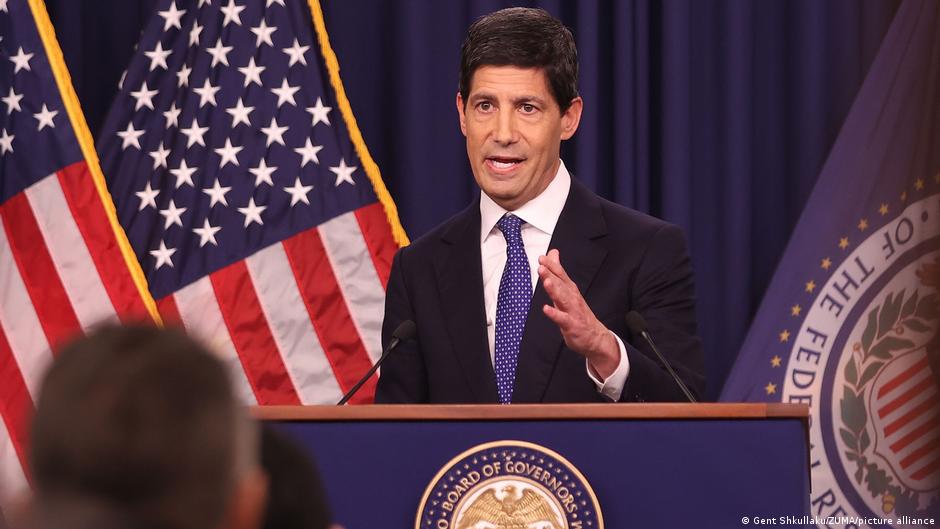
The U.S. Federal Reserve has raised its federal funds rate by 25 basis points to a range of 3.75% to 4% a year, marking the first increase in the key policy rate in three years. The decision, announced by the Fed on Wednesday evening, September 16, was presented as a response to persistently high inflation in the United States.
For households, the move matters because the federal funds rate influences borrowing costs across the economy, from mortgages and credit cards to auto loans and savings products. A higher rate can make debt more expensive, but it can also improve returns on some cash savings, money market funds and short-term fixed-income products. For everyday investors, the decision signals that the central bank is again prioritizing price stability after a period of easier monetary policy.
The rate increase follows a long stretch in which U.S. interest rates had been moving in the opposite direction. Before this decision, the Fed had cut rates three times in 2024 and three times in 2025, Interfax noted. All 12 members of the Federal Open Market Committee voted in favor of the increase, according to the Fed's publication.
Inflation Takes Priority Over Cheaper Credit
Fed Chair Kevin Warsh said the decision was driven by the central bank's inflation mandate. Speaking at a press conference, he emphasized that price pressures had remained elevated for too long.
“Our primary focus within our mandate is on ensuring price stability. Quite simply, inflation is too high, and it has been going on for too long. That is a fact.”
Unlike the European Central Bank, based in Frankfurt am Main, the U.S. Federal Reserve has a dual mandate: to ensure price stability and support a strong labor market, AFP explained. The latest decision suggests that inflation has become the dominant concern for policymakers, even though higher rates can cool lending, investment and parts of the job market over time.
Warsh said at the September 16 press conference that U.S. inflation has exceeded the Fed's 2.0% target for five years. In July and August of the current year, inflation stood at 3.4%. That level is lower than some past inflation peaks, but still high enough to affect household budgets, especially when families are already facing elevated energy and borrowing costs.
For consumers, the most immediate impact may be felt in variable-rate debt. Credit card balances, adjustable-rate loans and some forms of business credit can become more expensive when the Fed tightens policy. Mortgage rates are not set directly by the Fed, but they are influenced by expectations for inflation and interest rates. That means homebuyers may face renewed pressure if lenders price in a longer period of higher rates.
At the same time, savers may see some benefit. Banks and investment platforms do not always pass higher rates through quickly, but rising policy rates can support better yields on savings accounts, certificates of deposit and short-term Treasury-linked products. For households holding cash, the Fed's move could modestly improve income from savings, though inflation still reduces real purchasing power when prices rise faster than returns.
Energy Prices and Political Pressure
Warsh was nominated as Fed chair by U.S. President Donald Trump and took office in mid-May. He previously served on the Federal Reserve Board of Governors from 2006 to 2011. Earlier in his career, Warsh worked as a banker at Morgan Stanley, where he specialized in mergers and acquisitions. He also advised Trump on economic policy.
According to AFP, Trump had expected Warsh, as Fed chair, to keep interest rates low. Low rates can make real estate loans more affordable and help reduce monthly payments for borrowers. But the war waged by the United States and Israel against Iran since late February led to a sharp rise in energy prices and, as a result, fueled inflation, journalists observed.
That link between geopolitics, energy costs and monetary policy is central for household finances. Higher energy prices can hit consumers directly through utility bills and gasoline costs, while also raising transportation and production expenses for businesses. Those costs can then filter into prices for food, services and everyday goods. When inflation remains above target, the Fed may respond with higher rates, even if that makes borrowing more painful.
Financial markets and everyday investors will now be watching for whether this increase is a one-off step or the beginning of a new tightening cycle. Higher rates can weigh on stock valuations, particularly for companies that rely heavily on future growth or cheap financing. Bond investors may also see price swings as markets adjust to the Fed's new stance. Currency markets can react as well, because higher U.S. rates may support the dollar by making dollar-denominated assets more attractive.
Trump sharply criticized the FOMC decision to raise the key rate, saying it was driven by “political motives.” Speaking to journalists in North Carolina on September 16, he said Warsh was “a good man,” but argued that, regardless of how well he did his job, he had to deal with hostile leadership.
“They are raising the key rate to cause as much harm as possible to Trump,” Trump said, adding that the rate increase was being made for political reasons.
The unanimous FOMC vote, however, indicates broad agreement inside the rate-setting committee that inflation required a policy response. For consumers, the practical takeaway is less political than financial: debt may become more expensive, savings yields may improve, and household budgets could remain under pressure as the Fed tries to bring inflation back toward its 2.0% target.



