EU Backs New Accession Talks for Ukraine and Moldova, With Budget Stakes
The move advances talks on the internal market and inclusive growth, areas that could shape public finances, household costs and investor confidence.
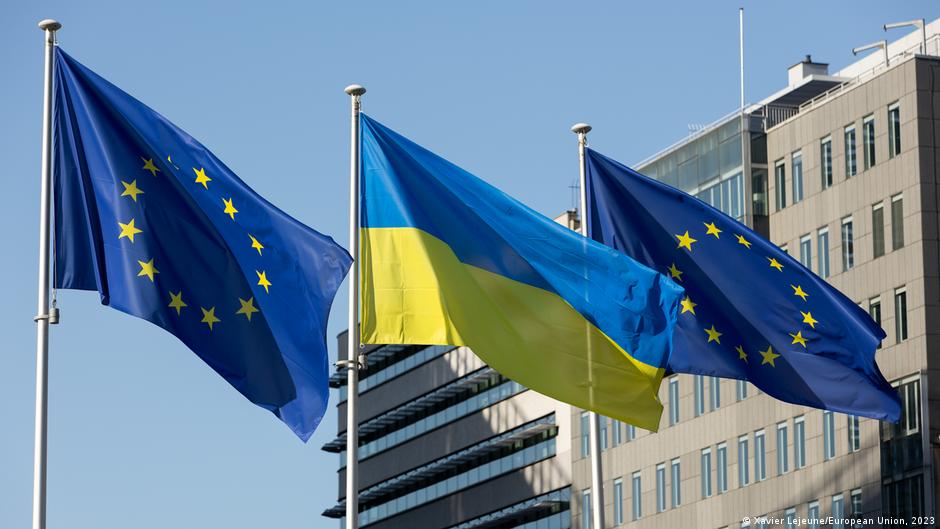
All European Union member states have agreed to open negotiating clusters 2 and 3 in accession talks with Ukraine and Moldova, Irish Minister for European Affairs Thomas Byrne wrote on X on Monday, October 12. The decision marks another step in the long process of aligning the two candidate countries with EU rules, with potential implications for government budgets, consumer markets, currencies and everyday investors watching the region.
The clusters cover two broad policy areas: the internal market, and competitiveness and inclusive growth. For households and small businesses, those chapters are more than diplomatic procedure. They touch on the rules that shape trade, market access, competition policy, labor conditions, business regulation and the gradual integration of national economies with the EU’s legal and economic framework.
“I can confirm that all EU member states agreed to open clusters 2 and 3 for Ukraine and Moldova,” Byrne wrote, while also referring to steps in accession talks for Albania and Montenegro.
Byrne said that after what he called “Montenegro Monday,” there would be a “Super Tuesday” for Albania, Moldova and Ukraine. He wrote that EU states had agreed to open clusters 2 and 3 for Ukraine and Moldova, close chapters 17, 18 and 19 for Albania, and close chapter 20 for Montenegro.
Why the Clusters Matter for Consumers
EU accession negotiations are divided into six large thematic sections, known as clusters, covering different areas of law and public policy. During the process, the European Union assesses how ready a candidate country is to apply EU rules and standards. That makes the opening of a cluster a procedural step, but one that can influence expectations about reform, funding, regulation and market access.
The six clusters are titled “Fundamentals,” “Internal Market,” “Competitiveness and Inclusive Growth,” “Green Agenda and Sustainable Connectivity,” “Resources, Agriculture and Cohesion,” and “External Relations.” Ukraine’s first cluster, “Fundamentals,” was opened on June 15.
For consumers, the internal market cluster is especially relevant because it concerns the framework under which goods, services, capital and workers can operate across borders. Progress in this area can eventually affect product standards, consumer protections, business licensing, market competition and the ease with which companies trade with EU partners. While accession itself remains a longer-term process, each negotiation step can influence the confidence of businesses and households planning ahead.
The competitiveness and inclusive growth cluster is also closely tied to personal finance. It relates to the conditions under which economies can grow, attract investment and distribute the benefits of that growth. For ordinary households, the policy areas behind the cluster can feed into wage prospects, job creation, business costs and the quality of public services funded through national budgets.
Ukraine’s Education Law and Hungary’s Role
Earlier on October 12, Ukraine’s Verkhovna Rada approved amendments to the education law in two readings and as a whole. The amendments concern the rights of national minorities. According to the source article, the document was necessary to secure Hungary’s consent to opening the second and third negotiating clusters for Ukraine’s accession to the European Union.
That same evening, Ukrainian lawmaker Yaroslav Zhelezniak wrote on Telegram that the adopted law had been signed by President Volodymyr Zelensky.
For financial markets and households, such political steps matter because EU accession talks are not only about diplomacy. They can affect expectations about budget support, reform momentum and the stability of the policy environment. Investors tend to watch whether candidate countries can maintain the political agreements required to keep negotiations moving, especially when reforms touch sensitive domestic issues such as education and minority rights.
For Ukraine, the budget dimension is particularly acute. European Commissioner for Enlargement Marta Kos said on October 5, after a Moldova-EU Association meeting, that the EU could open two negotiating clusters for Ukraine and Moldova during an intergovernmental conference on the sidelines of the EU General Affairs Council scheduled for October 13 in Luxembourg.
Kos said Ukraine and Moldova are carrying out systemic reforms “in very difficult conditions” and are among four countries leading accession negotiations. She also recalled that the European Commission would publish a detailed assessment of reform progress across all areas in candidate countries on October 28 in its annual enlargement report.
Budget Support and Investor Signals
Kos urged observers not to forget that Ukraine is currently fighting for survival while also pursuing EU accession and implementing reforms, including reforms needed to obtain additional funds for the budget and the needs of the army. That point is central for anyone viewing the accession process through a household finance lens.
Public budgets influence everyday life through pensions, public-sector wages, social support, defense spending, infrastructure and taxation. If reforms help unlock additional financing, the effect can be felt through the state’s ability to manage spending pressures. In Ukraine’s case, the commissioner’s remarks link accession-related reforms directly to budget resources and military needs.
Currency watchers may also pay attention to the talks. The opening of new clusters does not itself change exchange rates or guarantee economic outcomes. But progress in EU accession can become part of the wider signal investors use when judging political risk, reform credibility and prospects for future integration with European markets. Those signals can matter for households holding savings, receiving remittances, importing goods, or planning purchases affected by currency movements.
For Moldova, the same negotiating step reinforces its place alongside Ukraine in the EU enlargement process. While the source article does not give separate economic figures for Moldova, the opening of the internal market and competitiveness clusters points to areas that could shape business regulation, investment conditions and consumer markets as the country continues reforms.
The next formal marker is the intergovernmental conference expected on October 13 in Luxembourg, followed by the European Commission’s annual enlargement report on October 28. For households, savers and small investors, the significance lies less in any immediate windfall than in the direction of travel: closer alignment with EU rules, more scrutiny of reforms and a clearer framework for future budget and market decisions.



