Drone Incidents in Moldova Add Fresh Risks for Household Finances
Repeated airspace violations threaten public safety while adding uncertainty for Moldovan households, savers and everyday investors.
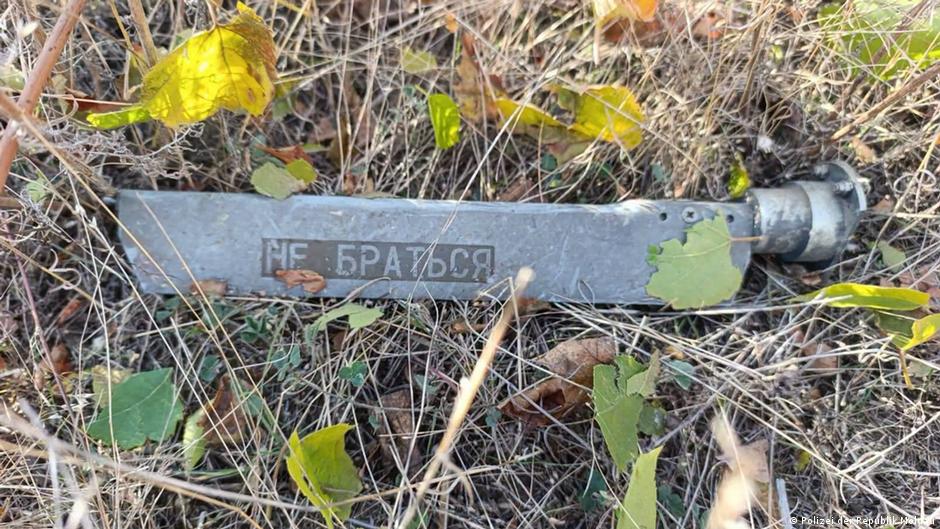
Drones violated Moldova’s airspace five times on October 16, and one aircraft crashed and exploded, according to the country’s Defense Ministry. The incidents introduce another layer of uncertainty for households already exposed to the economic consequences of Russia’s full-scale war against Ukraine, although officials did not provide an estimate of the financial damage or announce any immediate measures affecting consumers.
The drone came down during the day near the village of Novye Kodryany, about 50 kilometers from the Ukrainian border. Moldova’s Defense Ministry reported the incident on its Telegram channel that same day.
According to the ministry, the unmanned aerial vehicle entered Moldovan airspace illegally at 4:22 p.m. local time. At 5:06 p.m., officials announced that the aircraft had crashed and exploded. Moldovan police later published a photograph of the wreckage on Facebook.
No casualties or injuries were reported in connection with the October 16 crash in the information released by the authorities. The episode nevertheless underscores the physical and financial risks faced by communities near Moldova’s border with Ukraine, including the possibility of damage to homes, vehicles, farmland or local infrastructure in future incidents.
Why repeated incursions matter for family budgets
For Moldovan consumers, the most immediate issue is public safety rather than a confirmed change in prices, taxes or interest rates. Still, repeated security incidents can influence household finances indirectly. Families may face additional spending on travel, emergency supplies, repairs or temporary accommodation if an incident occurs close to where they live. Property owners and small businesses may also review insurance coverage and exclusions, particularly in border regions.
The Moldovan authorities have not reported a direct effect on insurance premiums, the leu exchange rate, bank deposits or consumer prices from the October 16 events. Any claim that these specific drone incursions have already raised household costs would therefore go beyond the available information. For savers and retail investors, the practical consideration is heightened geopolitical uncertainty rather than a documented market shock.
That uncertainty may encourage households to reassess how much cash they keep available for emergencies and whether their savings are sufficiently diversified. Such decisions should be based on individual circumstances, because the official statements contained no recommendation to withdraw deposits, exchange currencies or alter investments.
“Such incidents, among other things, endanger the safety of citizens,” Moldova’s Foreign Ministry said.
The Foreign Ministry “strongly condemned” the repeated violations of the country’s airspace. It also called on Russia to “immediately stop attacks on Ukraine and comply with international law, including the sovereignty and territorial integrity” of Moldova.
Incidents have accelerated in October
Several hours before the drone crashed on Moldovan territory, the Defense Ministry said the country’s airspace had been violated seven times since October 10 “against the backdrop of attacks by the Russian Federation on Ukraine.” Six of those cases involved drones: two occurred on October 15 and four during the night of October 16.
The other incident in that period involved a drone carrying explosives that fell on October 10 in Geamana, a locality roughly 50 kilometers from the Ukrainian border. The ministry’s figures show that the October 16 violations formed part of a broader pattern rather than an isolated event.
Since the beginning of the year, Moldova’s military authorities have recorded 64 airspace violations. Sixteen of those cases, including the October 16 incidents, occurred during October. Since 2022, when Russia launched its full-scale war against Ukraine, the total number of violations has reached 101.
On the morning of October 3, three missiles and two drones entered Moldovan airspace. All five fell within the country, and no one was killed or injured. Moldova’s Defense Ministry said that incident resulted from Russia’s large-scale strikes on Ukraine.
What savers and investors should watch
The source information does not identify damage to banks, energy facilities, transport links or other economically important infrastructure. It also does not report disruptions to financial services. That distinction matters for households deciding how to respond: the incidents represent a serious security risk, but there is no official evidence in the report of an immediate threat to deposits or the functioning of Moldova’s financial system.
Everyday investors may nevertheless monitor the Moldovan leu, government financing conditions and any new public spending commitments related to air defense, emergency response or infrastructure protection. These indicators could eventually affect borrowing costs, taxes or public services, but no such changes were announced in connection with the October 16 events.
For now, the clearest financial lesson is the value of basic resilience: maintaining an accessible emergency reserve, keeping important insurance and banking documents current, and avoiding abrupt currency or investment decisions based solely on an isolated headline. The growing number of recorded airspace violations makes the security situation relevant to household planning, even though the direct economic cost of the latest incidents remains unquantified.



