China Urges US to Avoid Space War Preparations as Orbital Arms Risks Rise
The dispute highlights how military competition in orbit could affect satellites that support navigation, communications and household finances.
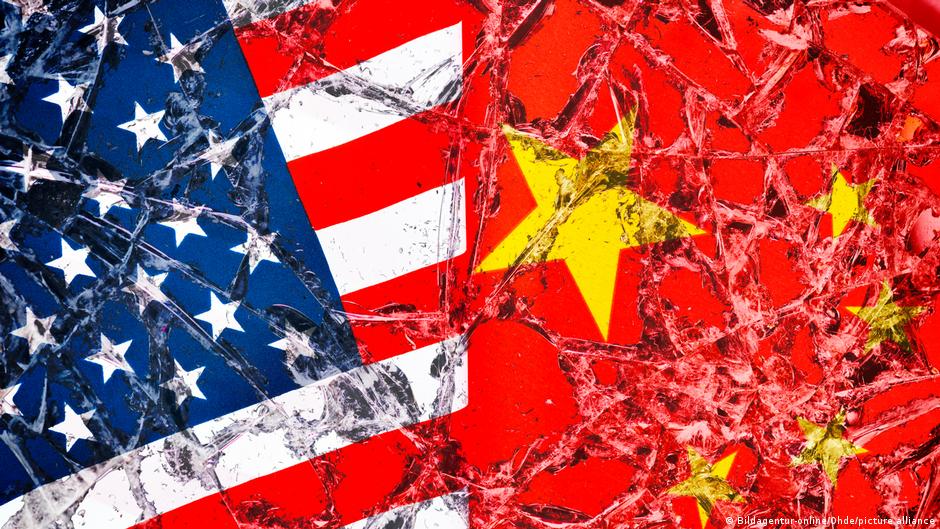
China has urged the United States to stop preparing for potential combat in space after Washington publicly confirmed for the first time that it has weapons systems deployed in orbit. The exchange adds a new layer of geopolitical risk to an arena that already underpins everyday financial life, from card payments and banking networks to GPS-based delivery, mobile communications and the satellite links used by investors and businesses.
The Chinese Foreign Ministry issued its warning on Tuesday, September 15, after the United States acknowledged that the US Space Force has orbital capabilities that can be used for both defensive and offensive purposes. Beijing cautioned against the “militarization of space,” turning orbit into a battlefield, and an arms race in outer space.
“We urge the US side to stop building up military capabilities and preparing for war in space,” Foreign Ministry spokesperson Guo Jiakun said at a briefing.
For households, the issue may sound remote. But space infrastructure has become part of the hidden plumbing of modern consumer life. Satellites help support navigation, weather forecasting, telecommunications, timing signals for financial markets and some forms of internet access. A conflict or sustained arms race in orbit could increase costs for governments and companies, and in a severe disruption could affect services that consumers and everyday investors rely on without thinking about them.
What Washington Confirmed
On September 14, US Air Force Secretary Troy Meink said the United States possesses “space control” assets located in orbit. He said those assets, operated by the US Space Force, are capable of protecting the joint force from hostile actions. He did not provide details about the weapons themselves.
The Space Force statement said space control includes capabilities needed to secure control of space and defend it, and that such capabilities may be used for both offensive and defensive purposes. It also referred to the use of kinetic and non-kinetic means, without describing specific systems.
The statement separately named China and Russia as threats in space. It said China is developing and operating space-related and counterspace systems as part of a broader strategy to modernize its armed forces. It also said Russia views space as a theater of military operations and believes dominance in space will become a decisive factor in future conflicts.
Former US President Donald Trump established the United States Space Force in 2019 during his first term, creating it as a separate branch of the armed forces in response to potential threats from Russia and China.
Why Consumers and Investors Should Care
The immediate issue is military, but the potential financial consequences are broader. Satellites support navigation systems used by logistics companies, airlines, ride-hailing apps, freight networks and emergency services. They also provide communications links and timing data that help synchronize parts of the global economy. If space becomes a more contested domain, insurers, telecom firms, defense contractors and governments may all face higher costs.
Those costs can travel through household budgets in indirect ways. Higher defense spending competes with other public priorities. More expensive satellite protection and replacement systems can raise operating costs for companies that rely on space-based services. Disruption to navigation or communications networks could create delays and inefficiencies that eventually show up in prices, availability of services, or corporate earnings.
For everyday investors, the escalation also affects how markets assess geopolitical risk. Defense and aerospace stocks may react differently from consumer-facing firms if space security becomes a larger budget priority. Telecom, satellite internet, semiconductor, cybersecurity and insurance companies could also come under closer scrutiny. At the same time, investors tend to punish uncertainty, especially when critical infrastructure is involved.
Currencies may also be sensitive to the wider context. A dispute involving the United States, China and Russia can reinforce safe-haven behavior in global markets, particularly if investors begin to price in higher geopolitical tension. The source report does not provide market moves or forecasts, but the strategic backdrop is the kind that can shape demand for reserve currencies, government bonds and defensive assets during periods of stress.
The Treaty Gap
Historically, the biggest concern was the possible deployment of nuclear weapons in space. The 1967 Outer Space Treaty prohibits such deployment. The United States, Russia and China are among its parties. The treaty requires the exploration and use of outer space to be conducted for peaceful purposes.
But the treaty does not cover conventional weapons placed on satellites or spacecraft. That gap matters because current military interest increasingly involves actions such as hacking satellites, jamming their operations, and developing systems that can interfere with or strike an opponent’s satellites.
Russia has been suspected of developing weapons against Starlink satellites used by the Ukrainian military. Russia, the United States, China and India are also studying ways to operate outside the treaty’s limits, including by striking enemy satellites that play an important role in military communications, surveillance and navigation, according to AFP.
The result is a strategic contest in which civilian and military infrastructure can be difficult to separate. A satellite network may support consumer broadband, business connectivity, disaster response and military operations at the same time. That overlap is one reason space security can quickly become an economic issue, not just a defense issue.
China’s warning does not resolve the underlying problem. Washington says it needs capabilities to protect space assets from hostile action. Beijing says the United States should stop expanding military capacity and preparing for war in orbit. Moscow is described by the US statement as treating space as a future battlefield. The practical effect is that households, companies and investors are watching a once-specialized military domain become part of the financial risk map.



