Brazil Election Runoff Puts Currency, Savings and Market Risk in Focus
Flavio Bolsonaro’s first-round lead over Lula da Silva sets up an Oct. 25 vote that could shape household budgets, investor confidence and Brazil’s currency outlook.
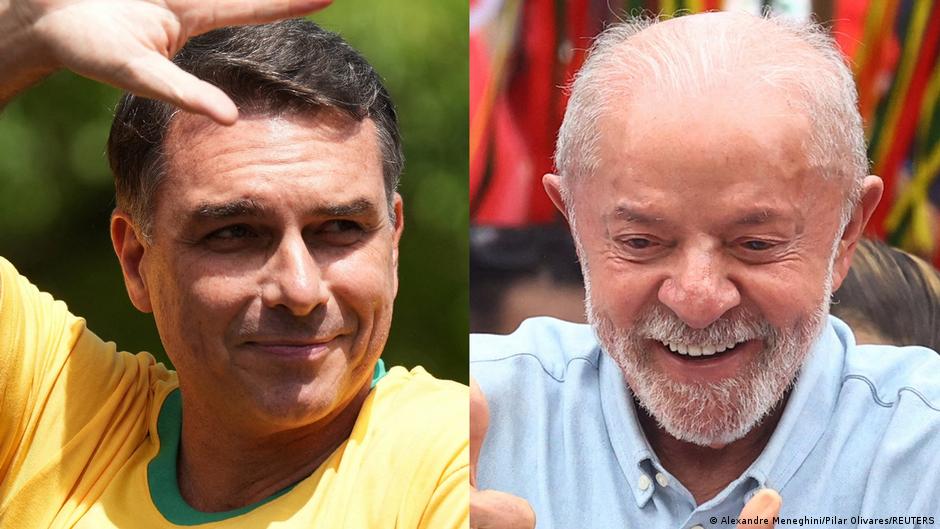
Brazil is heading for a presidential runoff after neither President Luiz Inacio Lula da Silva nor Senator Flavio Bolsonaro cleared the 50% threshold in the first round, a result that immediately raises the stakes for households, savers and everyday investors watching the country’s currency and financial markets.
With 99.99% of ballots counted, Bolsonaro, a senator from Rio de Janeiro state and the eldest son of former President Jair Bolsonaro, led the field with 47.03% of the vote, according to data from Brazil’s electoral authorities published overnight into Monday, Oct. 5. Lula, the incumbent left-wing president, followed closely with 45.16%. Turnout stood at 78.92%.
The second round is scheduled for Oct. 25. For Brazilian consumers, the three-week campaign could become more than a political contest. A tight race between two sharply different political camps may influence expectations for inflation, public spending, interest rates and the real, all of which feed directly into grocery bills, loan costs, mortgage payments and returns on savings.
Because no candidate crossed the 50% mark, Brazil will hold a second round of voting on Oct. 25.
Why the Runoff Matters for Household Finances
Brazilian presidential runoffs have become a familiar feature of the country’s politics. Since the start of the 2000s, every presidential election has required a repeat vote. But this year’s matchup carries particular financial sensitivity because it revives the rivalry between Lula and the Bolsonaro family, whose political battles have already shaped investor sentiment in Latin America’s largest economy.
In 2022, Lula defeated Jair Bolsonaro, Flavio Bolsonaro’s father, in a second-round vote. The elder Bolsonaro refused to recognize the result, and his supporters took to the streets in protest. He was later sentenced to a long prison term for an attempted coup. That history means markets may watch the coming runoff not only for policy signals but also for any risk of political instability.
For households, political instability can become a pocketbook issue quickly. If investors demand higher compensation for risk, borrowing costs can rise. If uncertainty pressures the real, imported goods can become more expensive. If inflation expectations shift, families may feel it in supermarket prices, utility costs and the rates offered on consumer credit.
Bolsonaro, 45, has campaigned in part on promises to fight crime, a message that can resonate with voters concerned about the cost of insecurity for businesses and families. But the source of his appeal is complicated by past allegations. In 2019, cases were opened against him over alleged payments linked to nonexistent employees listed among his subordinates, as well as suspicious transfers to his bank account. Those allegations remain part of the political backdrop as voters assess how a Bolsonaro administration might handle public money and financial oversight.
Investor Confidence and Financial Oversight
The election also intersects with an ongoing investigation into Banco Master and its largest shareholder, Daniel Vorcaro. Brazilian authorities are investigating allegations of fraudulent investment raising involving tens of millions of dollars from public and private funds, based on promises of high returns that could not be fulfilled. In plain terms, the case concerns a possible pyramid-style financial scheme.
That matters for ordinary savers because financial scandals can erode trust in investment products, private funds and institutions that promise unusually high yields. In countries where interest rates and inflation already make saving decisions difficult, households may be tempted by products advertised as offering returns well above the market. The Banco Master investigation is a reminder that headline yields can carry risks that are not always visible to retail investors.
Vorcaro is also known as one of the producers of “Dark Horse,” a flattering biographical film about Jair Bolsonaro. The film’s plot develops the former president’s claims of “stolen elections.” Media outlets have previously published correspondence between Vorcaro and Flavio Bolsonaro that may indicate the senator knew about the alleged fraudulent scheme and could have helped facilitate it, including through alleged cover in the form of supposedly expensive film production.
Those claims add another layer to the economic questions surrounding the runoff. Investors often look for signs that the next government will protect institutions, enforce financial rules and respond credibly to fraud. Consumers, in turn, depend on that credibility even if they do not trade stocks or bonds. Pension balances, bank deposits, fund investments and the value of wages are all influenced by confidence in the financial system.
Lula enters the second round as the incumbent, but his narrow second-place finish leaves the race open. For savers and investors, the key issue over the next three weeks will be whether either campaign can reassure markets without making promises that would strain the budget. Spending pledges, tax plans and comments on state-backed lending could all affect how economists and investors price Brazil’s risk.
For everyday investors outside Brazil, the runoff may also matter through emerging-market funds, Latin America exchange-traded funds and currency exposure. A shift in Brazil’s political outlook can influence regional market sentiment, particularly when the margin between candidates is less than two percentage points. Investors with diversified funds may not notice Brazil-specific exposure at first glance, but the country’s size means its election can move broader emerging-market benchmarks.
The immediate takeaway for households is caution rather than panic. The first-round result does not decide the presidency, and Brazil’s runoff system is designed for precisely this kind of outcome. But the combination of a close vote, a powerful political dynasty, corruption allegations and a live financial-fraud investigation means the Oct. 25 election is likely to be watched as closely by families managing budgets as by traders watching screens.



