Bosnia Vote Keeps Dodik Allies in Power, Holding Economic Risks in View
Preliminary results point to continuity in Bosnia and Herzegovina, with ruling-party candidates prevailing in key state and regional contests.
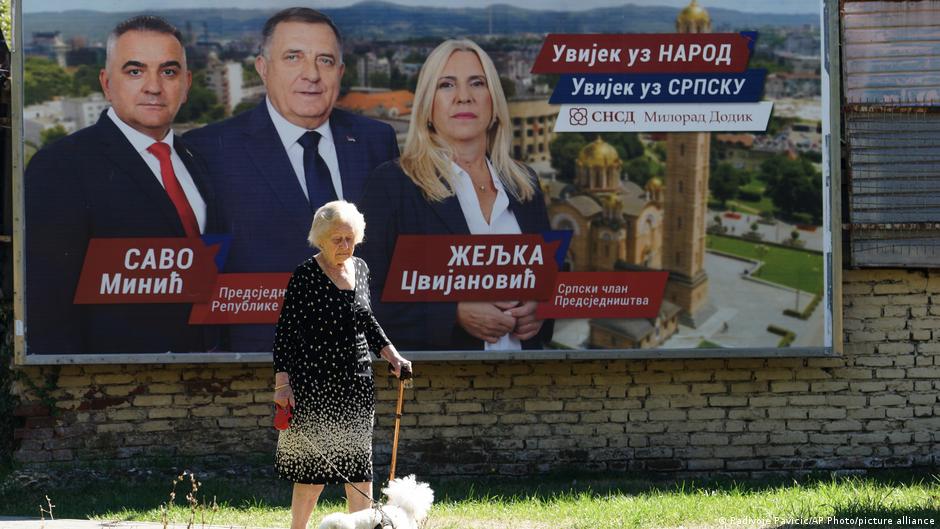
Voters in Bosnia and Herzegovina have delivered few surprises in elections that matter well beyond the country’s complex constitutional order. Preliminary results published by the Central Election Commission on Sunday evening, October 4, showed candidates from governing parties ahead in races for the state presidency, the central parliament, two regional parliaments and the presidency of Republika Srpska.
For households, savers and everyday investors, the result points first to continuity. That can be reassuring for those who value predictability, but it also keeps in place the political tensions that have long shaped Bosnia and Herzegovina’s investment climate, fiscal choices and relations with foreign partners. In a country where institutional deadlock can affect everything from public-sector spending to reform momentum, election outcomes are not only political headlines. They can become personal finance stories.
The most closely watched race was in Republika Srpska, the predominantly Serb entity within Bosnia and Herzegovina. Savo Minic, the entity’s prime minister, won the race for president, according to preliminary results. He was backed by Milorad Dodik, the former president of Republika Srpska, who is known for his closeness to Russia. Minic’s opponent was opposition candidate Branko Blanus, who won some electoral districts but, based on Central Election Commission data, did not change the overall result.
Minic ran for the Alliance of Independent Social Democrats, known as SNSD, the party founded by Dodik. Another Dodik ally, Zeljka Cvijanovic, also appeared set to remain a major figure at the state level after Serb voters favored her for the tripartite presidency with about 55 percent of the vote. Cvijanovic had already served in the presidency.
Why the result matters for household finances
Bosnia and Herzegovina’s presidency is unusual: the duties of head of state are carried out simultaneously by three representatives, one each for Croats, Bosnian Muslims and Serbs. The arrangement was created under the 1995 Dayton Accords, which were designed to settle disputes among Bosnian Muslims, Orthodox Serbs and Catholic Croats and to end the civil war. Many analysts consider the resulting system inefficient.
That institutional design may sound remote from daily budgets, but it affects the backdrop against which families make decisions about savings, jobs and spending. When political authority is fragmented and reforms are difficult, public services, investment projects and business confidence can all become harder to manage. For consumers, the practical question is whether continuity lowers uncertainty or entrenches the delays and tensions that can weigh on growth.
After 95 percent of ballots were counted, Denis Becirovic remained the leading candidate to represent Bosnian Muslims in the country’s presidency, with about 38 percent of the vote. Becirovic had previously served as chairman of the presidency. Croats were preliminarily set to be represented by Darijana Filipovic, who had about 48 percent of the vote.
Preliminary results showed candidates from governing parties ahead across the main state and regional contests.
The composition of the presidency is important for investors and consumers because Bosnia and Herzegovina’s political structure can influence policy coordination and relations with international institutions. Even without any immediate change to household taxes, wages or benefits, the political environment can influence borrowing conditions, infrastructure spending and foreign investor appetite.
Dodik’s influence remains central
Dodik himself was forcibly removed from office in 2025 for failing to comply with decisions of Bosnia and Herzegovina’s Constitutional Court and international agreements. Under a court ruling, he is barred from political activity for six years. He refused to recognize the court’s decision and traveled to Moscow to seek support.
Dodik has already congratulated both Minic and Cvijanovic on their victories. His influence remains visible through SNSD, which, according to the Central Election Commission, is also winning elections to the parliament of Republika Srpska, the National Assembly. Most Bosnian Serbs also voted for the same party in elections to the lower chamber of the national parliament, the House of Representatives of the Parliamentary Assembly.
The Moscow connection is another point that households and investors will watch. Dodik and Minic met Vladimir Putin in the Kremlin on September 29. The source article does not report any financial pledges, policy changes or currency measures tied to that meeting. Still, the political signal matters because foreign alignment can influence perceptions of risk, relations with European institutions and the broader economic environment in which consumers and small businesses operate.
For everyday investors, the clearest message is that the election does not signal a sharp political reset. Those exposed to the region through local businesses, remittances, banks, bonds or broader emerging-market portfolios may read the results as a continuation of existing conditions rather than a new economic direction. That means attention is likely to turn from vote counts to how elected officials handle budgets, entity-level authority, courts and international commitments.
For households inside Bosnia and Herzegovina, the stakes are more immediate. Political stability can help preserve confidence, but prolonged institutional friction can make it harder to deliver efficient public administration and long-term economic planning. The preliminary results therefore create a familiar mix: no electoral shock, but also no obvious break from the disputes that have made the country’s governance system hard to operate.
The final results will confirm the formal distribution of power, but the early picture is already clear. Ruling-party candidates and allies of Milorad Dodik have held key ground. For Money Desk readers, the issue is less who occupies which office and more whether Bosnia and Herzegovina’s political continuity can translate into economic predictability for households, savers and investors.



